
Original briefings. Zero spin.
Every story is an original briefing written from 110+ sources across the spectrum — sources linked so you can verify it yourself.
 economy
Major Story (8/10)
August 28, 2026 at 04:54 PM
economy
Major Story (8/10)
August 28, 2026 at 04:54 PM
CENTCOM Says Hormuz Shipping Lanes Are Clear of Iranian Mines, Tehran Oil Exports Stay at Zero
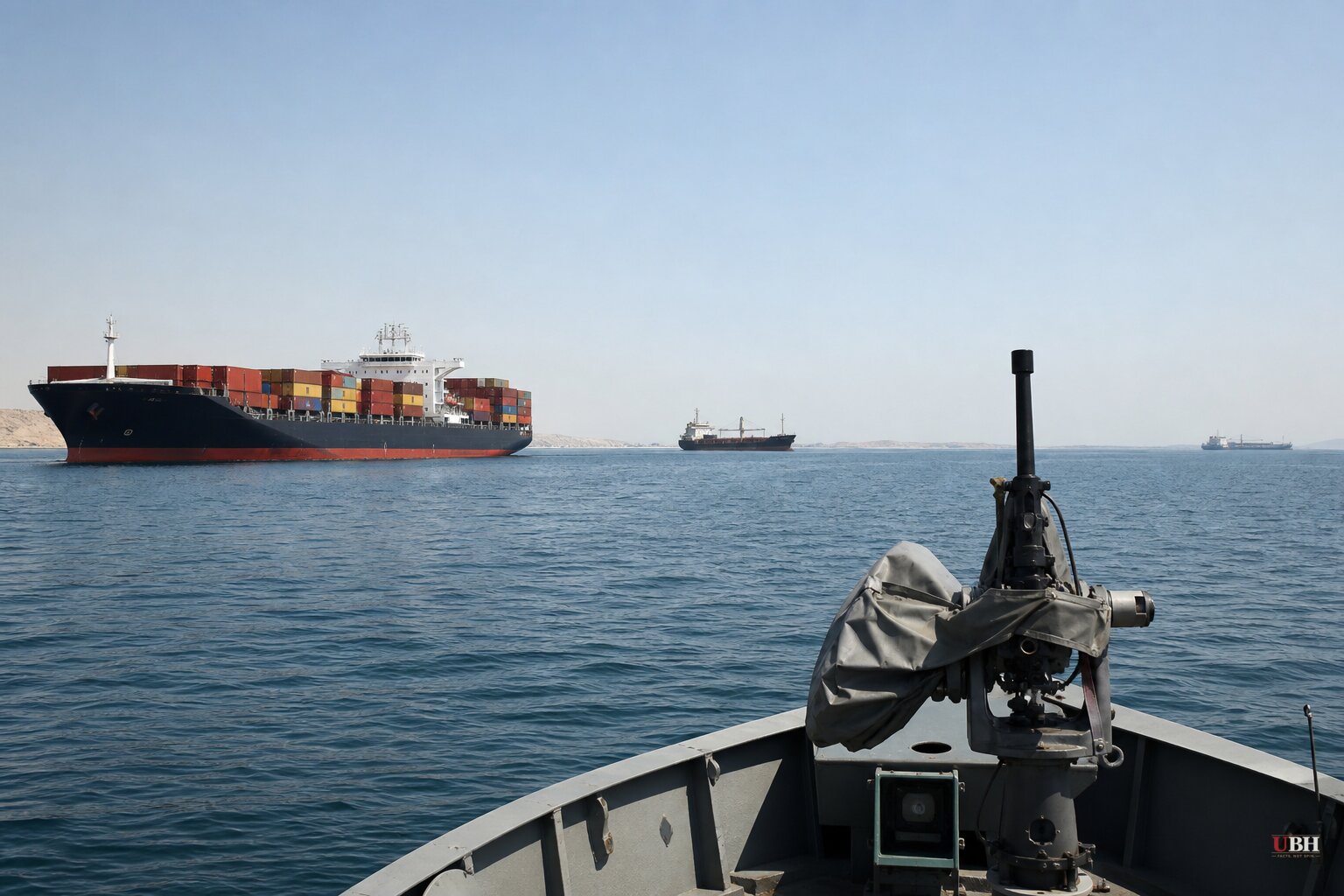
Six months into the war with Iran, CENTCOM says the Strait of Hormuz's main shipping lanes are finally clear of Iranian mines, and Tehran still hasn't exported a drop of oil since mid-July.
Adm. Brad Cooper, CENTCOM's commander, laid it out in a Thursday evening operational update. U.S. forces spent months quietly clearing Iranian sea mines from the Strait's Traffic Separation Scheme, the internationally recognized lanes commercial ships have used for decades to transit the chokepoint between Iran and Oman.
Cooper called it a "major milestone." Navy divers, SEALs, and airpower from all four services did the clearing, according to Cooper, described by both Breitbart and the Jerusalem Post. "The circumstances were challenging and dangerous, to say the least, but we got the job done," Cooper said.
The numbers Cooper gave are specific. Roughly 1,500 vessels carrying about 750 million barrels of crude have transited the Strait under U.S. protection in recent months. Meanwhile the naval blockade, resumed in mid-July, has turned back 75 vessels and disabled three that refused to comply, per CENTCOM figures reported by CNBC and gCaptain. Iran, Cooper says, has exported zero oil since.
Briefly reporting only the charted lanes, Cooper's announcement omits something the Joint Maritime Information Center flagged. There's still risk from drifting or uncharted mines in and around those same lanes, and it kept its overall threat assessment at SEVERE. Cooper's announcement covers the known, charted lanes, not a declaration that the entire waterway is mine-free.
The economic squeeze is real, but it's got holes in it
Kpler data cited by CNBC shows Iran loaded about 260,000 barrels a day for export in August, down more than 80% from 1.7 million bpd a year earlier. Matt Smith of Kpler called the blockade "very effective," saying it's "walloped Iran's crude export loadings." Bob McNally of Rapidan Energy told CNBC the administration is betting Iran eventually runs out of money and folds.
But ZeroHedge, citing Goldman Sachs commodities researcher Daan Struyven, reports Gulf-wide oil exports have actually recovered to more than two-thirds of pre-war levels, between 15 and 16 million barrels a day, up sharply from a March low of 5-6 million bpd. Struyven's note points to a "dark" tanker fleet and ship-to-ship transfers letting the broader market adapt around the disruption, even as Iran specifically stays locked out.
Treasury Secretary Scott Bessent is trying to close more gaps. CBS News reports Treasury is cutting off UAE branches of Banque Misr, Egypt's second-largest bank, from the U.S. financial system, plus sanctioning the manager of Iranian Bank Melli's Dubai branch and a Hong Kong front company Treasury says laundered money for a sanctioned Iranian exchange house.
Bessent called it accountability for "continued, egregious support of the Iranian regime." He's branded the broader push "Operation Economic Outcast" and told CNBC last week the blockade strategy already "worked in Venezuela" and is "working in Cuba," and will "collapse this regime" in Iran.
Jeremy Paner, a former OFAC official who worked Iran sanctions from 2007 to 2013, told CNBC this marks a real shift in U.S. policy. Past sanctions aimed to limit Iran's revenue. Bessent's stated goal, per Paner, is total economic isolation, something the U.S. hasn't tried before.
Iran isn't just sitting there
Iran's ambassador to Russia, Kazem Jalali, told the state outlet IRNA, per CBS News, that Tehran and Moscow have made "very good progress" on a pipeline through Azerbaijan to move Russian gas into Iran, an initial 150 million cubic meters a day, roughly equivalent to just under 1 million barrels of oil. That's a fraction of the roughly 21 million bpd that used to move through Hormuz before the war, according to the U.S. Energy Information Administration, but it's a lifeline Iran is actively building.
Iran's foreign ministry called the new sanctions "economic terrorism" and "US state terrorism against Iran and the world" in a Friday statement reported by CBS News, language it's repeated for days.
Trump's own red line gets fuzzy
MS NOW's Steve Benen zeroed in on a contradiction. Trump last week vowed "TREMENDOUS Economic Consequences" on "ANY country" helping Iran, branding it economic "D-Day." Days later, asked at a White House event whether he'd punish Russia or China for aiding Tehran, Trump said: "It depends, it depends. So far, I think Russia's behaved quite well having to do with the Strait of Hormuz."
That's a notable soft-pedal given NBC News reporting, cited by MS NOW, that Russia has been shipping drone components, ammunition and TNT to Iran through the Caspian Sea. The Washington Post separately reported, per MS NOW, that fresh U.S. intelligence suggests the Kremlin now views the U.S. as weakened by the drawn-out Iran war.
There's a fair defense of Trump's position here worth stating plainly: he may be calculating that picking a simultaneous economic fight with Russia and China, on top of Iran, risks fracturing the international pressure campaign rather than strengthening it. Whether that's strategic patience or a red line with no teeth is something Trump hasn't clarified, and reporters haven't gotten a straight answer on it yet.
Inside Iran, the debate has shifted from whether sanctions will hurt to how much pain the country can absorb. Analysts writing in Tehran's moderate outlets Fararu and Donya-ye Eghtesad, cited by Iran International, say the government may be forced into deeper subsidy cuts and rationing as its old sanctions-evasion tricks get squeezed one by one. The unresolved question is whether that internal pressure breaks the regime's position before the workarounds, Russian gas swaps, dark fleets, front companies, make up the difference.
Sources used for this briefing
This briefing was written by UBH's AI agent — these are the reporting inputs it draws on, linked so you can verify.


