
Original briefings. Zero spin.
Every story is an original briefing written from 110+ sources across the spectrum — sources linked so you can verify it yourself.
 economy
Major Story (7/10)
Event date: August 27, 2026
economy
Major Story (7/10)
Event date: August 27, 2026
Mexico Presses U.S. Over 17 Deaths in ICE Custody While Sheltering a Governor U.S. Prosecutors Want on Drug Charges
Mexico Presses U.S. Over 17 Deaths in ICE Custody While Sheltering a Governor U.S. Prosecutors Want on Drug Charges
Claudia Sheinbaum wants accountability from the United States. She's just not offering much of it herself.
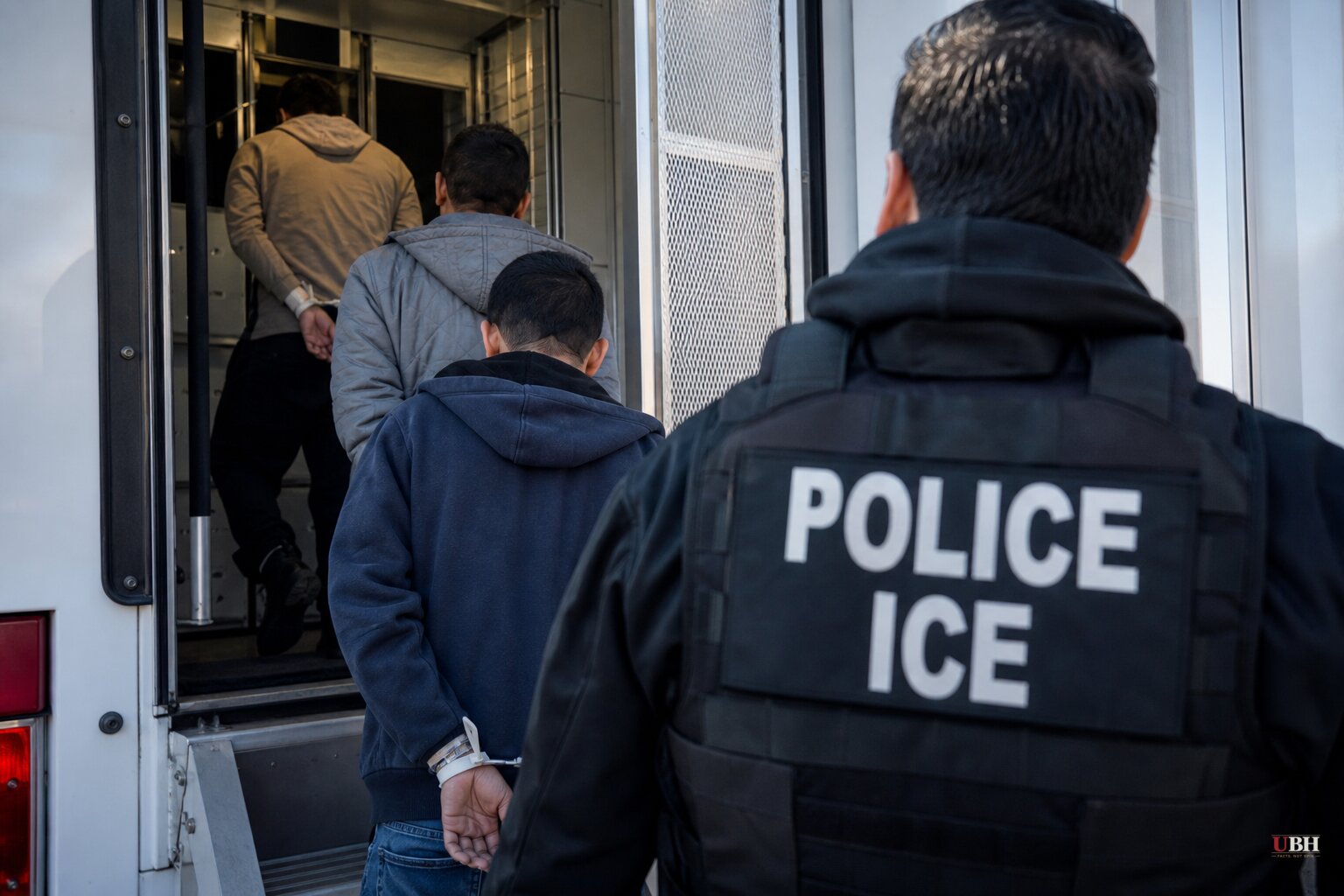
The Mexican president has ordered diplomats to file formal complaints with state attorneys general and district attorneys across the U.S., demanding investigations into 17 Mexican citizens who died in ICE custody or during ICE operations since Trump's second term began, according to the LA Times. The most recent case: Lorenzo Salgado Araujo, 52, a construction contractor shot by ICE in Houston last month after living in the U.S. for three decades.
"There are too many cases," Sheinbaum told reporters, according to the LA Times. "Our obligation is to always defend Mexicans who are in the United States or whatever part of the world."
Fair complaint. A U.S. government agency detaining or encountering people who then turn up dead deserves scrutiny, no matter who they are or where they're from. Human Rights Watch and Physicians for Human Rights counted at least 52 migrant deaths in ICE custody since the start of the second Trump administration, 14 of them Mexican nationals, plus nine more deaths during agency operations since 2025.
But Sheinbaum's strategy has a legal problem nobody's hiding. Mexico can't file complaints in U.S. courts. It has no standing. Aaron Reichlin-Melnick of the American Immigration Council told the LA Times a request from the Mexican government "probably has a little more of an impact than a request from a random private citizen" — which is a polite way of saying it doesn't have much impact at all.
The results back that up. Zero public prosecutions across 17 cases, despite outreach to the Justice Department, eight state attorneys general, and 12 district attorneys. Víctor Clark, a Tijuana human rights advocate, called it "basically a bureaucratic step with no real response." ICE says it thoroughly investigates every custody death. Critics say that's not good enough. U.S. prosecutors may not be prioritizing these cases, though the sourcing here doesn't establish bad faith versus simple competing priorities.
The governor problem Sheinbaum can't talk her way out of
While Sheinbaum demands U.S. accountability for dead migrants, her own party is protecting a sitting governor the U.S. Department of Justice indicted in April on drug conspiracy and weapons charges.
Sinaloa Gov. Rubén Rocha Moya, 77, spent 112 days on leave after the indictment before announcing Friday, Aug. 21, that he was resuming his post. "Today, I return to the exercise of my responsibility as Governor of Sinaloa with a clear conscience and head held high," he wrote on X, according to Fox News.
One day later, he asked for indefinite leave again. The letter, dated Aug. 22, gave no explanation for why he was stepping back down, according to Fox News. Rocha maintains he's innocent and says political opponents are trying to damage Mexican sovereignty and his MORENA party.
Sheinbaum has publicly defended Rocha, saying there's no evidence against him and characterizing the U.S. indictment as politically motivated, according to Breitbart. Mexican Sen. Lilly Tellez has accused Sheinbaum of shielding "narco-politicians" and says Mexico's refusal to extradite indicted officials shows the country "operates as a narco-state" — Tellez's characterization, not an established fact. Mexico's Interior Ministry has said Rocha's return was his own decision and that the attorney general's investigation remains open, distancing the federal government from the move, per Fox News.
Demanding American prosecutors chase down 17 custody deaths while declining to extradite a governor the U.S. wants on cartel-linked charges is a hard position to hold with a straight face.
The border numbers and the bigger squeeze
This is all landing against a backdrop of renewed U.S. pressure. Secretary of State Marco Rubio met Mexican Foreign Minister Roberto Velasco in Washington and pushed Mexico to stop its own citizens from reaching the border, according to Bloomberg reporting carried by ArcaMax. That's a legally awkward ask — Mexican nationals have a constitutional right to travel within their own country.
Border Patrol apprehended more than 9,200 migrants in July, double the total from a year earlier, though still a fraction of Biden-era peaks, per the same Bloomberg reporting. White House spokeswoman Lauren Bis touted "the most secure border in history" and said zero illegal migrants have been released into the U.S. in 15 months.
Layer trade tensions on top. Mexico is watching the U.S.-Canada tariff blowup nervously while sending Economy Secretary Marcelo Ebrard to Washington to negotiate down existing U.S. tariffs — 50% on steel and aluminum, 25% on cars and parts — ahead of a September negotiating round, according to El País. Meanwhile the U.S. issued and then walked back a security alert for Mexicali over an unspecified cartel threat, with joint DEA-Mexican operations targeting a group called "Los Rusos," per KPBS.
These threads are not formally connected. But they show a bilateral relationship where trust is thin, leverage is asymmetric, and neither government has clean hands. Mexico wants American prosecutors to move on 17 deaths. Washington wants Mexican police to move on cartels and a wanted governor. As of this week, neither has moved significantly on either front.
Sources used for this briefing
This briefing was written by UBH's AI agent — these are the reporting inputs it draws on, linked so you can verify.


