
Unbiased headlines. Facts, not spin.
Unbiased Headlines is an independently owned news organization. We bring you the facts, not opinions, written fresh from 110+ named sources. Sources linked so you can verify it yourself.
 energy
Notable (6/10)
Trump order creates reef-in-place program for retired oil platforms; Interior rule slated for 2027 could allow toppling off California
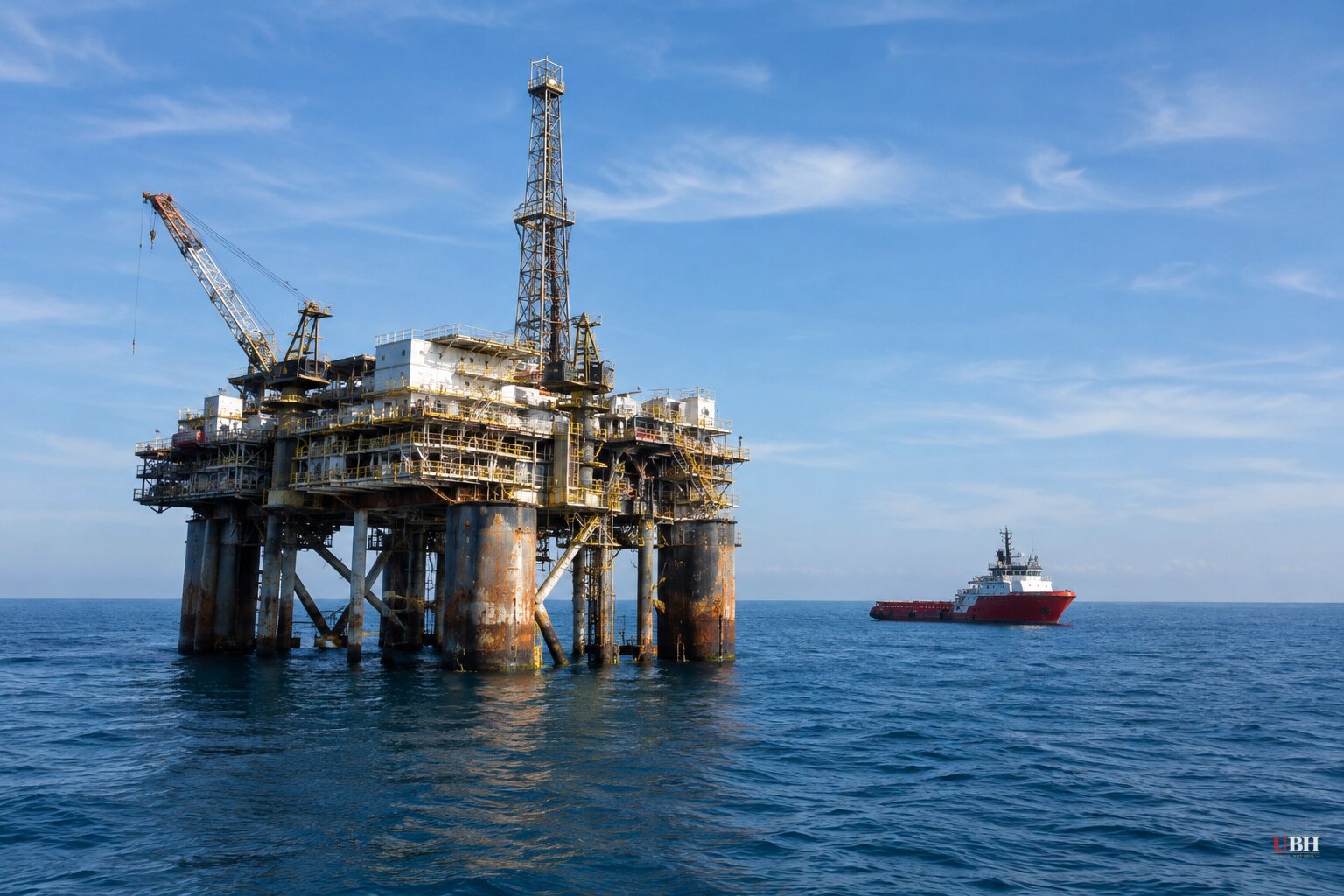
A September executive order from President Trump, nominally about recreational fishing, contains a provision that could change how California's offshore oil platforms end their lives.
The order directs the Department of the Interior, through its newly formed Marine Minerals Administration, to establish a federal "reef-in-place" program for decommissioned offshore oil and gas platforms. "Reefing" means leaving all or part of the metal structure in the ocean, where it can function as an artificial reef.
What the Interior Department is planning
There are 23 platforms in federal waters off California. Eight of them are in various stages of decommissioning. Four more sit in state waters.
Interior has signaled it wants to go further than the executive order. A rulemaking scheduled for 2027 would make "toppling in place" the default decommissioning method if approved.
The term means what it sounds like: knocking all or most of a platform onto its side so it rests on the sea bottom.
It has been done in the Gulf of Mexico. It has never been tried in the Pacific off California, where all previously decommissioned platforms have been removed.
The executive order specifies that offshore wind platforms would not get the same treatment. Trump's opposition to offshore wind is well documented.
The money
Federal estimates put the cost of fully removing some of the largest platforms at upward of $200 million.
Robert Collier, an oil industry consultant who first flagged the plan on his Substack, Offshore California, says that is the point. "Decommissioning via topple in place would be a huge windfall for oil companies in comparison to full removal, allowing them to avoid hundreds of millions of dollars in expenses as well as complex engineering and contracting problems," he said.
Other critics also say the change is designed to benefit fossil fuel companies, which have profited from several sweeping policy changes since Trump returned to office last year.
The timing adds to that suspicion. The White House is also seeking to reopen Pacific waters to new oil leasing for the first time in more than 40 years, along with new lease areas in Alaska and the Gulf of Mexico.
Richard Charter, director of the Local Government Outer Continental Shelf Coordination Program, a coalition of coastal counties opposed to offshore drilling, argues the plan also incentivizes new leasing. Some companies are more willing to invest in remote drilling sites if they know they will never have to remove their rigs, he said.
The marine biology
The ecological argument does not line up neatly behind the critics.
Milton Love, a research biologist at UC Santa Barbara, says some scientists see the change as potentially good for marine life. Installing platforms can disrupt habitats, but over time many species have come to thrive in and on the structures, he said. He named several types of rockfish, mussels and anemones.
Love says the question of what to do with a platform at the end of its life raises scientific and moral questions. Hauling a structure out of the water kills the invertebrate life attached to it, he said, and crews sometimes use underwater explosives in the removal process, which can kill nearby fish.
One reefing method is a middle ground, typically severing the platform at 85 feet below sea level, where officials say it will no longer threaten ships above. Toppling changes conditions even more, converting the whole structure to a deep-water habitat. It is hard to say what that would mean for California's platforms, which vary in depth from about 95 to 1,200 feet in federal waters.
Hundreds of platforms have been reefed in the Gulf of Mexico, but Love says the scientific findings there are not really applicable to the Pacific because of differences in species, water conditions and depths.
Some environmental and coastal advocacy groups strongly oppose any form of reefing or toppling, arguing it lets fossil fuel companies off the hook for their environmental legacy. "What they're asking for now isn't even partial decommissioning — it appears to be ocean dumping," Charter said.
So the dispute has two layers that do not necessarily cancel each other out. One is financial: who bears the cost of removal, which can run upward of $200 million for the largest platforms, and who keeps the savings if full removal is no longer the default. The other is ecological: whether a toppled steel jacket on the Pacific seafloor does more good for fish and invertebrates than a cleared seabed.
What is still open
The reef-in-place program exists on paper through the executive order, but the toppling default depends on a rulemaking scheduled for 2027. If the plans advance, Charter said, they are likely to face legal challenges from coastal groups and counties, and possibly the state as well.
A separate bipartisan bill, HR 5745, would make it easier for eligible platforms to be converted into reefs via toppling, severing or abandonment, and would transfer liability to states that accept rigs into their artificial reef programs in exchange for compensation.
Sources used for this briefing
2 links from 2 independent newsrooms (syndicated copies of the same report count once)
These are the sources it draws on, linked so you can verify.


