
Unbiased headlines. Facts, not spin.
Unbiased Headlines is an independently owned news organization. We bring you the facts, not opinions, written fresh from 110+ named sources. Sources linked so you can verify it yourself.
 politics
Major Story (8/10)
Event date: November 6, 2026 ·
Trump Departs for Manila and Shenzhen, With a Xi-Putin Summit and a Thailand Trade Deal on the Schedule
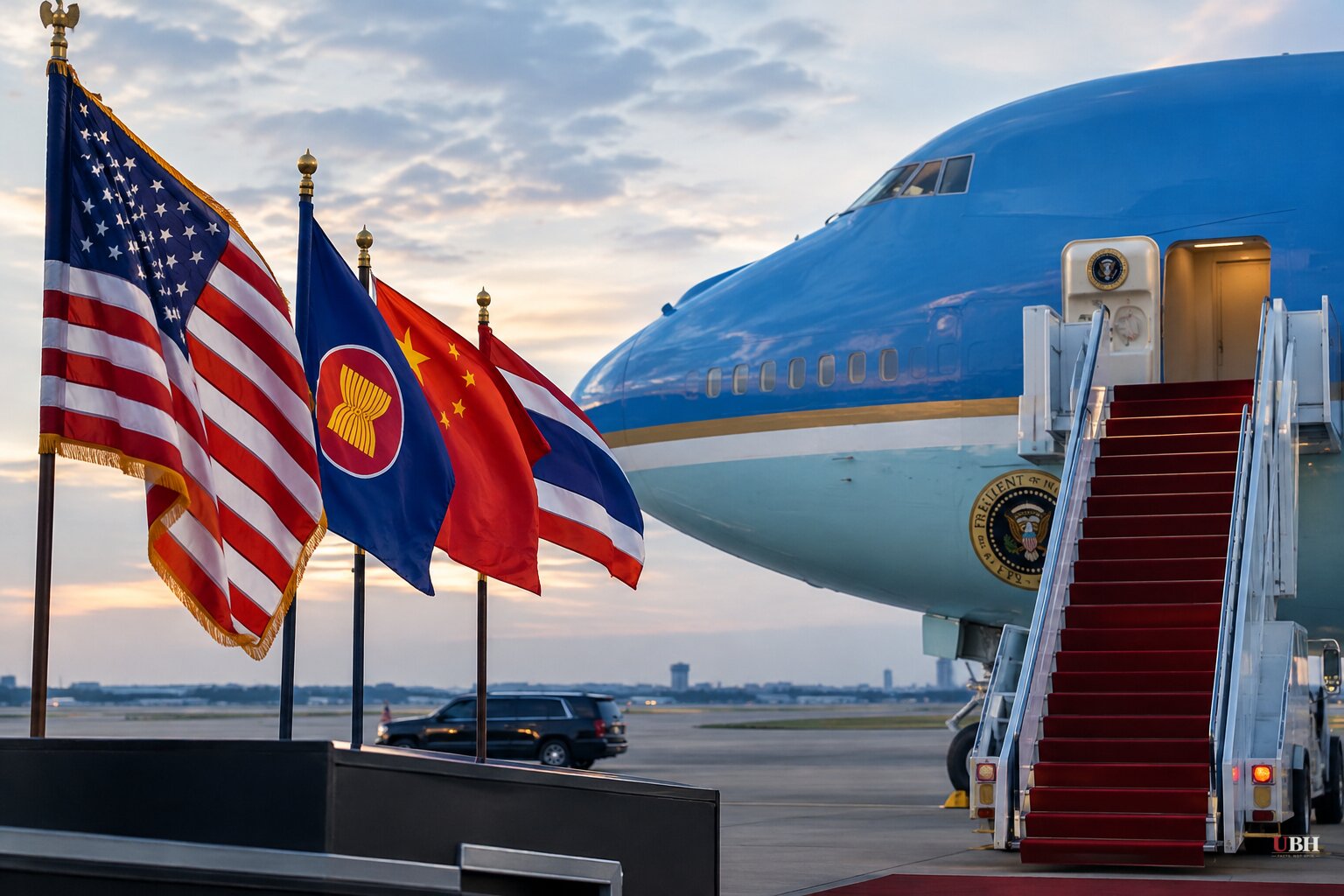
Since Republicans lost the midterms earlier this month, Trump has faced a shaken West Wing, an air-travel meltdown, and the fallout from Nvidia CEO Jensen Huang's resignation. Today, Monday, Nov. 16, he heads overseas.
The Council on Foreign Relations lists the trip as running Nov. 16 to 19. The first stop is Manila for a U.S.-ASEAN special summit on Tuesday. After that comes the Asia-Pacific Economic Cooperation (APEC) summit in Shenzhen, China, where leaders meet Nov. 18 and 19.
What is on the schedule
The White House says Trump will sign a trade agreement with Thailand in Manila and announce a batch of commercial deals. He will be the "guest of honor" at a leaders' dinner. He is also set to attend the first Quad leaders' meeting (U.S., Japan, India, Australia) since he returned to office in January 2025.
The CFR says the administration also wants Southeast Asian governments to join Pax Silica. That U.S.-led coalition coordinates export controls and investment monitoring on chips, AI, critical minerals and data centers. Trade deals with Vietnam and possibly Thailand could also be announced.
In Shenzhen, Trump is due to meet Xi Jinping for the fourth time in just over a year. That meeting will be followed by a three-way session with Xi and Putin, which CNN places on Thursday, Nov. 19. Putin first proposed it.
Chinese Foreign Ministry spokesperson Mao Ning said the three men "will exchange views in depth on safeguarding world peace and promoting strategic stability in major-power relations." She called the meeting "of groundbreaking significance." The AP reports the topic is the leaders' nuclear stockpiles. The CFR says Iran and Ukraine could also come up.
Trump has said Ukraine is not up for debate. Kyiv is worried anyway. Some analysts have compared the format to the 1945 Yalta conference, and Ukraine fears Putin will use the session to press Trump and Xi toward a settlement on Moscow's terms.
Elon Musk is traveling with Trump to APEC. CNN puts Musk's political spending at $445 million, and it did not deliver Republican majorities. The reason for his presence has not been explained.
The Nvidia problem
Huang resigned last week after admitting to an affair with a woman suspected of being a Chinese spy. White House officials say Trump will not raise the matter with Xi, and Trump has said the same. A senior U.S. official told CNN: "It's probably not something we're going to read the Chinese in on at the moment." The officials said they also do not expect the two men to discuss the revived debate inside the administration over tightening chip restrictions on China.
Administration officials say the Xi meeting is meant to implement the existing U.S.-China trade agreement. The CFR says Trump would also like a further extension of the trade truce and the rare-earth export truce. He would also like an AI hotline that both countries have already agreed in principle to set up.
Allies uneasy, analysts skeptical
The Los Angeles Times reports that delegates in Manila fear the stop is lip service ahead of the China leg. One Chinese official told the paper, "We do not forget our friends," in reference to Trump.
The CFR calls Trump's second-term Asia policy broadly unpopular across the region. It cites tariffs on allies and cuts to defense support, and says visits this year by Marco Rubio and Pete Hegseth drew angry responses. It rates the trip's prospects as slim. It points to turmoil at Nvidia and growing demand in places like Malaysia for data centers serving Chinese companies as obstacles to Pax Silica.
Brookings scholar Jonathan Czin is blunter. He says the last two Trump-Xi summits were "all thunder, no rain." He says both sides now "prioritize optics over any substance," which he calls "pantomime diplomacy."
Kyle Chan, also at Brookings, sees a narrow but real opening: an AI incident notification mechanism the two countries agreed to in principle. He argues expectations should stay low and the focus should be on limited information-sharing.
A familiar presidential move
There is plenty of precedent. Kurt Campbell, a deputy secretary of state under Joe Biden, said presidents in hard domestic moments tend to "get on an airplane and go international." Obama went to Beijing days after losing the Senate in 2014. George W. Bush went to APEC in Vietnam after losing Congress in 2006.
Edgard Kagan, a former U.S. ambassador to Malaysia, said foreign trips are "something only the president can do," and that they help "remind people that, you know, the president is still the president."
The constraints are real. Democrats take control of Congress in January, which AP says will limit Trump's ability to threaten tariffs or military action. Kurt Tong, a former U.S. ambassador to APEC, said the president "will undoubtedly be seeking to use this trip to reassert leadership and authority."
Several Asian government officials told the LA Times the election has little effect on Trump's power abroad. Some fear it could push him to focus more heavily on foreign affairs.
Several questions remain open. Will any ASEAN government sign onto Pax Silica? Will the Xi meeting yield the AI hotline and a truce extension? And will anything from Thursday's Xi-Putin session touch Ukraine despite Trump's assurance that it will not?
Sources used for this briefing
7 links from 7 independent newsrooms (syndicated copies of the same report count once)
These are the sources it draws on, linked so you can verify.
More coverage: Donald Trump


