
Unbiased headlines. Facts, not spin.
Unbiased Headlines is an independently owned news organization. We bring you the facts, not opinions, written fresh from 110+ named sources. Sources linked so you can verify it yourself.
 politics
Major Story (8/10)
FAA Probe Narrows to Two Routers as Trump Blames 'Old Equipment' and HPE Says Its Devices Did Not Fail
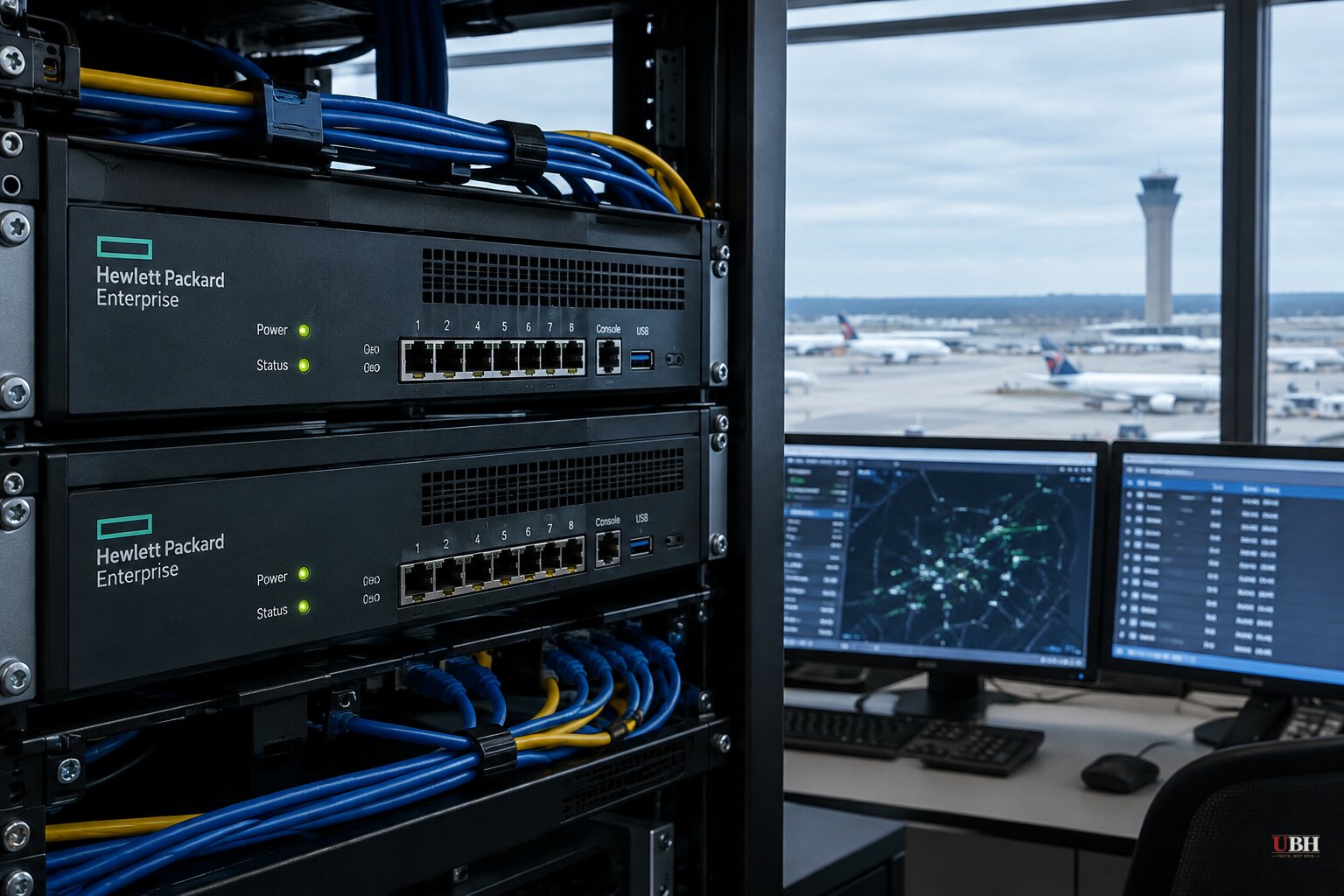
Since the Nov. 13 ground stop halted every U.S. departure for more than four hours, the investigation has narrowed to two remote FAA sites, and the blame is being traded between a contractor, a router maker and a decades-old network.
President Donald Trump spoke outside the White House on Monday, Nov. 16, before leaving for Asia. "What you saw on Friday was very, very old equipment that had a heart attack," he said. On a fix, he said: "We essentially want to blow it up and put new in, and we can do it simultaneously with very little trouble. So that's what we're doing, but we need the funding to get it done."
Where the investigation stands
The FAA said in a question-and-answer statement posted Sunday, Nov. 15, that data began flooding its FTI telecommunications network at about 1,000 connection attempts every four to five seconds. Its legacy equipment became unstable, disrupting aircraft communications and radar feeds.
The instability hit 17 of the FAA's 22 en route centers and spread into several approach control facilities. FAA Administrator Bryan Bedford said nothing went fully dark. The agency calls it instability, not an outage, and says recovery to normal operations will be slow and steady.
The initial investigation points to a radar site in Amarillo, Texas, and a radio communications site in El Dorado, Arkansas. FAA acting Chief Technology Officer Rebecca Guy said technicians found two locations hitting the network at that rate and disabled both. The network then stabilized.
Contractor L3Harris was replacing copper connections with fiber at El Dorado and deploying a new router there that day. Transportation Secretary Sean Duffy said a router installed in Amarillo about three weeks earlier "started to flood our system as well." The FAA lifted the ground stop at 8:15 p.m. ET.
Who is blamed for what
Duffy has not settled on a cause. "We think it was the installation or the router that was the bad actor," he said on Fox News Sunday. Earlier he put the open question this way: "We're working to determine whether we had incompetence, meaning was it user error or installer error from L3Harris, or did they install a faulty router? We haven't determined what the fault was."
The Wall Street Journal reported, citing government and industry officials, that the Arkansas unit was a new Juniper Networks router installed by L3Harris. The Journal also reported that data from it and the Texas router overwhelmed the system. The FAA's own statement does not name a vendor.
Hewlett Packard Enterprise, which owns Juniper, rejects the idea that its hardware failed. "They did not fail," a company spokesperson said. The company also said its routers operated as configured.
L3Harris says it takes the issue seriously and is supporting the investigation. Duffy said he has spoken with L3Harris's chief executive, and that FAA, Juniper and Cisco engineers are helping test the removed routers at L3Harris's Florida headquarters.
Duffy said there is no indication of a foreign cyberattack, and no source has reported evidence of a deliberate or malicious act. Bedford asked on Saturday whether it was a faulty installation, a faulty configuration or "a bad piece of router technology." Nobody has answered that yet.
The broadcast function
Officials pointed to a broadcasting feature on the routers that pushed data more widely across the network than needed. The FAA turned that function off on the new routers "as a precaution." Its statement puts the number at approximately 60. Duffy cited 69 on Sunday television. The agency has not reconciled the two figures publicly.
The FAA says the flood destabilized its legacy time-division multiplexing equipment, and that none of the facilities already upgraded under its modernization program went down. It also says replacements at remote sites have been done in daylight for decades without trouble, but that it will reevaluate how and when it does such work.
The money
Trump's framing and the agency's account overlap but are not identical. The FAA says old equipment became unstable. The documented trigger was new routers installed during a copper-to-fiber transition. The Transportation Department's inspector general previously found that a 2009 outage of the same network, which affected 129 facilities, involved a router configuration error during a fiber transition.
Duffy is pressing Congress for $50 billion to replace the network. He puts completion at late 2028 or early 2029 if funding comes now. Until then, the existing network stays in service. The results of the Florida diagnostics will show whether the two routers were defective, badly installed or badly configured, and that answer will determine who owns the failure.
Sources used for this briefing
8 links from 8 independent newsrooms (syndicated copies of the same report count once)
These are the sources it draws on, linked so you can verify.
More coverage: Donald Trump


