
Unbiased headlines. Facts, not spin.
Unbiased Headlines is an independently owned news organization. We bring you the facts, not opinions, written fresh from 110+ named sources. Sources linked so you can verify it yourself.
 politics
Major Story (7/10)
Five EU Countries Announce Rwanda Return Hub for Rejected Asylum Seekers, Targeting 2027 Start
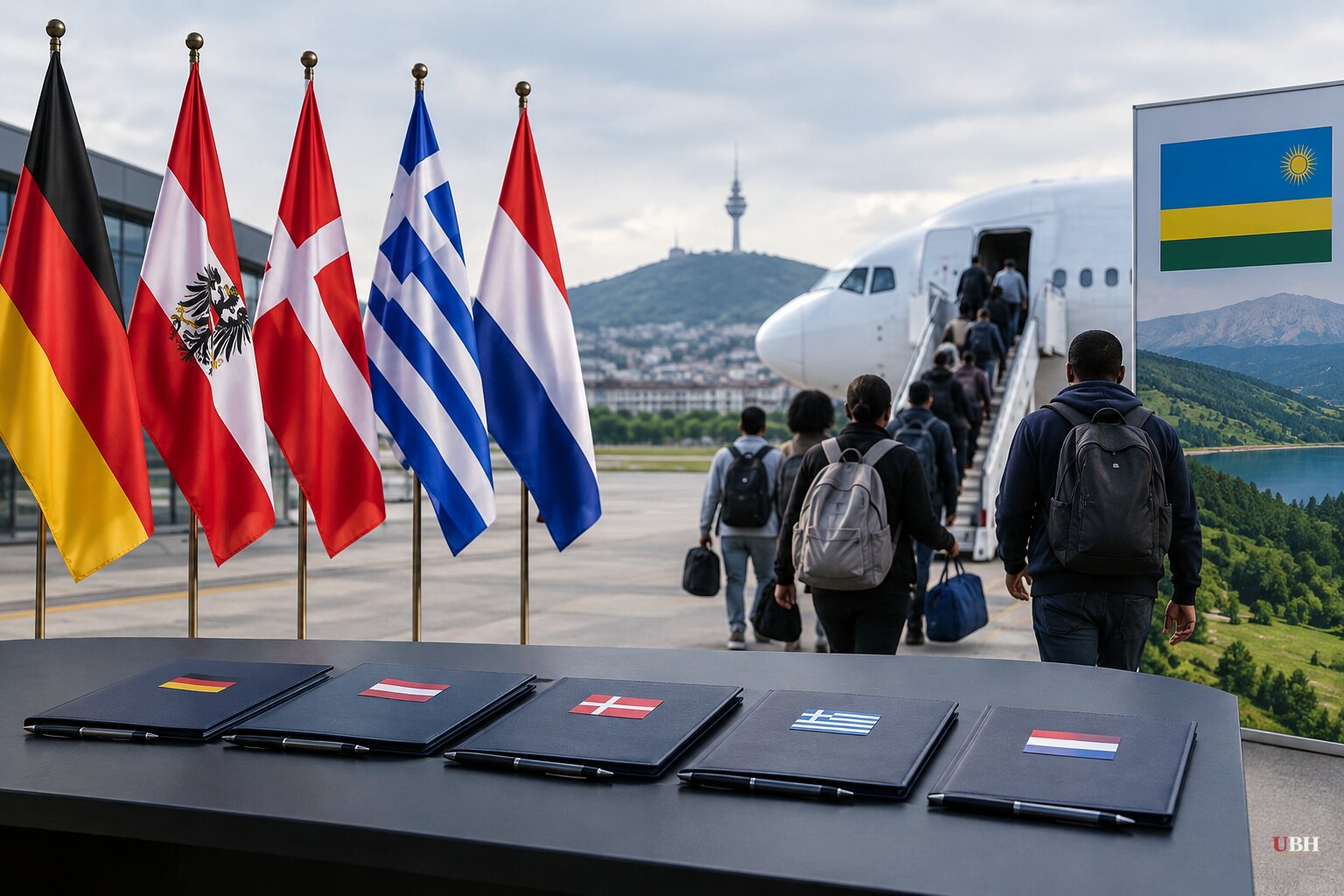
Five EU governments announced Monday, Nov. 16, in Vienna that they will build a joint "return hub" in Rwanda for migrants who have exhausted their legal options to stay in Europe.
The five are Germany, Austria, the Netherlands, Denmark and Greece. They are the first to use the EU's newly agreed returns law, which allows removals to a third country that is not the migrant's homeland.
The governments say they want transfers to begin in 2027. Diplomatic sources have put the start anywhere from early in the year to mid-year. The statement said "concrete negotiations with partner country Rwanda will begin for implementation," so the deal with Kigali is not finished.
What the plan covers
The hub is designed as a pilot for about 100 people, according to diplomatic sources, with each country possibly sending around 20.
The scheme applies to people with enforceable return decisions, meaning rejected asylum seekers or others with no right to live in the EU. It does not cover people with pending claims, which separates it from the British Conservative government's scrapped Rwanda plan. Minors are excluded.
The Dutch government said the first phase will "only return single men," and that the Netherlands will focus on people from countries in Rwanda's region. Germany plans to target migrants who refuse to cooperate in establishing their identity and who come from countries reluctant to take their nationals back, according to people familiar with the negotiations.
The facility is described as open, not a closed detention center. After a period whose length has not been set, migrants could integrate in Rwanda, return to their home country, or go to another country where they have a right to reside. The Dutch government said those who stay would get residence rights and access to education, healthcare, the labor market and the legal system.
Frontex, the EU border agency, will have no role in the initial stage.
The politicians' pitch
Danish Prime Minister Mette Frederiksen called it "a game changer." She said: "We will break down the business model of human smugglers. We will take back control of our borders and we will remove the incentives for illegal migration."
Austrian Chancellor Christian Stocker called it "a truly historic paradigm shift in migration policy." German Interior Minister Alexander Dobrindt said return hubs offer "a positive approach" for people with no prospects in Europe whose home countries won't cooperate on repatriation.
The numbers behind the push are blunt. Official estimates show fewer than 30 percent of migrants ordered to leave the EU actually go.
Rwandan Interior Minister Vincent Biruta said his country would offer "a second chance" to people with no right to remain in Europe. He said Rwanda would work on "correcting the global imbalance in economic opportunities," which he called a key driver of irregular migration. The European Commission said it has been "closely following the preparatory work."
Rights groups and the legal fight
Amnesty International reacted to the announcement by citing "illegal practices" and a "serious violation of human rights." Other rights groups warn of risks including indefinite detention, psychological harm and violations of non-refoulement, the rule against sending people to places where they face harm.
Critics also point to Rwanda's own record. The U.S. State Department found in 2024 that the government allows security forces and civilian officials to commit human rights abuses with impunity.
The five governments say the plan complies with EU and international law. They have a precedent of sorts. In April, an Advocate General at the European Court of Justice found Italy's Albania arrangement compatible with EU return and asylum law, provided migrants' rights are fully protected. That opinion is non-binding, and the court has not issued a final ruling.
Individual deportees would likely still be able to bring cases before the ECJ or the European Court of Human Rights. Euronews reports the hub will stay small until the risk of courts blocking deportations diminishes.
Open questions on site and money
The five countries will cover the full cost of transporting and housing migrants in Rwanda. No estimate was given in Vienna because talks are ongoing.
Diplomatic sources said the hub will not use the British-funded facilities built in Kigali. AFP reported before the announcement that a center in Gashora, which German broadcaster NTV says Rwanda has used to hold migrants from Libya since 2019, was expected to serve as the site. The five governments have not confirmed a location. The UN's International Organization for Migration said it is in talks with some EU countries on plans and could play a supporting role.
In Britain, Andy Burnham said last week that the UK had held no direct talks with the governments involved but would "watch that with interest, learning from what went on in the past." Downing Street has not ruled out joining.
Next comes the Rwanda negotiation itself. Its outcome will settle the site, the length of stay, the per-person cost to taxpayers in five countries, and whether the first 100 transfers happen in 2027 or get tied up in court.
Sources used for this briefing
8 links from 8 independent newsrooms (syndicated copies of the same report count once)
These are the sources it draws on, linked so you can verify.


