
Unbiased headlines. Facts, not spin.
Unbiased Headlines is an independently owned news organization. We bring you the facts, not opinions, written fresh from 110+ named sources. Sources linked so you can verify it yourself.
 politics
Notable (6/10)
Event date: November 14, 2026 ·
Interior Report on Four Colorado Firefighter Deaths Cites Understaffing, Unexpected Fire Behavior and Quick-Suppression Policy
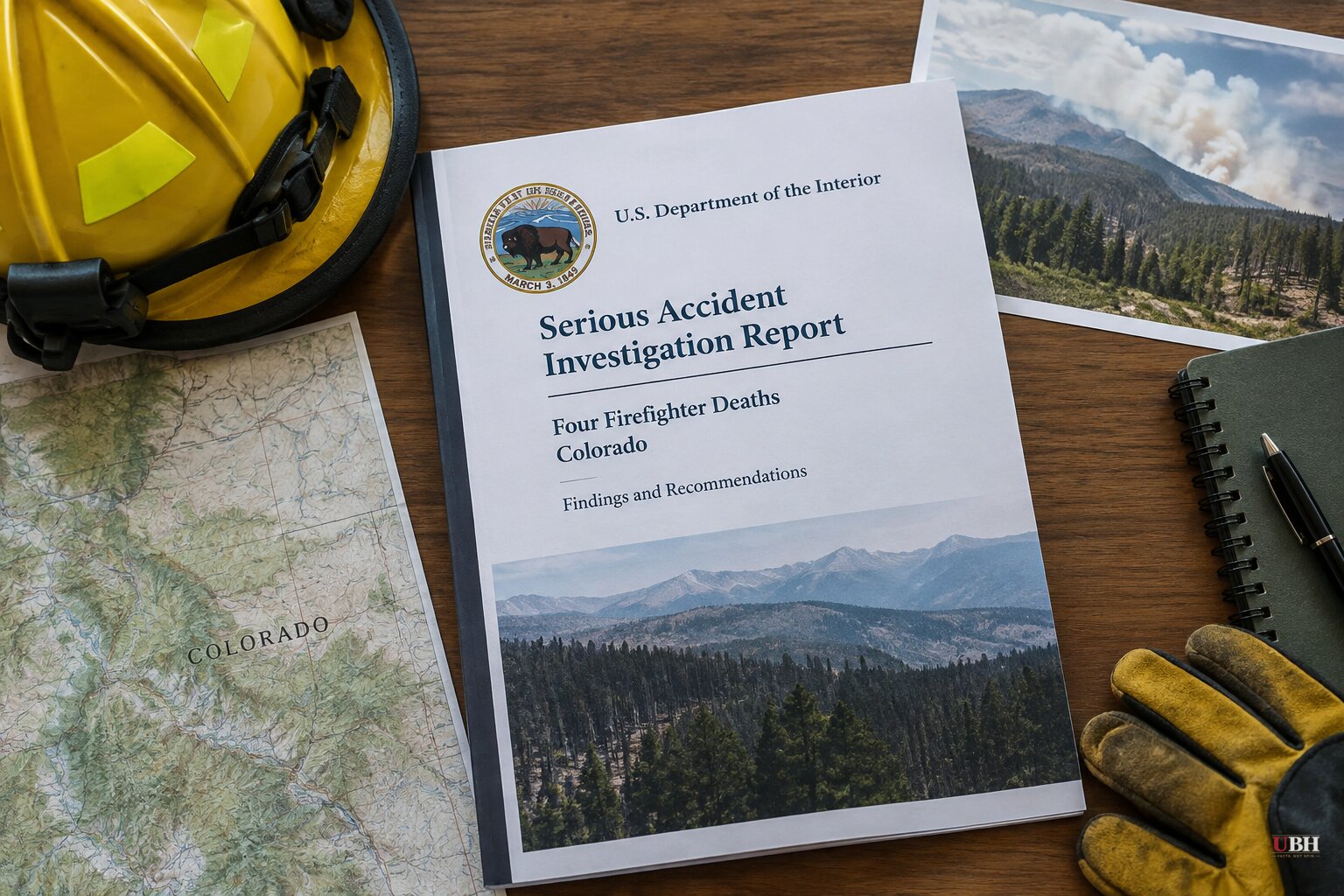
A federal investigation into the deaths of four wildland firefighters in western Colorado points to a mix of bad luck, thin staffing and a policy that pushed crews toward small fires on a dangerous day.
The U.S. Department of the Interior released the Serious Accident Investigation report this month. It examines the Knowles fire, which merged with others to form the Snyder Fire on the Colorado/Utah border.
What the report found
The report lists several contributing factors: unexpected fire behavior, chronic understaffing, a lack of highly trained employees, and a new policy to quash fires quickly.
The dead worked for the U.S. Forest Service and the newly created U.S. Wildland Fire Service. They were members of the Rifle Helitack crew, dropped into a remote area to work a fire line. Strong winds then blew the fires toward them and overtook the crew.
Emily Barker, Nick Hutcherson and Sydney Watson were killed at the scene. Nathan Matthews was badly burned and died on July 24. A fifth crew member was burned but survived.
The suppression push
The report says decisions on how to fight the Knowles fire were driven by the desire to prevent the spread of cheatgrass, protect sage-grouse habitat and protect a downwind community.
Those pressures, the report says, "established an organizational posture to aggressively suppress new starts while small." It continues: "This policy framing drove the decision to insert helitack firefighters onto small wilderness starts on a day with extreme fire weather conditions forecast."
The report's key finding is that it does not simply say the weather turned. It says the forecast was already extreme and the posture of the response still favored sending people in.
The Associated Press describes the underlying approach as a policy of stomping out all wildfires quickly that the Trump administration revived after it had been discredited. The report's own language centers on the suppression posture and its effect on the decision to put the crew on the ground.
The day of the fire
Multiple lightning fires ignited on June 27 in Colorado's Black Ridge Canyon Wilderness. The region was in extreme drought and the winds were picking up.
An incident team coordinated the response by calling in aircraft and crews. At one point, the official in charge ordered all aircraft to the Jones fire. Constant high winds challenged every pilot that day, and many told investigators it was the most difficult flying of their careers, the report says.
That means air resources were stretched and hard to fly in the same conditions that were pushing the fires toward the ground crew.
The families want more
Ron and Lisa Hutcherson, parents of Nick Hutcherson, met with investigators and visited the site. They say the crew should not have been sent out ahead of the fire because dangerous winds were in the forecast. They believe the deaths were preventable and resulted from a failure of leadership and oversight.
"Telling us how the fire reached our son does not answer why he was still there," Ron Hutcherson said in an email to The Associated Press. "Who was watching the bigger picture? Who was responsible for bringing those firefighters home while there was still time?"
Lisa Hutcherson said: "My son depended on the people responsible for tracking the fire threatening him and making the decisions needed to keep him safe. We want answers, and we want accountability."
What is at stake
The findings land on an agency structure that is still being built. The U.S. Wildland Fire Service is newly created, and the report describes chronic understaffing and a shortage of highly trained people across the firefighting workforce.
That is a management problem, not just a funding line. A government that sets an aggressive suppression posture, then staffs it thinly, is asking small crews to carry the risk.
The report names factors and a policy framing. The Hutchersons are asking for something more specific: the person or people who were tracking the fire and had the authority to pull the crew out. The report's public findings, as released, do not answer that question for the families.
Sources used for this briefing
7 links from 6 independent newsrooms (syndicated copies of the same report count once)
These are the sources it draws on, linked so you can verify.


