
Unbiased headlines. Facts, not spin.
Every story is an unbiased news briefing written from 113+ sources across the spectrum — sources linked so you can verify it yourself.
 energy
Major Story (8/10)
September 24, 2026 at 10:06 AM
energy
Major Story (8/10)
September 24, 2026 at 10:06 AM
Saudi Arabia Sells Nearly 100 Million Barrels to Asia in a Week as Hormuz Claims and Ground Reality Diverge
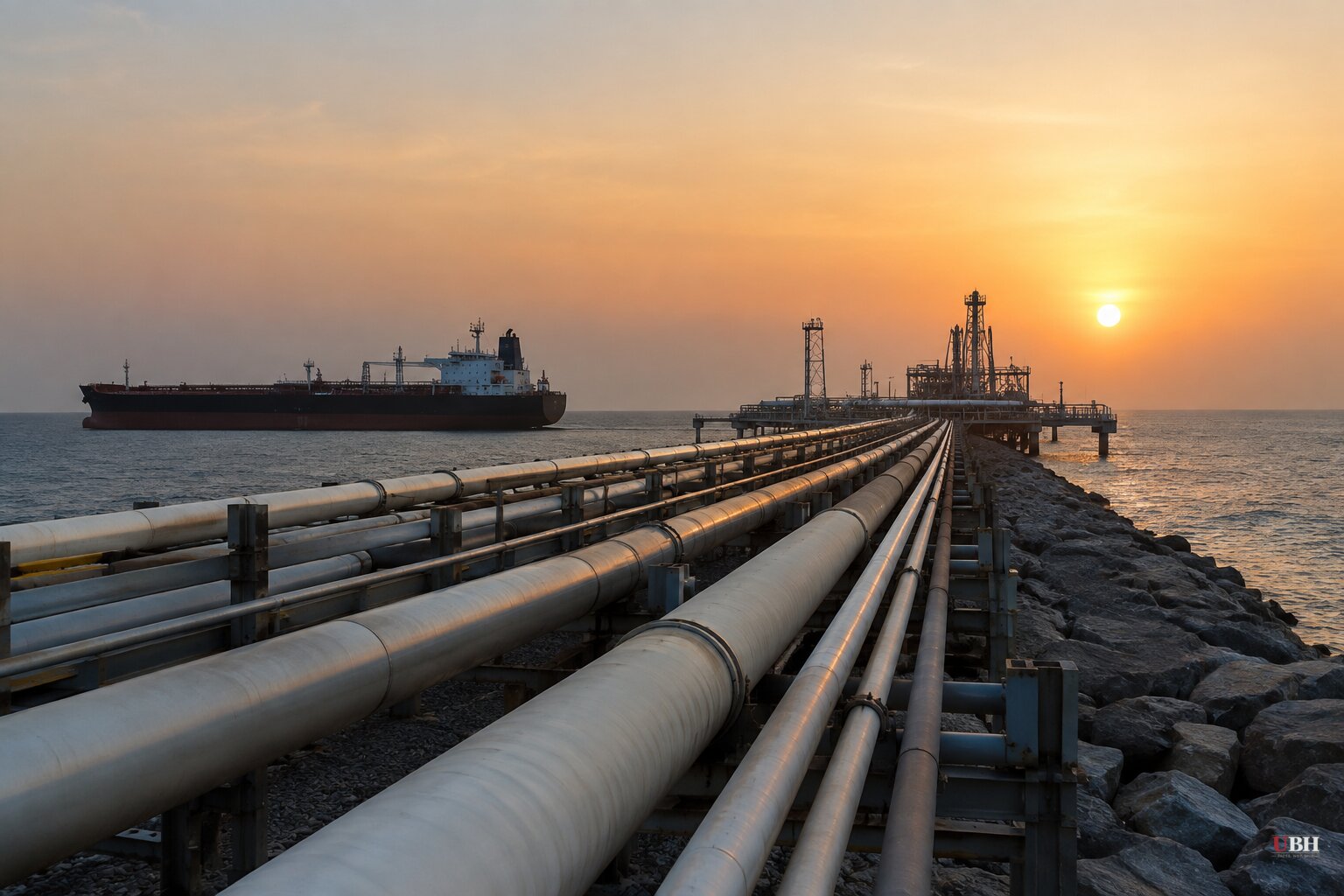
Since Saudi Aramco began restarting its Yanbu-bound East-West pipeline on September 22 and the Houthis warned Egypt, Turkey and Pakistan against joining the Saudi fight, the numbers behind the seven-month-old Iran war have moved in two directions at once. Riyadh found a way to flood Asia with crude even before the pipeline is fully back. Separately, the data shows the region still hasn't recovered.
Saudi Arabia sold almost 100 million barrels of oil to Asian buyers in roughly one week, according to traders cited by both Bloomberg and The National. That's about a day's worth of total global demand, and more than double recent Saudi-to-Asia flows through the Strait of Hormuz. The crude, headed to Chinese state and independent refiners along with buyers in India, Japan and South Korea for October and November delivery, will move through Hormuz rather than the still-limping East-West pipeline.
Aramco is even offering to manage shipping logistics all the way to the customer, traders told Bloomberg. That's new. Gulf producers used to sell crude free-on-board, meaning buyers sent their own tankers. Since the war started, refiners have been reluctant to expose their own ships to attack, so sellers are absorbing more of the risk themselves.
The Numbers Don't Fully Agree
U.S. Energy Secretary Chris Wright told CNBC this week that the Strait of Hormuz has effectively reopened under American protection, with flows hitting 18 million barrels a day, which he called "basically pre-conflict levels," according to Breitbart. Wright also called the East-West pipeline attack a "brief and temporary interruption" that would be fixed within days.
Kpler's shipment-tracking data for the region as a whole shows something different. Asia is on pace to import 23.96 million barrels a day of crude in September, according to Kpler data cited by Reuters columnist Clyde Russell and reported by Gulf News. That's the highest monthly total since February, before the war, and up from 23.38 million bpd in August. But it's still about 13% below pre-war levels. China, the world's largest crude importer, brought in 8.93 million bpd in August, up 6.2% from July, but still trailing where it was before the conflict, per Gulf News.
Wright's figure and Kpler's figure aren't measuring the same thing. His is Hormuz throughput; theirs is total Asian import volume, which includes cargo lost to the East-West pipeline outage and other disruptions. Both can be technically accurate while telling different stories about how normal things actually are. Independent analysts, unlike Wright, have told Breitbart the East-West pipeline could take up to six weeks to fully repair, not days. Neither Aramco nor Saudi officials have released an official repair timeline, according to Breitbart.
The Houthi Wildcard
Hussain Abdul-Hussain, a research fellow at the Foundation for Defense of Democracies, told Fox News Digital that Saudi Arabia is now facing "the biggest threat" to its oil production since the kingdom was founded in 1932. He argues Iran pushed the Houthis to blockade Saudi Arabia near the Bab el-Mandeb Strait after its own Hormuz blockade failed to force other Gulf exporters into solidarity. Abdul-Hussain, whose think tank has consistently pushed a hawkish line on Iran, said he doesn't expect Washington to intervene militarily: "We'll probably offer them advice and tell support, but I don't think we, the United States, will get involved with this war over Bab el-Mandeb."
Saudi air defenses destroyed a Houthi drone approaching airspace near Mecca on Tuesday, according to Fox News. That follows the Houthi warnings issued earlier in the week telling Egypt, Turkey and Pakistan to stay out of the fight.
China's Play in Beijing
Chinese Foreign Minister Wang Yi met Iranian Foreign Minister Abbas Araghchi in Beijing on Wednesday and urged Tehran to reopen Hormuz and return to the June memorandum of understanding with the United States, according to Breitbart, citing China's Foreign Ministry. Araghchi told Chinese state media that "Iran is not interested in continuing the conflict, hopes to return to a diplomatic path toward a settlement," and insisted Iran still considers the MOU valid, even though Breitbart notes Iran has continued attacking vessels in the strait since Saturday.
Araghchi didn't get a new deal out of the BRICS summit in New Delhi over the weekend. The bloc's joint statement left out any denunciation of American and Israeli strikes on Iran, according to Breitbart, a sign of Tehran's shrinking diplomatic leverage even as China, its largest oil customer, pushes it toward de-escalation.
The Bigger Picture
The Associated Press reported that oil is running around $100 a barrel, seven months into the war, higher than before the conflict but nowhere near the doomsday scenarios once forecast. Gulf producers and the U.S. military have engaged in what AP called a "clandestine game of whack-a-mole," building workarounds for workarounds, from the UAE's Oman-to-Fujairah pipeline to a U.S.-supervised smuggling route near Oman that ship operators use with location trackers switched off.
AP flagged the real vulnerability: China has been drawing down its own commercial oil stockpiles to keep its refiners running, a cushion that cannot last indefinitely. Combine that with an unrepaired pipeline, an unresolved Houthi threat near Bab el-Mandeb, and Iran's continuing attacks in Hormuz since Saturday, and the durability of current workarounds depends on two uncertain timelines. One is whether China's stockpiles last long enough. The other is whether the six-week pipeline repair estimate, if accurate, holds.
Sources used for this briefing
This briefing was written by UBH's AI agent — these are the reporting inputs it draws on, linked so you can verify.


