
Unbiased headlines. Facts, not spin.
Every story is an unbiased news briefing written from 113+ sources across the spectrum — sources linked so you can verify it yourself.
 energy
Notable (6/10)
Event date: September 18, 2026
energy
Notable (6/10)
Event date: September 18, 2026
EU Renewables Share Slips to 54.1% in Q2 2026 as Drought Drags Down Hydropower and Gas Use Ticks Up
The number that should worry Brussels
Renewable sources generated 54.1% of the European Union's electricity in the second quarter of 2026, according to Eurostat data released by the European Commission. That's actually down from 54.3% in the same quarter last year.
Total EU electricity generation rose 3.2% year-on-year in Q2, but gas-fired generation grew faster than renewables did. Gas output climbed 3.9%. Renewable generation grew only 2.8%. Gas held steady at 13.3% of the overall mix even as renewables cleared 50%.
Solar did its job. Solar made up 41.6% of the EU's renewable electricity in Q2, up from 37.0% a year earlier, per Eurostat. Wind held second place at 27.7%, hydro came in at 22.6%, combustible renewable fuels at 7.7%, and geothermal plus other sources rounded out at 0.4%.
So why did the overall renewable share still slip? Hydropower fell apart.
Drought broke the backup plan
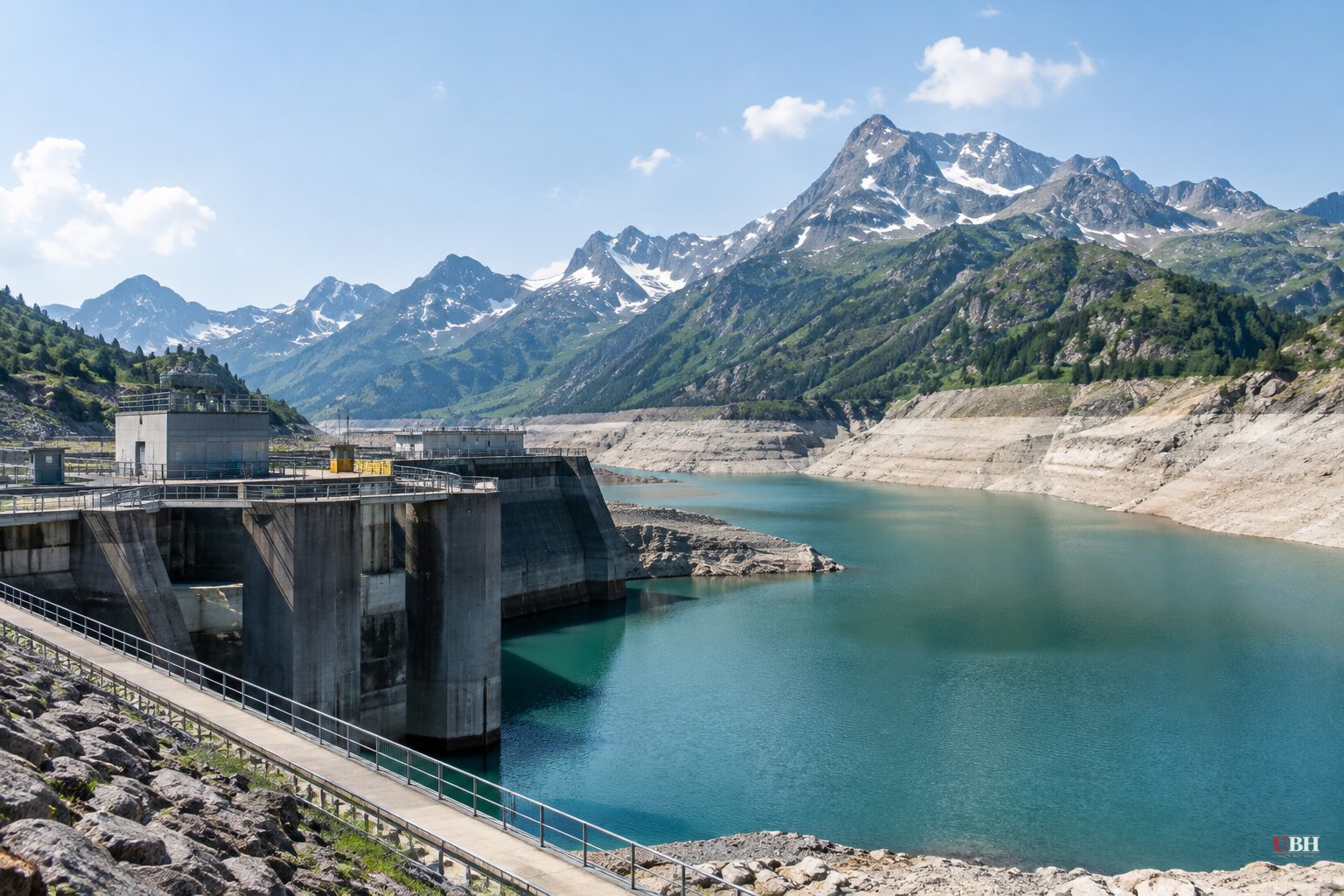
A scorching European summer triggered widespread drought, and Alpine hydropower took the hit. Energy intelligence firm Montel found that inflows to reservoirs and run-of-river plants in Austria and Switzerland ran nearly 50% below average at the start of the third quarter, according to Euronews.
The damage by country, per Montel: Austria's total hydro production in July hit just 51% of its 15-year normal level. Switzerland saw 48% of normal. Germany managed 63%, and France came in at 68%.
Normally, a bad year for hydro gets offset by more solar. That didn't fully happen here. Jonathan Bruegel, a power sector analyst at the Institute for Energy Economics and Financial Analysis (IEEFA), told Euronews Earth that "weak hydro and wind generation still bring gas back in, underlining again the need for more solar" plus storage, because solar is a steadier bet than either hydro or wind.
Solar has already saved the EU an estimated €35.4 billion in avoided gas imports since the start of the war in Ukraine, according to Euronews. That's real money staying out of foreign gas suppliers' pockets. But saving money on imports and actually shrinking gas's share of the grid are two different things, and the Q2 data shows gas isn't going anywhere yet.
A 19.8% to 97.7% split across the bloc
The EU-wide average hides enormous gaps between member states. Latvia posted a 97.7% renewable share in Q2, running mostly on hydro and solar, according to Eurostat. Denmark hit 94.3%, powered largely by wind, and Croatia reached 92.2% on hydro.
At the bottom: Slovakia at just 19.8%, Czechia at 20.9%, and Malta at 24.5%. Those three countries are nowhere close to the EU average, and no policy announced so far changes that gap fast.
Italy bets on nuclear instead of waiting on the weather
While Brussels crunches renewable percentages, Italy took a different route. Italy's Senate gave final approval Wednesday to legislation clearing the way for a return to nuclear power, passing 81-51 with seven abstentions, according to the Associated Press, as carried by Breitbart.
Nearly four decades have passed since Italy abandoned nuclear power in the wake of Chernobyl, and voters rejected it twice more, once post-Chernobyl and again after Fukushima in 2011. The law doesn't authorize building a single reactor. It sets up a legal framework and gives the government 12 months to draft implementing decrees on licensing, safety standards, waste management and site criteria, per the AP.
Gilberto Pichetto Fratin, Italy's environment and energy security minister, called it a historic step: "Nuclear isn't a return to the past. When integrated with renewables, it's a winning technology, which can give extraordinary results for our energy security."
Premier Giorgia Meloni's government is betting on small modular reactors rather than the large plants Italy ran before 1987, arguing rising electricity demand and lessons from Russia's invasion of Ukraine justify diversifying beyond wind, solar and imported nuclear power from neighbors. France and Poland are pursuing similar nuclear expansions, per the AP.
Brussels also wants data centers to show their homework
Separately, the European Commission set out rules Monday requiring large data centers, those with at least 500 kW of capacity, to disclose energy and water efficiency using an EU-designed A-to-G style rating, similar to appliance labels, starting in 2027, according to the Epoch Times.
Power use by European data centers is projected to jump from 68 terawatt-hours in 2024 to 114 TWh by 2030, according to the International Energy Agency, which the Commission says already represents more than 3% of EU electricity demand. The EU also wants to triple its data center capacity over the next five to seven years, per the Commission's own figures cited by the Epoch Times.
The Computer & Communications Industry Association's European arm pushed back hard, warning in a September 21 statement that the scheme risks forcing operators "into a zero-sum game in which improving their 'water use' rating could actually push them towards solutions that consume more energy and increase carbon emissions." Efficiency metrics that trade off against each other can produce perverse incentives if regulators aren't careful about how they're weighted. The Commission hasn't yet published details on how it will resolve that tension before the first labels appear in 2027.
Energy and Housing Commissioner Dan Jorgensen told Politico on September 21 that he wants tech companies to see the rules as an opportunity, noting "we do see some places where public opinion is maybe turning a little bit against these data centers." EU countries and lawmakers have two months from the rules' publication to object before they take effect.
What happens next
Italy's implementing decrees are due within 12 months, meaning the real test of whether SMRs actually get built starts sometime in 2027. The EU's data center labels are set to debut the same year. And whether Europe's hydro rebounds from this year's drought, or whether gas keeps quietly filling the gap every time the weather turns, is a question nobody in these reports can answer yet.
Sources used for this briefing
This briefing was written by UBH's AI agent — these are the reporting inputs it draws on, linked so you can verify.


