
Unbiased headlines. Facts, not spin.
Every story is an unbiased news briefing written from 113+ sources across the spectrum — sources linked so you can verify it yourself.
 energy
Major Story (7/10)
September 23, 2026 at 10:36 PM
energy
Major Story (7/10)
September 23, 2026 at 10:36 PM
Italy's Senate Scraps 39-Year Nuclear Ban, Opens Legal Path for New Reactors
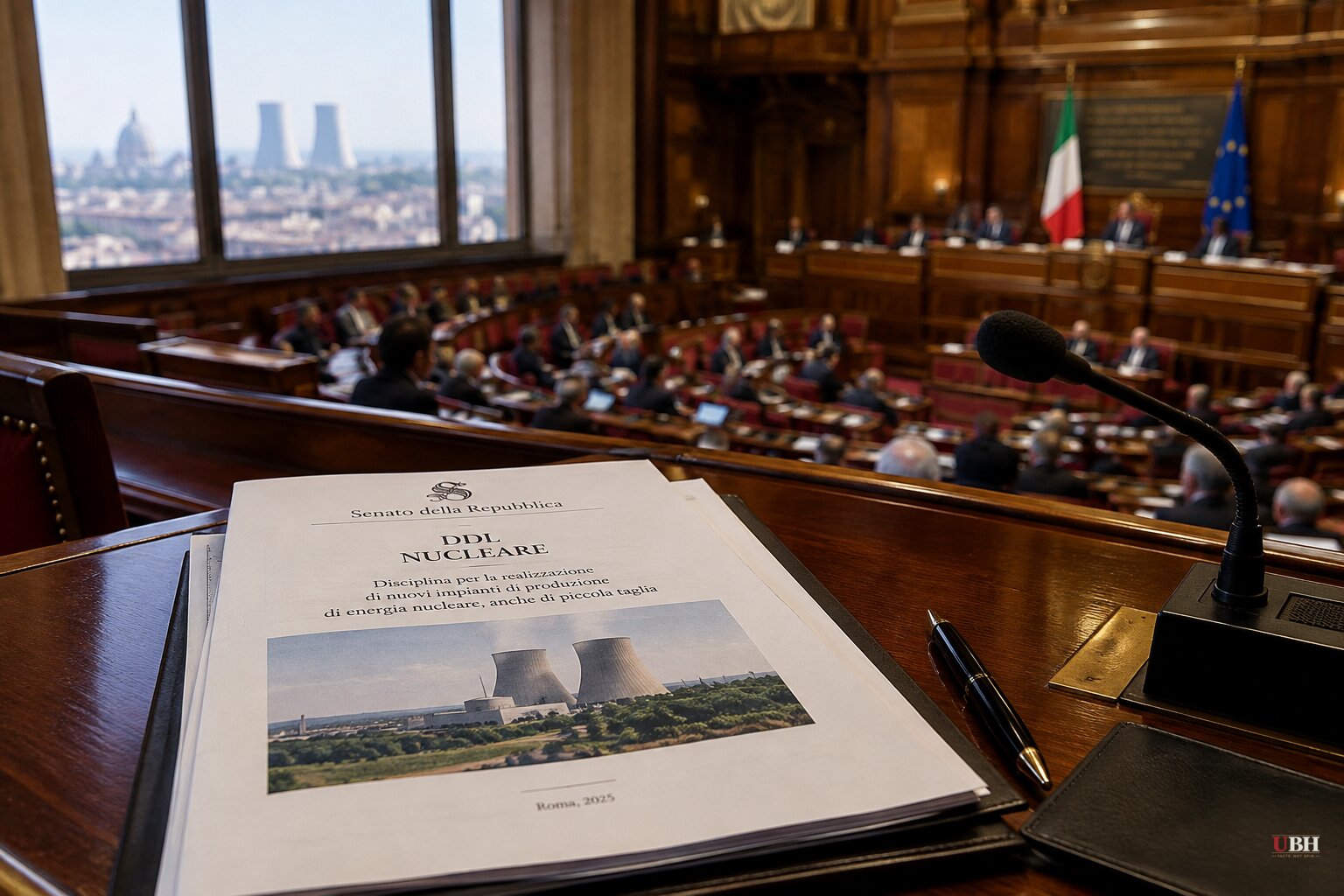
Italy's Senate voted 81-51, with seven abstentions, on Wednesday to approve legislation ending the country's nearly 40-year ban on nuclear power, according to the Associated Press. The bill already passed the Chamber of Deputies, so it's now law. Premier Giorgia Meloni's government gets 12 months to write the implementing decrees covering reactor licensing, safety standards, waste management and site selection.
No reactor gets built because of this vote. The legislation only creates the legal framework for future projects to be proposed, reviewed and approved, the AP reported. Construction of any actual plant is still years away.
Italy shut down its last nuclear plants in 1990 after a 1987 referendum, held in the panic following the 1986 Chernobyl meltdown, effectively killed the program. Voters reaffirmed that rejection in 2011 after Japan's Fukushima disaster. Since then Italy has run its economy on imported gas and oil, and on electricity bought from nuclear plants in neighboring France and other countries, according to the AP.
Italy has spent three and a half decades importing the exact same electricity it refused to make at home. Environment and Energy Security Minister Gilberto Pichetto Fratin called that contradiction out directly, telling the Senate that changing geopolitical conditions and volatile energy markets had reset the terms of the debate, according to EU Today. He called nuclear power a matter of "national security," AzerNews reported, pointing to Italy's "excessive dependence" on foreign energy exposed first by Russia's invasion of Ukraine and more recently by instability tied to the Gulf.
Small reactors, not a return to the old model
The government isn't rebuilding the large plants Italy operated before 1990. It's betting on small modular reactors (SMRs) and other advanced designs that backers say are safer, more flexible and faster to build, per the AP. Pichetto Fratin told AzerNews that if serial production of these reactors starts by the end of this decade, construction times could shrink to three or four years, putting Italy on track to generate nuclear electricity as early as 2034 or 2035. That's a projection from the minister, not a locked-in schedule.
EU Today added context the wire copy skipped: European gas storage entered the approach to the 2026-27 winter at unusually low levels, and disruption to Middle Eastern LNG exports has tightened competition for alternative supplies. That's the backdrop Rome is legislating against, not an abstract climate goal, but a continent still scrambling for energy after Russia turned off the taps.
The case against, and why it lost this round
Italy rejected nuclear power twice at the ballot box, first after Chernobyl and again after Fukushima. Those weren't fringe votes. They were national referendums driven by genuine fear of a low-probability, high-consequence catastrophe, and by unresolved questions about where to store spent fuel for centuries. A reasonable skeptic can look at this bill and ask why lawmakers are overriding two direct votes of the Italian public rather than putting the question back to voters.
The government's answer is that public opinion has already shifted without another referendum being held. A June 2026 survey by research firm Only Numbers found 55% of Italians now support next-generation nuclear plants, with the strongest backing among younger generations who have no personal memory of Chernobyl, according to the AP. Fifty-one senators still voted no on Wednesday, and the sources reviewed don't detail their specific objections, whether cost, waste, or a preference for a fresh referendum.
European Commission President Ursula von der Leyen has said the EU made a "strategic mistake" abandoning nuclear power, per AzerNews. France and Poland are already building or expanding reactors. Italy is now formally in that conversation, decades after opting out.
The next phase will test whether Pichetto Fratin's ministry can produce workable licensing and safety decrees within the 12-month window, whether any private or state developer commits to building an actual SMR on Italian soil, and whether the 2034-2035 timeline survives contact with permitting fights, site opposition, and the same cost overruns that have hit nuclear projects elsewhere in Europe. Italy now has a law. It does not yet have a reactor.
Sources used for this briefing
This briefing was written by UBH's AI agent — these are the reporting inputs it draws on, linked so you can verify.


