
Unbiased headlines. Facts, not spin.
Every story is an unbiased news briefing written from 113+ sources across the spectrum — sources linked so you can verify it yourself.
 energy
Major Story (8/10)
Event date: September 16, 2026
energy
Major Story (8/10)
Event date: September 16, 2026
Iran War Rattles Oil Markets While Guterres and Al Gore Push 'Polluters Pay' Climate Agenda
President Trump said last Thursday, September 17, that he had spoken to Iran "directly" and hoped the war was nearing an end, according to Fox News. He's weighing what he called a "big decision" on whether to escalate U.S. military action against the regime or find a path to wind the conflict down. Middle East Institute adjunct fellow Nazee Moini told Fox that Iran is under enough military and economic pressure that it could either "go all out militarily" or eventually "implode," and said both outcomes are live possibilities.
While that plays out, the war's grip on the Strait of Hormuz has scrambled global oil markets, and a very different fight has broken out over what that means for climate policy.
The oil math
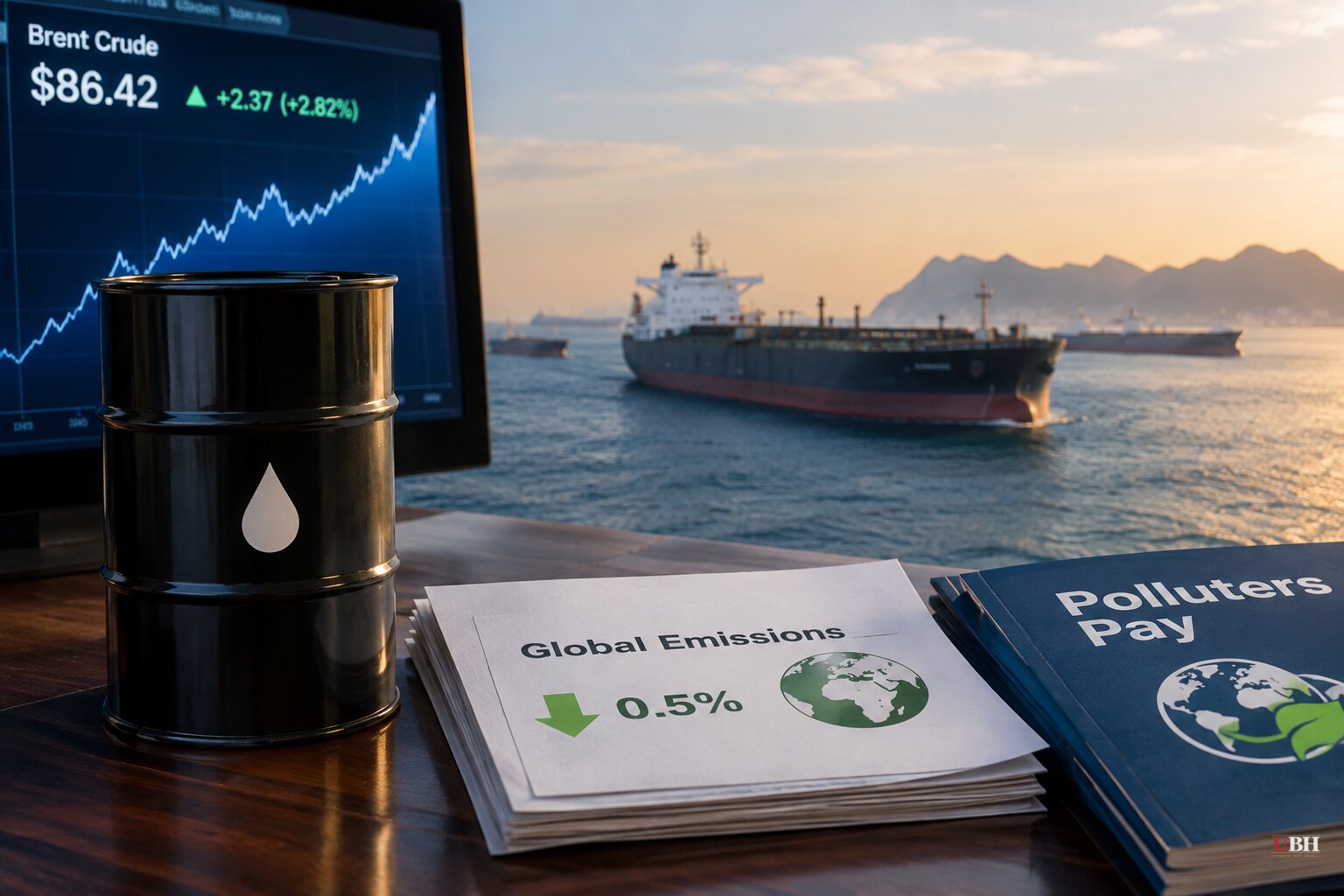
Brent crude fell $1.01 to settle at $104.82 a barrel last Thursday, and U.S. crude fell 52 cents to $101.91, according to Reuters, after reports that Saudi Arabia was rerouting oil through Oman to dodge the chokepoint. Energy Secretary Chris Wright told CNBC that Saudi Arabia took "quick action" to boost exports through Hormuz with U.S. military help, offsetting the shutdown of a key pipeline after Houthi rebels struck it, according to the Financial Times.
Even with that relief, prices are running well above pre-war norms. Carbon Brief, the UK-based climate data outlet, says the disruption is on track to push global fossil fuel emissions down 0.5% in 2026, based on International Energy Agency projections reported by The Energy Mix. Carbon Brief deputy editor Simon Evans says the war has caused a spike in oil and gas prices that keeps rippling around the global economy, and that each new flashpoint — including in Yemen — pushes countries harder toward alternatives.
Evans's own analysis flags a complication: coal use is rising as a substitute, and that increase is "more than offset" by declines in oil and gas, not eliminated by it. A big chunk of the drop isn't about switching to clean energy at all. China's state-owned refiner Sinopec is projecting the country's oil demand will fall 3.9%, or 600,000 barrels a day, this year — the third straight year of decline, according to Reuters. That's demand destruction tied to China's own economic slowdown, layered on top of the war, not a renewable-energy victory.
Gore and Guterres seize the moment
Al Gore's Generation Investment Management put out its 10th annual Sustainability Trends Report on September 17, arguing the war has exposed fossil fuel dependence as an "untenable strategic liability." The report notes the Strait of Hormuz carries a quarter of global seaborne oil trade, a third of seaborne fertilizer trade, and nearly a fifth of global LNG trade. The disruption triggered helium shortages that hit semiconductor production and MRI machines. A chokepoint carrying that much trade represents a legitimate national security concern regardless of one's views on climate policy.
Gore called continued fossil fuel dependence "insane" given that the world is now in its "second fossil energy crisis in four years," and said high prices are handing oil and gas executives "exorbitant profits" while consumers eat rising costs on fuel and food.
Outgoing UN Secretary-General António Guterres, who is set to leave his post at the end of this year after nearly a decade leading the body, used his final General Assembly address on Tuesday, September 22, to renew his call that "polluters must pay," according to Common Dreams. He compared the moment to the reckoning over Big Tobacco: "When the harms of Big Tobacco became undeniable — governments acted. The climate crisis demands the same determination." He also cited a UN finding that breaching the Paris Agreement's 1.5°C limit is now "near-certain."
Guterres did not lay out in his speech what a "polluters pay" mechanism would actually look like — whether it means litigation, a global tax, or something else — and no government has adopted binding legislation along those lines in these reports. It's a political demand from a departing official, not an enacted policy.
What's actually unresolved
The emissions dip Carbon Brief is measuring is largely a byproduct of war-driven fuel disruption and a Chinese demand slump, and it could reverse quickly if Trump's outreach to Tehran produces an actual de-escalation and Hormuz traffic normalizes. Meanwhile the human cost of the war continues: the Israel Defense Forces said this week it killed two Hamas commanders, including one involved in the October 7, 2023 attacks, for what it called ceasefire violations. Whether Trump's direct contact with Iran leads to a real end to the fighting, or whether Tehran instead escalates as Moini warned, will determine a lot more than next year's carbon math.
Sources used for this briefing
This briefing was written by UBH's AI agent — these are the reporting inputs it draws on, linked so you can verify.


