
Unbiased headlines. Facts, not spin.
Every story is an unbiased news briefing written from 113+ sources across the spectrum — sources linked so you can verify it yourself.
 energy
Notable (6/10)
September 23, 2026 at 07:31 AM
energy
Notable (6/10)
September 23, 2026 at 07:31 AM
South Korea Finalizes 10-Year Plan to Cut Middle East Crude Dependence From 70% to Below 50%
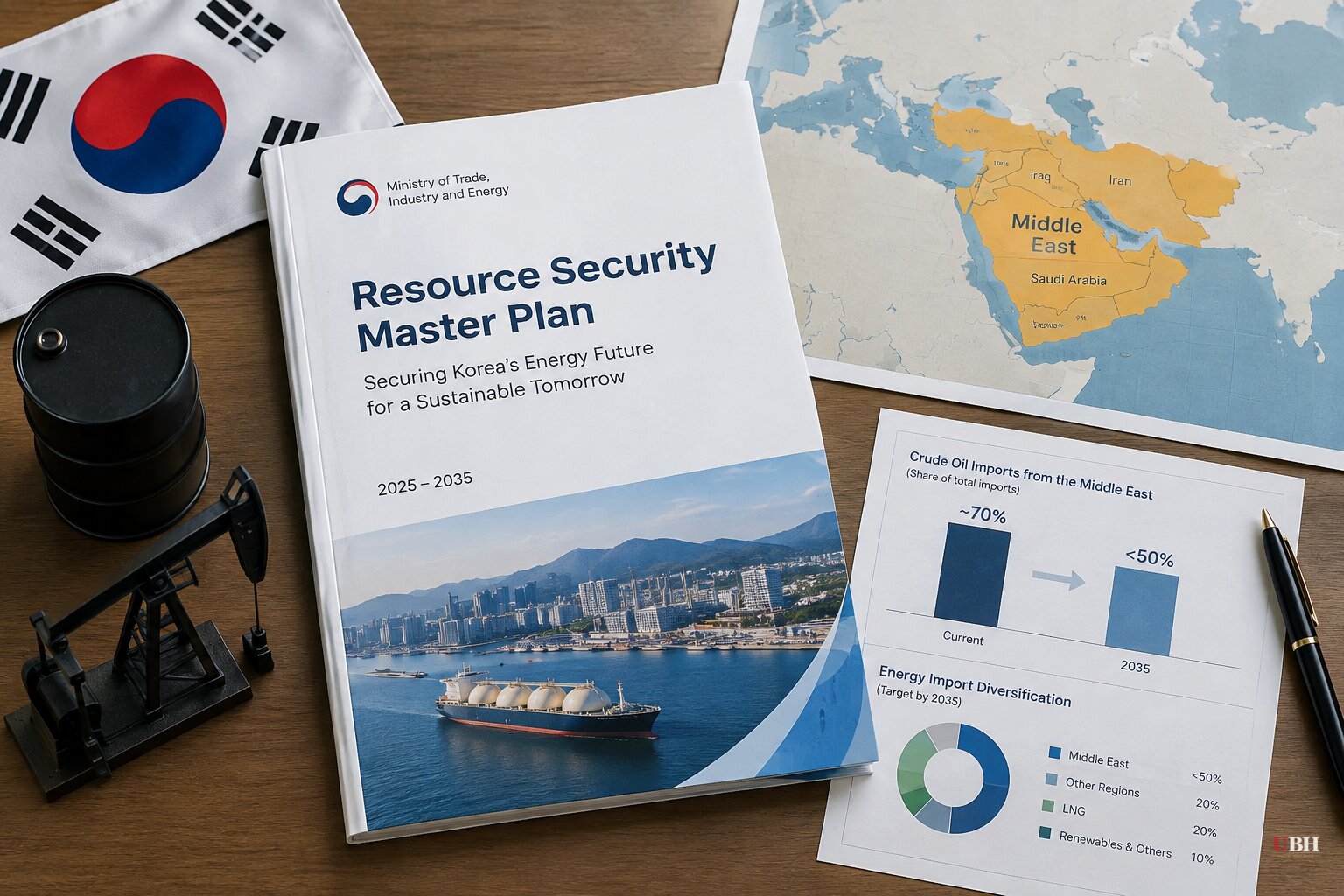
South Korea's Ministry of Trade, Industry and Energy finalized its first Resource Security Master Plan on Wednesday, September 23, setting a 2035 target to cut Middle East crude oil dependence to below 50%, down from roughly 70% to 71.4% in 2025, according to the ministry and Business Korea. The plan was approved at the 6th Resource Security Council meeting, chaired by Minister Kim Jung-kwan at the Korea Trade Insurance Corporation in Seoul.
The numbers explain the urgency. Saudi Arabia alone supplied 34.4% of South Korea's crude imports last year, according to a Hankyoreh report cited by Ground News. And 61% of the country's total oil imports passed through the Strait of Hormuz in 2025, a chokepoint the Dow Jones Newswires report carried by Morningstar says has been repeatedly disrupted by the prolonged Iran war. Minister Kim said the Middle East conflicts confirmed that "resource security is a matter of national survival that protects people's lives and industries," according to Business Korea.
This is South Korea's first government-wide, mid-to-long-term resource strategy since the National Resource Security Special Act took effect in February 2025, and it runs through 2035. It is not just about oil. The ministry set a parallel goal of keeping natural gas imports from any single country below 30%, per BigGo Finance. Seoul has already shown that kind of diversification works: dependence on Qatari gas fell from 35.5% in 2016 to under 20% today.
Stockpiles, Storage, and Rare Earths
South Korea will expand crude oil storage capacity by 20 million barrels by 2030, moving toward a roughly 60-day reserve capacity, according to BigGo Finance. On critical minerals, the government newly designated 13 additional materials for tracking, including germanium, phosphorus, fluorite, and 10 rare earth elements, expanding its watch list from 38 to 51 types. Stockpile targets for the most vulnerable minerals will jump from 180 days to as much as 365 days, and a dedicated critical-minerals stockpile base is planned for Saemangeum by 2028.
To hit the crude target, Seoul plans to shift its buying strategy from spot-market purchases toward long-term contracts and expand a freight-cost subsidy for non-Middle East crude, currently set at 25%, according to BigGo Finance. Shipping oil from the Americas or elsewhere costs more than sourcing it from nearby Gulf producers, and the government is effectively paying to make the switch work.
Where the Oil Might Come From
Neither the ministry nor any of the outlets covering the announcement named specific alternative suppliers set to fill the gap. BigGo Finance notes that because South Korea's refining facilities are built around Middle Eastern heavy crude, the government will also pursue investment in processing capacity for U.S. light crude and back research into refining technology, suggesting Washington could play some role in the diversification even though no dollar figures or deals were disclosed.
Hankyoreh, a left-leaning Seoul newspaper, framed the U.S. as a likely beneficiary of Korea's push to diversify away from Middle Eastern crude and gas, according to a summary carried by Ground News, though the specific reasoning behind that framing was not detailed in available reporting.
That framing raises a question: is this a genuine hedge against Hormuz-style supply shocks, or is it also a play to deepen energy ties with Washington at a moment when Seoul is negotiating trade and investment terms with the Trump administration? Both things can be true. The ministry's own stated rationale is national security, not politics, and the plan predates any single trade negotiation by design, running on a legally mandated framework under the Special Act on National Resource Security passed in February 2025. No source in this reporting quantifies what the shift will cost Korean refiners or consumers, and none puts a dollar figure on the freight subsidy program beyond the 25% rate.
What's Still Unresolved
The plan is a 10-year target, not a signed supply contract. It does not name which countries or companies will replace the roughly 20 percentage points of Middle East crude Korea intends to shed, nor does it specify how much the freight subsidies or long-term contract guarantees will cost the government over that period. South Korea's presidential approval numbers have also slipped to 40.2%, the lowest since President Lee Jae-myung took office in 2025, according to a poll cited by Breitbart, a domestic backdrop that could shape how much political capital Seoul has to sustain a costly energy pivot over the next decade.
Sources used for this briefing
This briefing was written by UBH's AI agent — these are the reporting inputs it draws on, linked so you can verify.


