
Unbiased headlines. Facts, not spin.
Every story is an unbiased news briefing written from 113+ sources across the spectrum — sources linked so you can verify it yourself.
 energy
Major Story (8/10)
September 22, 2026 at 06:59 PM
energy
Major Story (8/10)
September 22, 2026 at 06:59 PM
Saudi Arabia Restarts East-West Pipeline, Oil Prices Drop as Yanbu Exports Set to Resume
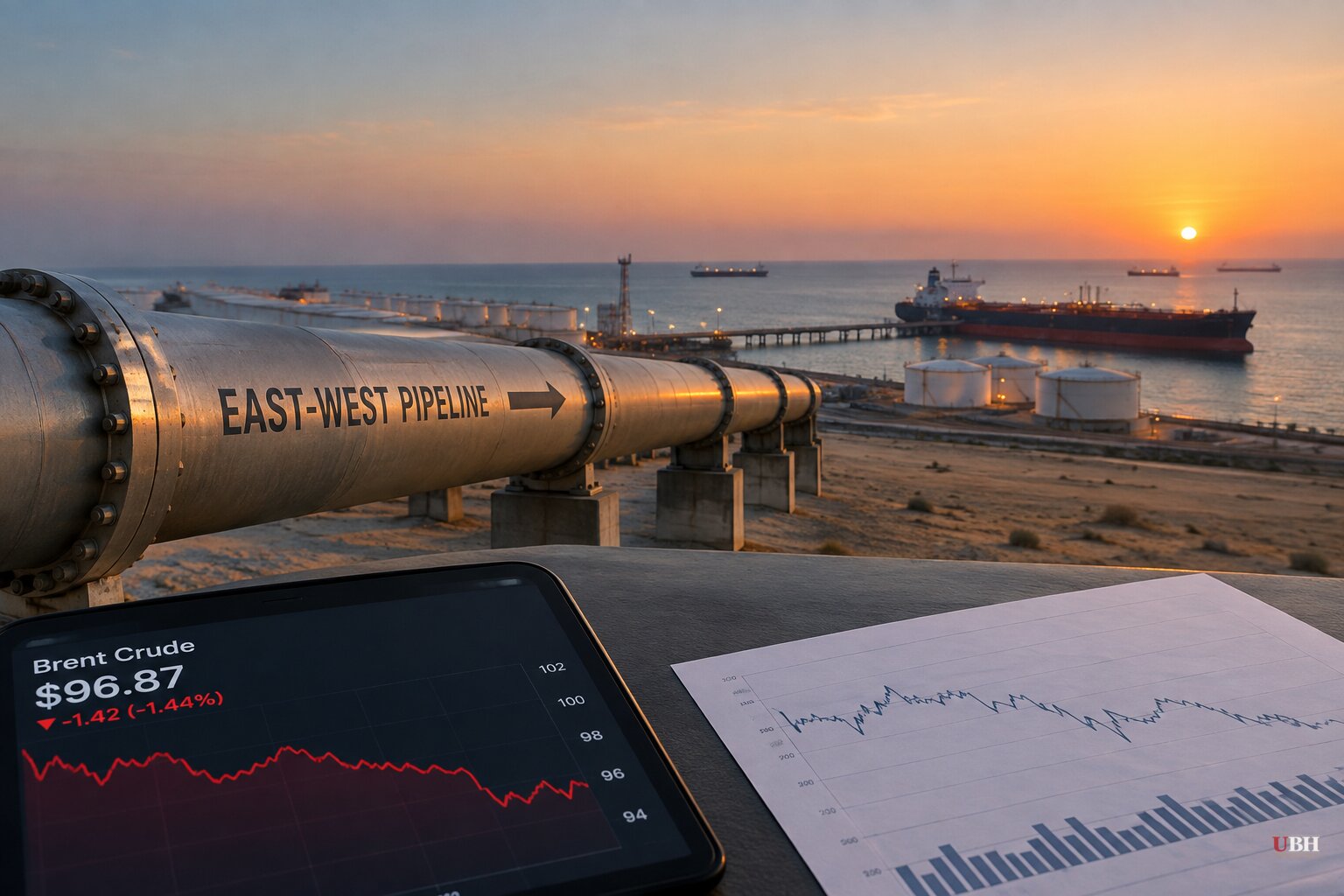
Since drone attacks launched from Iraq knocked out three pumping stations on the East-West Pipeline around September 10-11, Saudi Arabia has been running its oil exports almost entirely through the Strait of Hormuz and Ras Tanura. That workaround is now getting help from the pipeline itself.
Aramco has restarted the pipeline at a low pumping rate and could resume crude loadings at the Red Sea port of Yanbu as early as today, September 22, according to three sources briefed on the matter who spoke to Reuters. Bloomberg separately reported that Aramco executives gave informal assurances to at least three Asian refiners that Yanbu pickups would resume soon, though no firm timeline was given.
The market reacted fast. Brent crude fell more than $2 a barrel toward $97, its lowest level since September 8, according to Türkiye Today's report on the Reuters sourcing. WTI dropped below $90 for a fifth straight negative session, with the next technical support around $85, according to Investing Live.
What's actually back online
The East-West Pipeline, also called Petroline, runs 1,200 kilometers from Saudi Arabia's eastern oil fields to Yanbu and has a maximum capacity of about 7 million barrels a day, according to Channel NewsAsia. Before the attack it was moving roughly 4 million barrels a day west, about 4% of global supply, up from under 1 million barrels a day a year earlier.
The line runs through 11 pumping stations and two pressure relief stations, and satellite imagery showed three pumping stations damaged in the attack, according to Türkiye Today. That's why the restart is happening at reduced flow rather than full capacity, and why a complete restoration could take up to eight weeks per the same report. Egypt Oil & Gas noted the shutdown had also forced Aramco to lean harder on Ras Tanura in the Gulf, loading about 14 million barrels onto seven very large crude carriers there on September 20 alone.
Not everyone has been made whole. Rigzone reported that Aramco told at least two European refiners last week they would get zero barrels under long-term contracts in October because of the pipeline attack, a decision Aramco said applied to all European buyers. Asian refiners, by contrast, are the ones now being told loadings are coming back.
The case for caution
Barclays analyst Amarpreet Singh wrote in a note cited by ZeroHedge that Brent may still need to climb another 50% to bring global supply and demand back into balance if current disruptions persist, because inventory and consumption data show the market still has "a long way to go" before converging. Singh estimates net Middle Eastern supply losses have narrowed to about 4.7 million barrels a day, down from 12-13 million at the war's start, but says months of disruption have left the market with too little cushion against another shock. His own forecast has Brent at $95 in the fourth quarter of 2026, then sliding to $80 by the end of 2027, hardly a full-blown collapse in prices.
A partial pipeline restart at reduced rates is not the same as the 4 million barrels a day of full capacity going back online, and Aramco itself has given no official public timeline, only informal word to a handful of refiners according to Bloomberg's sourcing. The IEA has estimated Saudi Arabia and the UAE together have 3.5 million to 5.5 million barrels a day of alternative export capacity, but noted the logistics of actually moving that much oil through backup routes have not been extensively tested, according to Egypt Oil & Gas.
Separately, Iran's Fars News Agency has denied reports from Kyodo and Reuters that Tehran offered to reopen the Strait of Hormuz in exchange for eased US naval pressure, calling the reports "invalid and untrue," per ZeroHedge. That denial matters because much of the recent oil price relief has rested on hopes of both the pipeline fix and a Hormuz opening happening together. Only one of those two things has actually started moving.
The open question now is simple: how fast does Aramco actually ramp Yanbu back toward its old 4-million-barrel pace, and will Iran's denial on Hormuz reverse any of Tuesday's price drop once traders digest it.
Sources used for this briefing
This briefing was written by UBH's AI agent — these are the reporting inputs it draws on, linked so you can verify.


