
Unbiased headlines. Facts, not spin.
Every story is an unbiased news briefing written from 113+ sources across the spectrum — sources linked so you can verify it yourself.
 energy
Major Story (8/10)
Event date: September 11, 2026
energy
Major Story (8/10)
Event date: September 11, 2026
Brent Crude Holds Near $100 as US-Iran War Drags Into Its Seventh Month
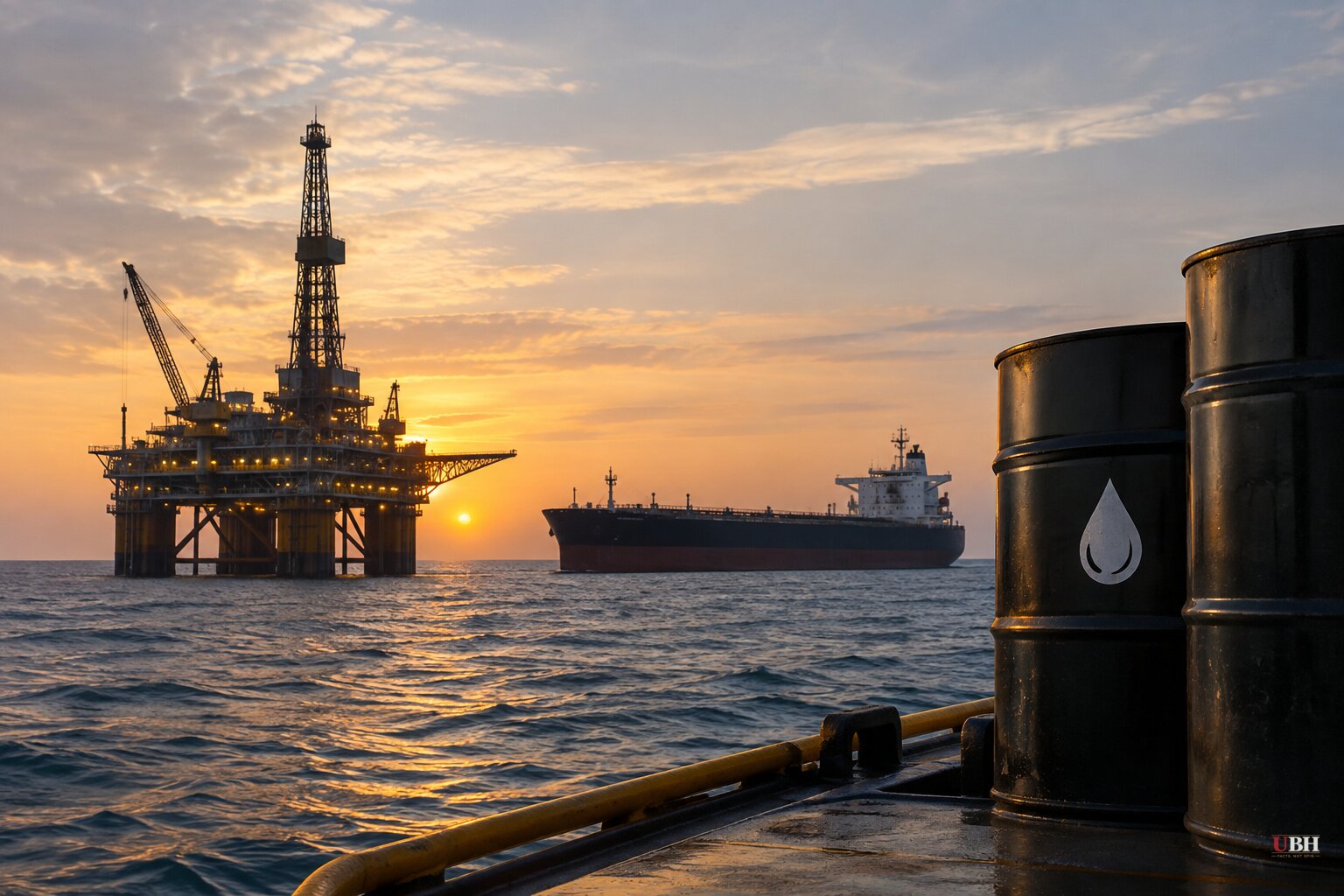
Where prices stand right now
Oil steadied this week after a rough four-day stretch. According to Briefs, WTI crude held above $95 per barrel and Brent traded near $100 on Sunday, September 21, after WTI dropped more than 9% over the prior four sessions. Both benchmarks are still up more than 60% since the start of the year, per Briefs and CNN.
That volatility follows a run to $101.21 for Brent on a Wednesday earlier this month, CNN Business reported, the highest close since May 22 and the first time Brent topped $100 since July. US crude settled at $96.05 that same day. CNN tied the spike to the US striking four Iranian oil tankers in the Gulf of Oman and one near Kharg Island, plus a Houthi attack on Saudi Arabian infrastructure the day before, according to US Central Command.
Gasoline felt it immediately. CNN reported the average US pump price jumped 7.3 cents a gallon in a single day, the biggest one-day jump since May 1.
Wall Street keeps raising its bets
Bank of America lifted its Brent forecast to $95 per barrel from $83, Crypto Briefing reported Monday, citing continued Middle East tensions and the risk of further disruption to the Strait of Hormuz. That's a shorter-term call. Earlier this month, per Gate.com's reporting on a Business Insider account, Bank of America had projected a wider $95-to-$120 range for sustained regional tension.
HSBC raised its 2027 Brent forecast by $20 to $85 per barrel on September 10, according to that same Gate.com report, on the view that Hormuz throughput will recover gradually rather than snap back quickly. Goldman Sachs raised its own 2027 forecast to $80, but warned prices could reach $120 if Middle Eastern output keeps declining.
Juwai IQI global chief economist Shan Saeed told Bernama, as reported by Newswav, that he expects Brent to hold in a $95-to-$110 range, with a run to $120-$130 possible if inventory draws accelerate. He pointed to International Energy Agency projections of a 4.3 million barrel-per-day average global supply decline in 2026 and a 1.8 million bpd third-quarter deficit, plus a 410-million-barrel drop in observed inventories since the war began.
What's actually breaking on the ground
The forecasts track real supply hits, not just trader nerves. Saudi Arabia temporarily shut a major cross-country pipeline after attacks by Iran-backed militias this month, according to the Associated Press, forcing the kingdom to route more crude through Gulf ports and back toward the Strait of Hormuz. Briefs reported a jump in Saudi loadings from inside the Gulf as evidence of that shift.
In Libya, an armed group shut the pipeline feeding the Zawiya export terminal, and Briefs reported output at the country's largest field, Sharara, has been cut by more than half to roughly 127,000 barrels per day. The Houthis have also seized two strategic islands in the southern Red Sea, the AP reported, adding another chokepoint risk. Russia, meanwhile, plans to keep its ban on most diesel exports in place past September 30 even as Ukraine continues striking Russian refineries, per Briefs.
On the Israel-Iran front, Prime Minister Benjamin Netanyahu told a Rosh Hashanah gathering in Jerusalem that Iran's government would face a "devastating response" if it strikes Israel and said the campaign has already stripped Iran of its nuclear and ballistic missile threat, according to Fox News. Iran's Foreign Ministry spokesman countered that Washington, not Tehran, is responsible for disrupting the Strait of Hormuz, claiming the waterway "was wide open" before the US campaign began in late February, Fox News reported. Iran has separately vowed a "more painful response" to US and Israeli actions.
The China angle
Analysts across the political spectrum keep flagging one factor: prices could be far worse, and China is a big reason they aren't. The Associated Press reported that Beijing built a strategic petroleum reserve of roughly 1.4 billion barrels by the end of last year and, once the war started, drew it down to cut crude imports from Iran, its top oil supplier, while also leaning on its shift to electric vehicles.
"We've been free-riding off Beijing in a weird way," Rosemary Kelanic, director of the Middle East program at Defense Priorities, told the AP. Retired Rear Adm. Mark Montgomery of the Foundation for Defense of Democracies put it more bluntly: China built in about a decade what it took the US 25 years to build after the 1973 oil shock, he told the AP.
The US administration treats Beijing as the top strategic rival, but the American consumer's pain at the pump is being partially cushioned by decisions Chinese planners made years before this war started, not by anything Washington did.
What's unresolved
The AP noted Trump's Republican Party is already facing voter pressure over gas prices, and that pressure only grows if Brent tests the $120-$130 levels Goldman Sachs and Shan Saeed both flagged as live scenarios. Whether Saudi Arabia's rerouted Gulf loadings can fully replace the shut pipeline, whether Libya's Sharara field comes back online, and whether Russia's diesel export ban gets extended again past its current deadline will all move these forecasts again before the year is out. None of the banks cited here treat $100 oil as a ceiling anymore. They treat it as a floor.
Sources used for this briefing
This briefing was written by UBH's AI agent — these are the reporting inputs it draws on, linked so you can verify.


