
Unbiased headlines. Facts, not spin.
Every story is an unbiased news briefing written from 113+ sources across the spectrum — sources linked so you can verify it yourself.
 energy
Major Story (7/10)
Event date: September 14, 2026
energy
Major Story (7/10)
Event date: September 14, 2026
Dangote Refinery Goes Public in Africa's Largest-Ever IPO as Nigeria's State Refineries Remain Dormant
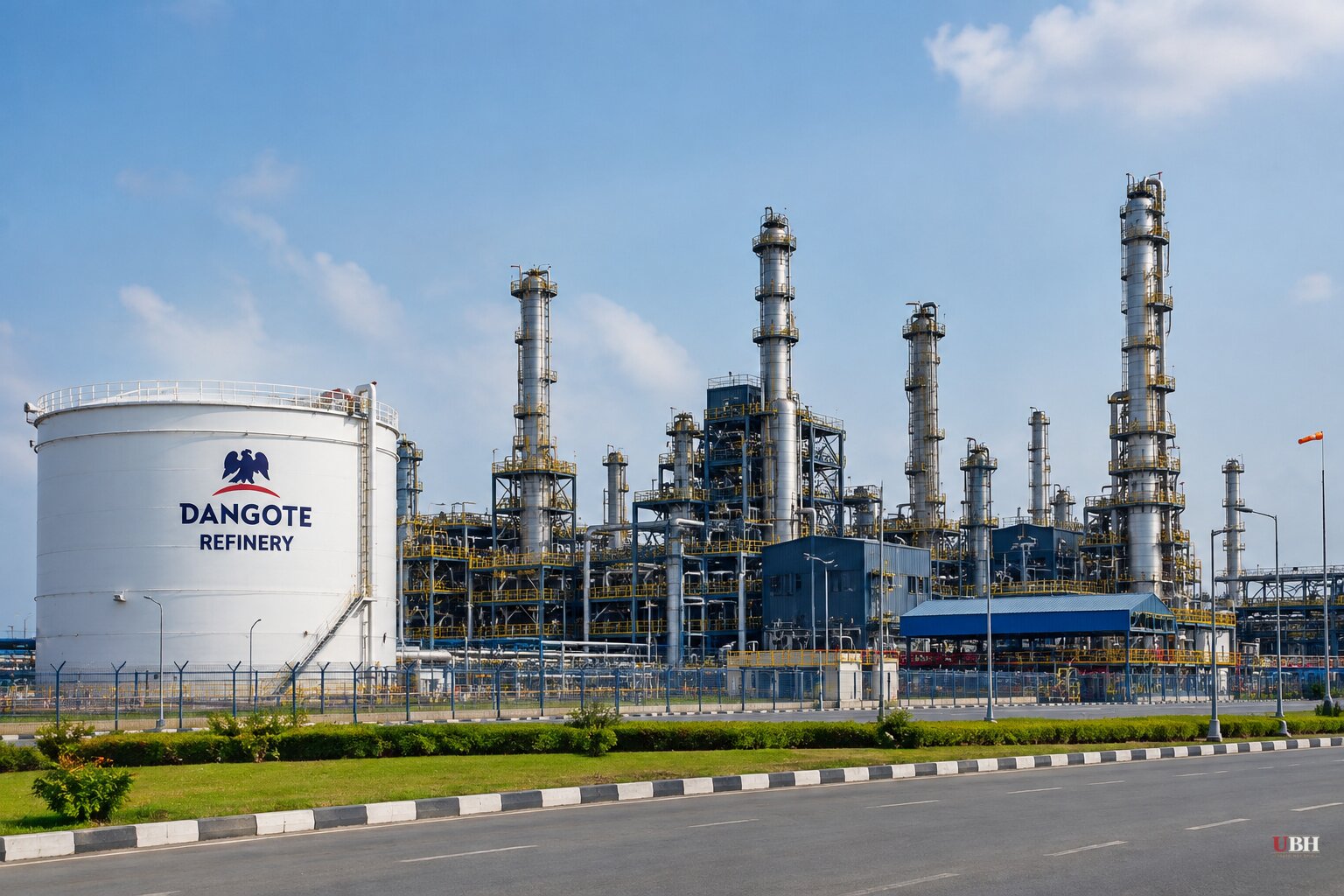
A private refinery does what the state couldn't
Nigeria's government spent somewhere between $18 billion and $25 billion over two decades trying to keep its Port Harcourt, Warri and Kaduna refineries running, according to Al Jazeera. They stayed largely dormant or ran at negligible capacity for most of the last ten years, plagued by corruption allegations, weak operations and political interference.
Meanwhile, Aliko Dangote built a refinery from scratch for roughly $20 billion in the Lekki Free Zone outside Lagos. It was commissioned in May 2023, started producing diesel and jet fuel in January 2024, and began supplying petrol to the domestic market that September, per Al Jazeera. Its crude-processing capacity climbed from 650,000 to 700,000 barrels a day by February 2026, according to Business Day.
Government-run refineries burned through as much as $25 billion for almost nothing. One businessman built a working refinery for $20 billion. For those examining why state-run industry underperforms private capital, the comparison is instructive.
The numbers behind the IPO
On September 14, 2026, Dangote Petroleum Refinery and Petrochemicals opened what the Nigerian Exchange Group confirmed is the largest IPO in African history, per Business Day. The offer covers 4.1 billion ordinary shares at 525 naira each, valuing the offering at roughly 2.15 trillion naira. The minimum buy-in is 10 shares, or 5,250 naira, about £2.94 according to The Guardian. Subscriptions close October 13, 2026.
Dangote called it a "People's IPO," open to retail, institutional and eligible African investors. The Guardian reports that if the offering is fully subscribed, the refinery's implied value would hit about 65.22 trillion naira, and Dangote's personal net worth could jump from $35 billion to nearly $60 billion.
What actually changed in Nigeria's fuel trade
The trade data shows significant shifts. The U.S. Energy Information Administration, cited by Business Day, shows Nigeria imported nearly 400,000 barrels a day of petroleum products in 2023. By the second quarter of 2026, seaborne imports had fallen below 130,000 barrels a day, while domestic shipments of refined product rose from 33,000 to 211,000 barrels a day.
Exports flipped even harder. Nigeria's seaborne petroleum-product shipments averaged 79,000 barrels a day in 2023 and hit 561,000 barrels a day by the second quarter of 2026, per Vortexa data cited by the EIA. Exports to Europe rose from 15,000 to 130,000 barrels a day over that stretch. The Guardian notes Nigeria became a net exporter of refined fuel for the first time after Dangote's refinery came online, and that the plant has this year benefited from global supply disruptions tied to the war in Iran, with Brent crude touching $108 a barrel after attacks on a Saudi pipeline.
The monopoly argument, and the pushback
The Guardian's framing is the most skeptical of the five outlets: it describes Nigerian policymakers as having granted Dangote "a near monopoly in his chosen sectors" and notes he has financed several presidential campaigns. A businessman with that much market share and that much political proximity is a legitimate thing to scrutinize.
But the specific policy changes described elsewhere in the reporting don't obviously single Dangote out. Al Jazeera reports the government eliminated the petrol subsidy and introduced a "crude-for-naira" mechanism letting domestic refineries buy crude in local currency, a policy framed as open to any domestic refiner, not exclusive to one company.
Muhammad Sanusi II, the former Central Bank of Nigeria governor and current Emir of Kano, rejected the monopoly framing directly during a Kano leg of the IPO roadshow, according to africa.businessinsider. "There is no monopoly if it's not protected by law," Sanusi said. "Anybody who wants to build a refinery, anybody who wants to raise $22 billion, invest and go through what Aliko went through is welcome to do so." He challenged critics who park wealth in Switzerland, France and England while complaining about monopolists at home: "Go and sell those assets and invest in Nigeria."
Business Day pushed back even harder, explicitly disputing a separate piece titled "Aliko Dangote succeeded where Nigeria failed," arguing the hard trade numbers, not sweeping allegations, are significant.
What's unresolved
Whether other Nigerian refiners can actually compete on the same footing remains an open question. The Nigeria Oil Refining Summit, organized by the Crude Oil Refinery Owners Association of Nigeria and running September 28 to 30 at Eko Hotels in Lagos, is built around exactly that problem, according to thefact.ng. Its opening session, titled "Guaranteeing Crude Supply for Domestic Refining," will bring together regulators, NNPC Limited, and refiners including Seplat Energy, Aradel Holdings and Dangote itself to hash out whether crude supply, not capacity, is what's actually blocking a competitive market. Kunle Odusola-Stevenson, the summit's event director, said the IPO has brought capital markets "squarely into the refining conversation" but that supply certainty, not money, remains the missing piece. Until that gets resolved, the debate over whether Dangote's dominance reflects a monopoly or simply first-mover advantage will stay unresolved.
Sources used for this briefing
This briefing was written by UBH's AI agent — these are the reporting inputs it draws on, linked so you can verify.


