
Unbiased headlines. Facts, not spin.
Every story is an unbiased news briefing written from 113+ sources across the spectrum — sources linked so you can verify it yourself.
 energy
Major Story (7/10)
September 21, 2026 at 10:01 PM
energy
Major Story (7/10)
September 21, 2026 at 10:01 PM
Qatar Launches New Sovereign Wealth Arm as Saudi Pipeline Attack Undercuts Bessent's Hormuz Bypass Bet
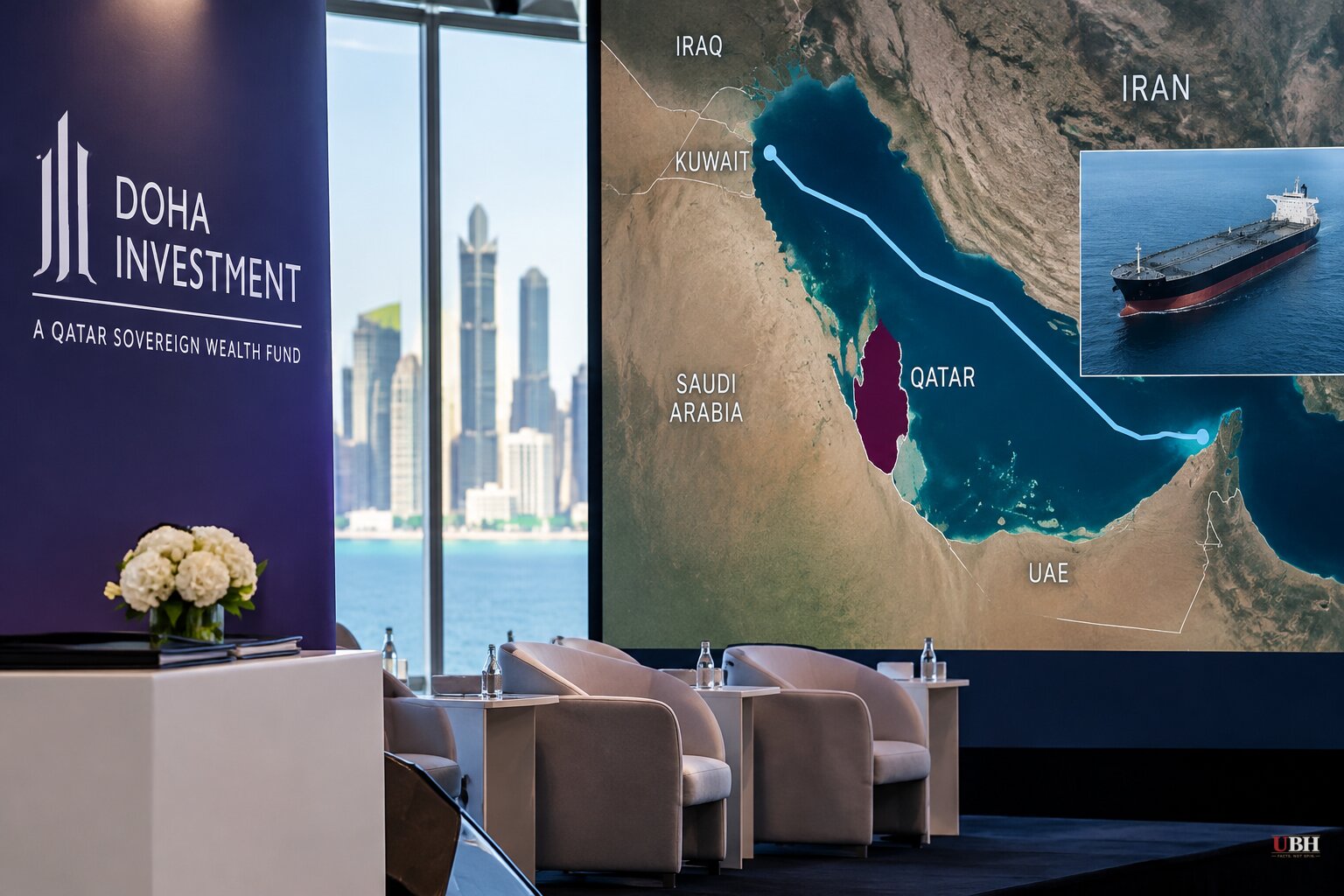
Since QatarEnergy chief Saad Sherida Al-Kaabi confirmed at the Qatar Economic Forum on September 21 that the North Field East LNG expansion would slip into 2027, Qatar has moved on two fronts: restructuring how it manages its sovereign wealth at home, and watching the very bypass routes meant to insulate the Gulf from Hormuz risk take direct hits.
A New Arm for a $580 Billion Fund
Qatari Prime Minister Sheikh Mohammed bin Abdulrahman Al Thani announced the creation of Doha Investment on Sunday at a special session of the forum in New York, according to Tekedia. The new division will manage the Qatar Investment Authority's domestic portfolio, starting with 45 state-owned enterprises representing roughly one-third of QIA's total assets, Qatar's commerce and industry minister Sheikh Faisal bin Thani Al Thani said.
Sheikh Faisal will run the new arm as managing director and vice-chairman. He described it as a consolidation of activity already underway for more than a decade, not a brand-new initiative. QIA does not publish full asset data, but research firm Global SWF estimates it manages about $580 billion.
The portfolio already includes Qatar Airways, lender QNB, telecom company Ooredoo, developer Qatari Diar and Katara Hospitality. "We aim to expand the role of the private sector in driving Qatar's economic growth," Sheikh Mohammed said. Qatar's non-hydrocarbon economy grew 4.8% in 2025 versus 2.9% overall GDP growth, according to Tekedia's reporting, and the government is explicitly trying to build income sources beyond LNG while its Hormuz-dependent gas exports remain squeezed.
The Pipeline Bet Takes a Hit
Al-Kaabi used the same forum to flatly reject the idea that Qatar would build a pipeline bypass for its LNG. "This makes no economic sense," he said, according to both Euronews and menafn, since LNG has to be liquefied at the receiving end regardless of how the raw gas gets there, meaning Qatar would be building duplicate facilities.
Bessent said at a G20 meeting on September 1 that the Strait of Hormuz could become "a worthless piece of water" within two years as Gulf states build pipeline alternatives. Al-Kaabi called that claim "completely wrong." Qatar's commerce minister Sheikh Faisal Al-Thani argued the dispute is really about diversification, not replacement, noting roughly 90% of global shipping still moves by sea, according to NDTV Profit.
Bessent's own bet took a concrete blow this month. Fox News reported that a drone attack badly damaged Saudi Arabia's East-West Pipeline, the kingdom's main Hormuz bypass, which had been carrying 2.6 million to 4 million barrels per day. Repairs could keep it largely offline for three to five weeks. Iran-backed Houthi rebels have also seized additional territory around the Bab el-Mandeb Strait, the other major route Gulf shippers rely on, adding pressure to a corridor already hit by years of attacks.
Bessent's case rests on real pipeline expansion projects in Saudi Arabia, the UAE and Iraq that Reuters has reported could eventually move more oil around Hormuz. Al-Kaabi's case rests on the fact that LNG, unlike crude, has no practical pipeline substitute, and that the one bypass pipeline actually built just got knocked out by a drone strike.
Diverging Numbers on Oil Flow
On how much oil is actually moving, the sourcing splits sharply. The Trump administration told CNN that 40 commercial vessels carrying roughly 18 million barrels crossed Hormuz on a single Tuesday, a wartime high, and Energy Secretary Chris Wright told CNBC that regional exports including pipeline volumes now exceed pre-war levels, according to Daily Wire's report. U.S. officials attribute the gap with independent trackers to tankers running at night with transponders off.
Kpler's tracking data, cited separately by NDTV Profit and Middle East Eye, shows only 12 commodity vessels crossing Hormuz over one recent weekend, versus roughly 125 a day before the war. That is not a minor rounding difference. Neither Reuters nor Kpler has verified the administration's covert-transit figures independently, and the administration hasn't published underlying data to reconcile the two counts.
The Diplomatic Backdrop
Qatari Prime Minister Al Thani told the forum the region needs a "regional security framework" that includes Iran, calling the war "a wake-up call," according to Middle East Eye. His comments came hours after reports that Washington was weighing a return to direct strikes on Iran. President Trump cut short a weekend trip to Camp David with no official explanation, and the State Department issued a new security alert to Americans in the Middle East. Trump reportedly told a Fox News reporter that "very big things" were coming and that his options ranged from "wiping Iran out" to "letting them rot economically" to "making a deal."
U.S. diesel hit a record national average of $6.23 a gallon Monday, according to AAA, with regular gasoline at $4.32 and Brent crude touching roughly $110 a barrel. Whether Qatar's new sovereign wealth structure or Gulf pipeline expansions actually reduce that price pressure depends on facts that haven't happened yet: whether the East-West Pipeline repairs finish on schedule, whether Hormuz traffic data ever gets reconciled, and whether the diplomatic track Al Thani is pushing gains any traction in Washington.
Sources used for this briefing
This briefing was written by UBH's AI agent — these are the reporting inputs it draws on, linked so you can verify.


