
Unbiased headlines. Facts, not spin.
Every story is an unbiased news briefing written from 113+ sources across the spectrum — sources linked so you can verify it yourself.
 energy
Major Story (8/10)
Event date: September 20, 2026
energy
Major Story (8/10)
Event date: September 20, 2026
Qatar Pushes $83 Billion LNG Expansion Into 2027, Warns Hormuz Disruption Could Delay It Further
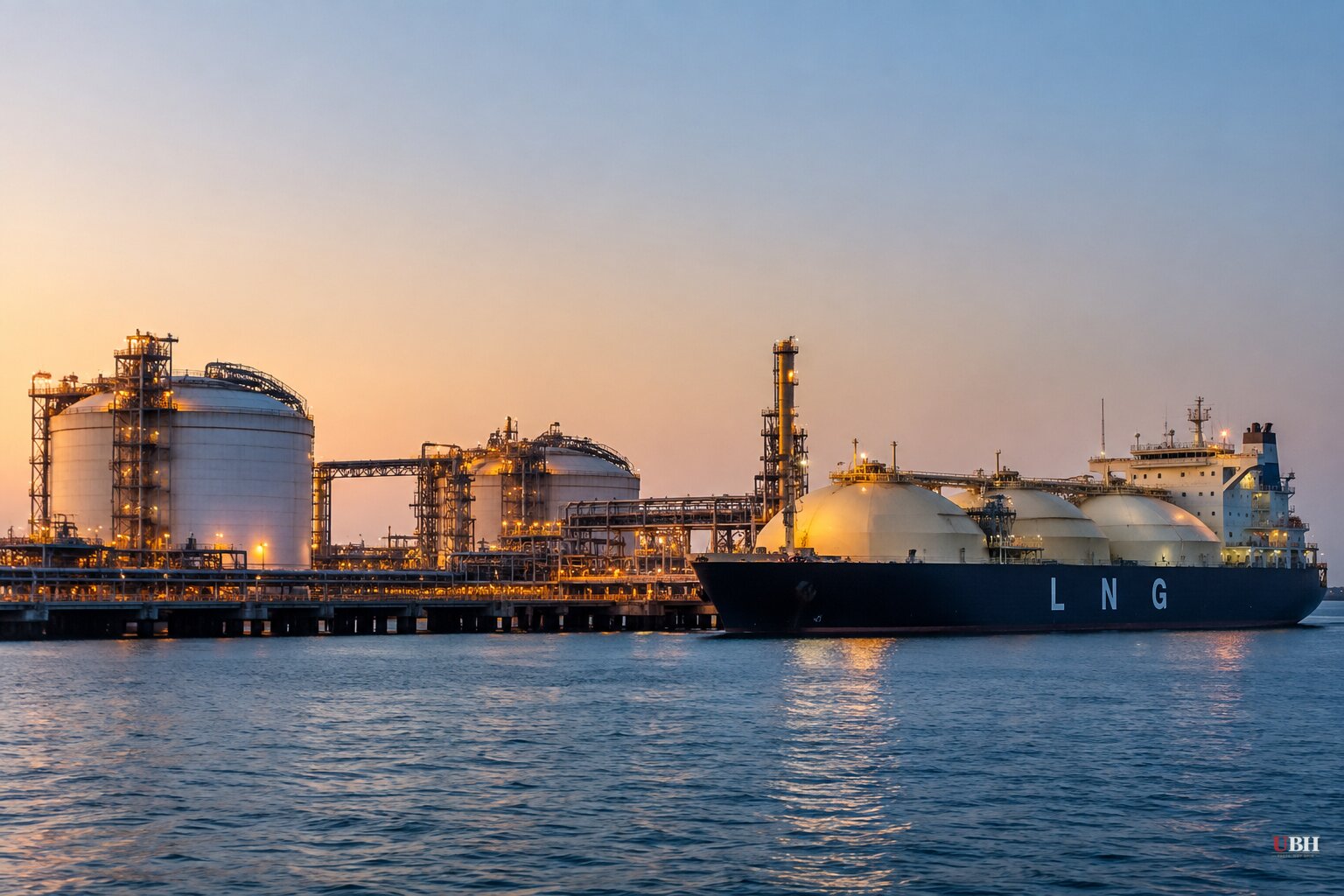
Since Iran's missile strike on Qatar's Ras Laffan complex on March 18 knocked out two of the country's 14 LNG production lines, and since a Qatari tanker was attacked in the Strait of Hormuz in late July halting nearly all seaborne exports, Qatar's position as the world's second-largest LNG supplier has been quietly unraveling.
Qatar's Energy Minister and QatarEnergy CEO Saad Sherida al-Kaabi laid out the damage at the Qatar Economic Forum in New York over the weekend, according to Bloomberg reporting carried by Energy Connects. The first production train of the North Field East expansion, originally expected to start in 2026, is now targeted for the first half of 2027. The follow-on North Field South project remains slated for 2028.
"It will depend a lot on the Hormuz Strait for the additional trains that are going to come, because that could push it back if we can't get facilities coming in," al-Kaabi said.
The Math Behind the Delay
The numbers are stark. Al-Kaabi said the two damaged Ras Laffan lines, representing 17% of Qatar's export capacity and roughly $20 billion in annual revenue according to OilPrice reporting cited by ua.news, will stay offline for three to five years. Shell's Pearl gas-to-liquids plant, also hit in the strikes, is targeted to restart in the first quarter of 2027.
Al-Kaabi told the forum QatarEnergy is currently producing only a "very minute" volume of LNG. The International Monetary Fund expects Qatar's economy to contract more than 8% this year, per figures cited by Energy Connects. That's an economic blow for a country that built its entire national budget model around gas exports.
QatarEnergy's broader ambition was to grow national LNG capacity from 77 million tons a year to 142 million tons by 2030, an $83 billion program backed by ExxonMobil, ConocoPhillips, Shell, TotalEnergies and Eni, expected to supply 40% of new LNG hitting the global market this decade, according to OilPrice. That timeline is now openly in question.
A Public Disagreement Over Pipelines
Treasury Secretary Scott Bessent said last month that new pipeline capacity, led by the UAE's expansion of its line to Fujairah on the Gulf of Oman, could eventually make shipping through Hormuz "irrelevant," according to the Daily Wire. Al-Kaabi rejected that outright at the forum, calling Bessent "wrong" and saying Hormuz will never become obsolete.
His reasoning: LNG can't move through a pipeline in its liquefied, super-chilled form. Building pipeline infrastructure plus new reliquefaction facilities at the receiving end, he said, "makes no economic sense." Qatar has no plans to build bypass pipelines of its own.
Some Cargo Is Moving Again
There's a modest sign of thaw. The tanker Al Marrouna, which loaded LNG at Ras Laffan in late August, transited the Strait of Hormuz this week and was tracked in the Gulf of Oman, according to Marine Insight, citing Bloomberg ship-tracking data. It's headed to Port Qasim in Pakistan. It's the first Qatari LNG tanker to make the passage with its tracking signal on since July.
gCaptain reported separately that at least two other LNG carriers conducted ship-to-ship transfers off Oman's coast this week, and Copernicus Sentinel-2 satellite imagery has recorded at least three such transfers since mid-August. Before the war, roughly three LNG cargoes a day passed through Hormuz. Qatar has also kept some tankers loaded at minimum levels inside the Gulf and shipped gas to Kuwait to keep equipment running, Marine Insight noted.
Qatar extended force majeure on LNG deliveries to European and Asian buyers into October, a move that has kept spot prices at their highest levels since 2022 in both regions, according to Energy Connects and gCaptain.
A Gap Between Official Claims and Trackers
On the oil side, separate from Qatar's gas troubles, the Trump administration has claimed Gulf oil exports through Hormuz now exceed pre-war levels. Energy Secretary Chris Wright told CNBC more than 17 million barrels crossed the strait on a single Monday, and U.S. officials told CNN 40 vessels carrying roughly 18 million barrels passed through the following Tuesday, according to the Daily Wire.
But independent tracker Kpler recorded just five confirmed crossings that same Monday, down by half from the day before, the Daily Wire reported. U.S. officials attribute the gap to tankers running dark with transponders off, sometimes with Navy assistance. Crude that traded around $70 a barrel before the war has climbed to roughly $90, and U.S. gasoline has risen from about $2.98 to $4.14 a gallon, per the same report.
Whatever is happening with oil tankers, Qatar's gas math points the other direction: less supply, longer repair timelines, and an $83 billion buildout now running at least a year behind where it started. Al-Kaabi said normal Ras Laffan operations at undamaged units could resume within a couple of weeks once Hormuz reopens fully. The open question is when, or whether, that happens before winter demand in Asia and Europe tightens the market further.
Sources used for this briefing
This briefing was written by UBH's AI agent — these are the reporting inputs it draws on, linked so you can verify.


