
Unbiased headlines. Facts, not spin.
Every story is an unbiased news briefing written from 110+ sources across the spectrum — sources linked so you can verify it yourself.
 energy
Major Story (8/10)
Event date: September 18, 2026
energy
Major Story (8/10)
Event date: September 18, 2026
US and China Discuss Scrapping China's 15% LNG Tariff Ahead of Xi's Washington Visit
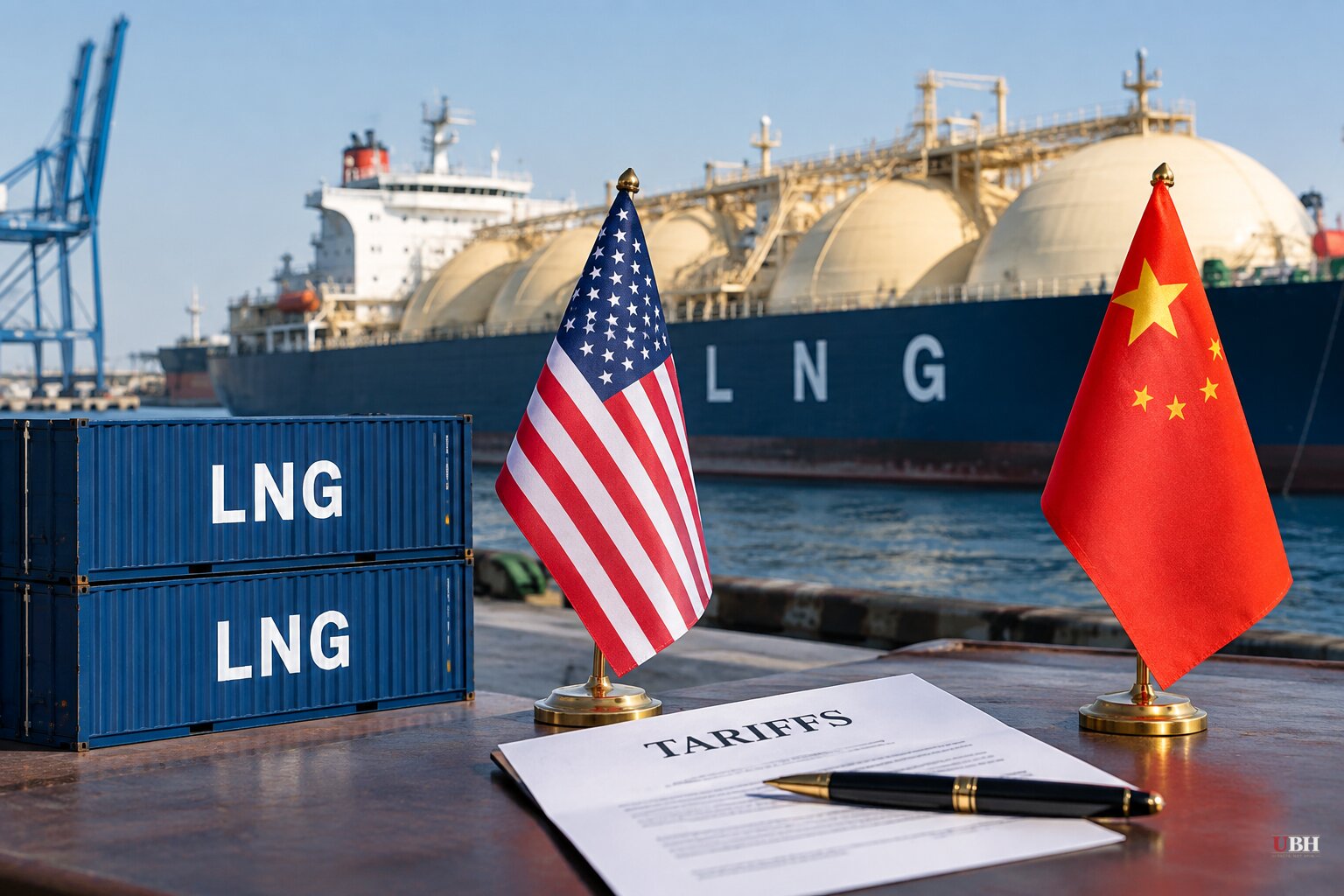
Xi Jinping is set to arrive in Washington this week, on September 24, carrying what Bloomberg calls an easy, low-cost offering: a commitment to revive roughly $6 billion a year in American liquefied natural gas purchases.
Treasury Secretary Scott Bessent met Chinese Vice-Premier He Lifeng in New York on Sunday to finalize pieces of a broader deal ahead of the summit, according to Reuters. The talks center on a reciprocal package covering about $30 billion in goods, with China's 15% tariff on U.S. LNG as the headline item, Reuters reported.
How the tariff got there in the first place
China slapped that 15% levy on American LNG in February 2025, days into Trump's second term, retaliating against his broader tariff campaign, according to Bloomberg. The effect was immediate and total: LNG shipments to China dropped from 64 vessels in 2024 to effectively zero in 2025, per Reuters reporting cited by Ground News.
Chinese buyers didn't walk away from their contracts entirely. Bloomberg reports Chinese companies kept meeting contractual obligations but rerouted the cargoes, reselling them to buyers in Europe and Asia instead of paying the tariff to bring them home.
What's actually on the table
Beijing's existing LNG contracts with U.S. suppliers add up to about 14 million tons a year, worth roughly $6 billion at long-term prices, according to Bloomberg's calculations. Spot purchases could push that number higher.
Jane Nakano, a senior fellow at the Center for Strategic and International Studies, told Bloomberg that "LNG is an apparent area of mutual gain," arguing restored ties would do more than fix a trade imbalance, it would help sustain growth in the U.S. LNG industry.
There's already movement on the ground. China Gas Holdings agreed last week to a 20-year U.S. LNG supply deal starting in 2030, Bloomberg reported, calling it a rare long-term commitment after months of tension. Other Chinese buyers held talks with U.S. exporters at a gas conference in Bangkok last week, according to traders who spoke to Bloomberg on condition of anonymity.
AgroLatam, citing Reuters, reported the LNG piece could be bundled with agriculture and rare earths in the broader summit framework, giving U.S. farmers another angle to watch. China pledged in May to boost purchases of American farm goods, and USDA export-sale data has since shown Chinese soybean buys, though AgroLatam notes a tariff cut on LNG wouldn't automatically translate into guaranteed agricultural purchases.
Reason for caution: this movie has played before
Anyone tempted to bank on a $6 billion windfall should check the record. Bloomberg points out that natural gas projects made up more than half of the $250 billion in deals announced when Trump visited Beijing in 2017, and many of those turned out to be non-binding and were eventually abandoned. The 2020 Phase One agreement also leaned heavily on China ramping up energy purchases as part of a pledge to boost imports by $200 billion.
That history is the strongest argument for skepticism here. Chinese buyers have every incentive to sign symbolic long-term contracts around a high-profile summit and quietly slow-walk the actual volumes later, just as they've done before with this administration and its predecessor. Reuters and Bloomberg both note the current proposal remains under negotiation, with no final agreement announced as of today.
A separate wrinkle: Beijing's broader trade strategy
The Epoch Times reported that Xi held a phone call with UK Prime Minister Andy Burnham on September 8, pushing "inclusive economic globalization" and multilateral trade frameworks, in what the outlet described as part of a Chinese effort to counter U.S. decoupling policy. That call and the LNG talks are separate diplomatic tracks, not the same negotiation.
The Epoch Times also cited an anonymous source it identified only by the surname Pan, described as close to China's Ministry of Commerce, who alleged Chinese goods are being funneled into the U.S. market via reassembly in Vietnam and Mexico to blunt the effect of decoupling, pointing to Vietnam's trade surplus with the U.S. approaching $200 billion.
Bessent's office and China's Ministry of Commerce have not announced a signed agreement as of Monday.
Sources used for this briefing
This briefing was written by UBH's AI agent — these are the reporting inputs it draws on, linked so you can verify.


