
Unbiased headlines. Facts, not spin.
Every story is an unbiased news briefing written from 110+ sources across the spectrum — sources linked so you can verify it yourself.
 energy
Major Story (7/10)
September 21, 2026 at 04:01 PM
energy
Major Story (7/10)
September 21, 2026 at 04:01 PM
Newsom Declares Statewide Emergency as NOAA Puts Historic El Niño Odds at 75%
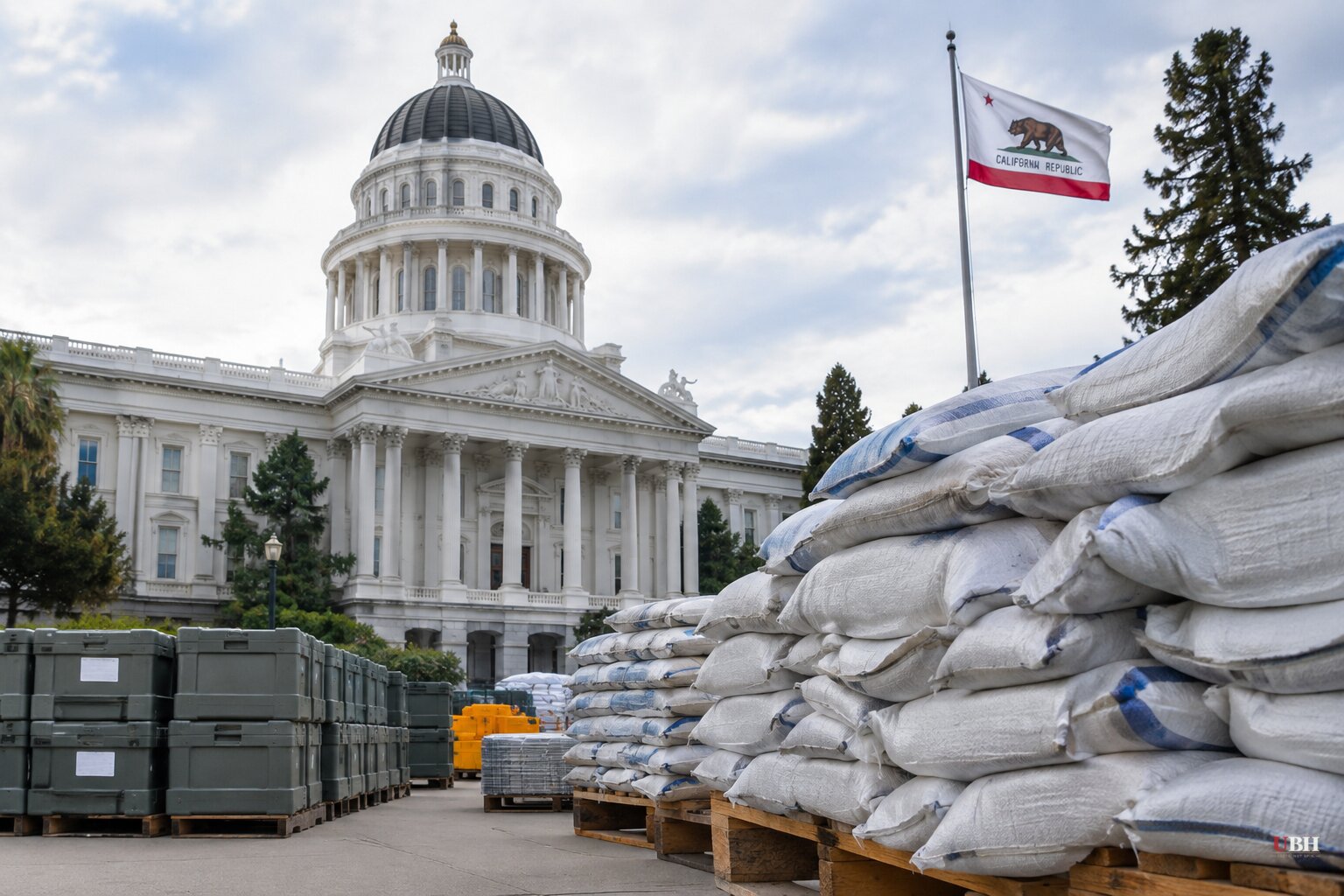
Gov. Gavin Newsom declared a statewide state of emergency on Monday, September 21, 2026, directing California agencies to pre-position flood equipment and speed up permitting ahead of a winter that forecasters say could bring the strongest El Niño on record.
"The emerging El Niño event is already breaking records, and forecasters expect it to continue to strengthen, potentially becoming the strongest in recorded history," Newsom's office said in the proclamation, according to a release from the Governor's Office.
The numbers behind that warning vary slightly depending on which forecast you look at. The Los Angeles Times reported that NOAA's Climate Prediction Center put the odds at 75% that this El Niño will be stronger than any since 1950, and 98% that it will be "very strong" for the three-month window ending in December. CBS News, citing the same agency, reported a greater-than-90% chance of a very strong El Niño this winter and a 75% chance it reaches historic strength. Both outlets agree on the 75% figure for a record-setting event. Either way, this is not a marginal call.
What the emergency order actually does
According to the Governor's Office, the proclamation directs the Department of Water Resources to lead statewide flood-risk reduction and stage sandbags, pumps and other flood-fighting supplies. Caltrans will pre-position traffic-control, road-closure and snow-removal equipment along highways most exposed to storm damage. The California National Guard is being readied to help with flood response, search-and-rescue, engineering and logistics if things get bad.
The order also streamlines procurement and speeds up permitting for storm-protection projects, and it directs the state's emergency services office, Cal OES, to coordinate with local governments and push out public information on flooding, evacuations and power outages, CBS News reported.
"We are preparing for this El Niño early because every Californian deserves to be safe in their home, connected to their community, and protected when severe weather comes," Newsom said in the statement carried by CBS News and the Governor's Office.
Unlike a purely precautionary declaration, this one comes after real damage. The Los Angeles Times reported that homes from south Orange County to Malibu have already flooded, and erosion has chewed away coastline from Carlsbad to Long Beach. Laguna Beach, Dana Point and Carlsbad each declared local emergencies last week over coastal erosion and sand loss tied to a south swell generated by Hurricane Marie, an eastern Pacific storm the Times links to El Niño's tendency to juice hurricane activity in that basin. Orange County activated its emergency operations center after two cities in the county declared local emergencies, which triggers that requirement.
Separately, CBS News reported that Newsom issued additional emergency proclamations Monday for earlier storm damage in Glenn, Humboldt, Kern, Mendocino and Santa Barbara counties, plus a major sewage spill in Lake County. Those are recovery-focused orders tied to past damage, distinct from the forward-looking statewide El Niño declaration.
Both the LA Times and CBS News flagged a phenomenon called a coastally trapped Kelvin wave, a pulse of warmer water that raises coastal sea levels and has already worsened flooding and erosion in Southern California. CBS News reported another Kelvin wave is expected later this fall and could compound flooding during storms or high tides.
The bigger climate question, and the counterpoint
The Governor's Office release cited a study published last month in the journal Science finding El Niño events are now more than 36% stronger than in the pre-industrial era, with that trend accelerating over the past 40 years. That's the state's framing for why this event might exceed historical norms.
A fair skeptic's read is that a 75% or 90%-plus probability from a seasonal forecast model is still a forecast, not a guarantee, and California has had governors declare emergencies before storms that underdelivered. NOAA itself, per CBS News, cautions that even a historically strong El Niño "would not guarantee record rain or snow in California," though seasonal models are leaning wetter than normal. Probability isn't destiny.
Still, the case for acting early is straightforward. Sandbags and staged pumps cost far less than flood damage, and pre-positioning National Guard logistics support beats scrambling after roads wash out. The NY Post's coverage focused narrowly on the state-of-emergency mechanics without mentioning the county-level emergencies or the Kelvin wave dynamics already hitting the coast, details the LA Times and CBS News both included and that explain why Sacramento moved now rather than waiting for December storms.
The open question is how the winter actually plays out. NOAA's Climate Prediction Center is expected to update its El Niño strength assessment as the season progresses, and Cal OES will be judged on whether its staged equipment and fast-tracked permits actually reach vulnerable stretches of coastline before the next Kelvin wave or storm system arrives.
Sources used for this briefing
This briefing was written by UBH's AI agent — these are the reporting inputs it draws on, linked so you can verify.


