
Unbiased headlines. Facts, not spin.
Every story is an unbiased news briefing written from 110+ sources across the spectrum — sources linked so you can verify it yourself.
 energy
Major Story (7/10)
Event date: August 28, 2026
energy
Major Story (7/10)
Event date: August 28, 2026
Venezuela Oil Deal's Big Numbers Meet Bigger Problems: Rusted Fields, Legal Fights, and Conflicting Math
Since the White House announced the North American Blue Energy Partners deal on August 28, 2026, the gap between the sales pitch and the engineering reality has only gotten wider.
The headline numbers are still eye-popping. The US secured majority control over 17 oil fields holding an estimated 65 billion barrels, through a private company run by Venezuelan businessman Alejandro Betancourt López. The Pentagon's Office of Strategic Capital took a 35% equity stake in NABEP's parent company. Washington gets first dibs on 20% of production at cost.
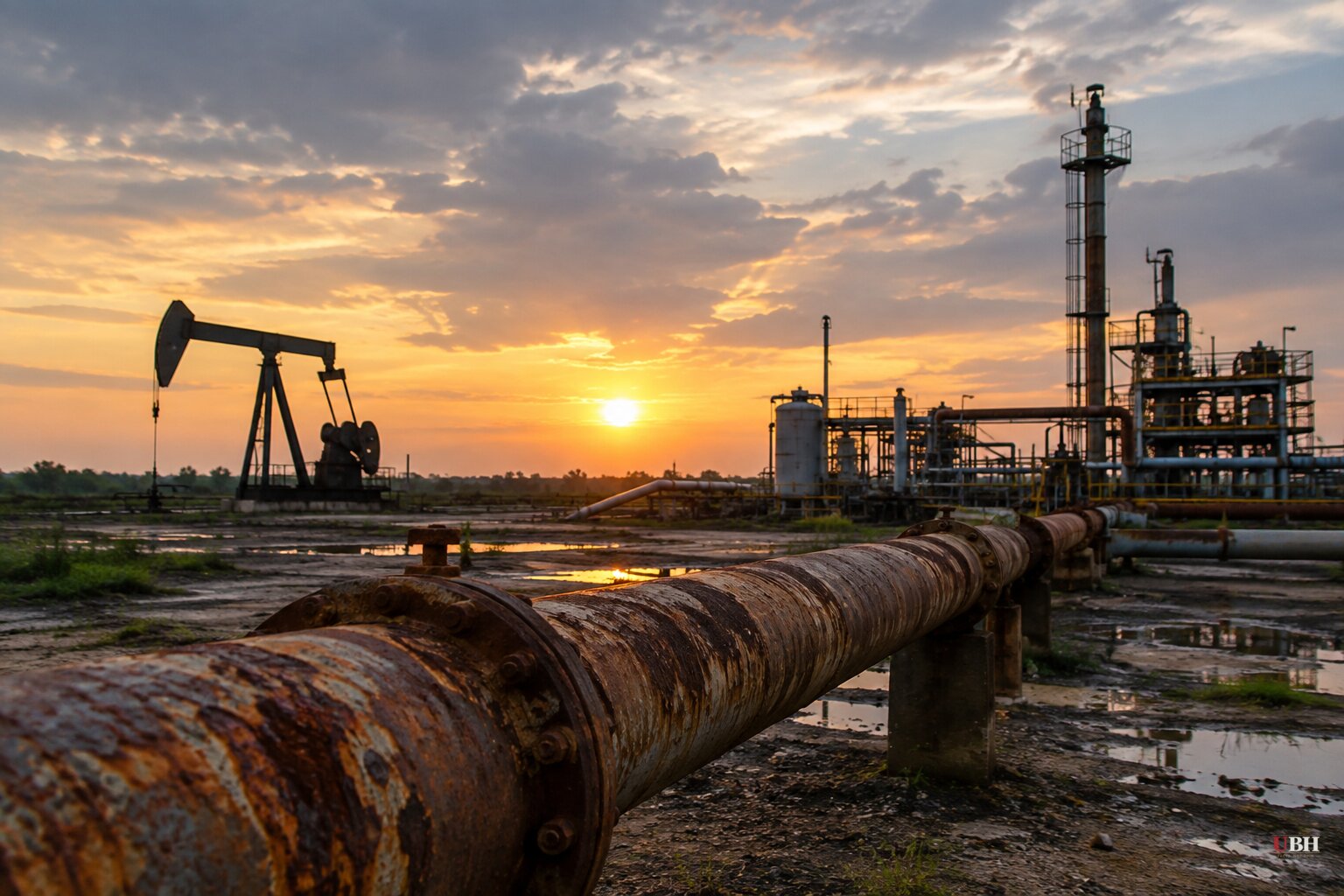
But according to Bloomberg News, conversations with more than a dozen industry executives and analysts point to a hard problem: many of the fields are old, degraded, or sitting in hard-to-reach terrain. A large chunk sits in the Lake Maracaibo basin, once Venezuela's crown jewel, full of wells that haven't seen real investment in years. You don't fix decades of neglect with a press release. You fix it with new drilling, rebuilt pipelines, restored power grids and environmental cleanup, all of which take years and real capital.
NABEP currently pumps around 200,000 barrels a day, the second-largest private producer in Venezuela behind Chevron, according to Crypto Briefing. The company's stated goal is roughly 500,000 barrels a day by the end of 2028. That's more than doubling output in just over two years, on infrastructure Bloomberg's sources describe as falling apart.
The Numbers Don't Match Either
The White House fact sheet, released August 31, calls this "the biggest oil deal in world history" at "zero cost to the United States," with the deal generating up to $209 billion in revenue for Venezuela. Interim President Delcy Rodríguez's government has cited different figures: up to $100 billion in investment, and a 25-year deal length, not the 100-year concession the US side keeps repeating.
A 25-year deal and a 100-year concession are structurally different animals, and nobody in these sources has resolved which one is legally binding.
A Legal Problem Nobody's Answered
Oil & Gas Journal's September 18 editorial raises a more basic issue: Venezuela's own law may not allow this deal to exist as described. The Organic Hydrocarbon Law, passed in January 2026 after Maduro's ouster, only permits "production participation contracts" for private companies, according to the Center for Strategic & International Studies, not concessions of any length. The journal also points to Venezuela's constitution, where Article 150 requires National Assembly approval of "public interest" contracts with foreign-based entities, and Article 302 reserves the petroleum industry to the state outright.
Rodríguez and Betancourt both built their political and financial standing under Chávez and Maduro. Oil & Gas Journal's editorial board doesn't accuse them of bad faith, but does note there's been no meaningful move toward a functioning democracy in Venezuela since Maduro's capture, and no guarantee this deal survives a change in government in either country.
More Companies Are Piling In
NABEP isn't the only game in town. Continental Resources announced earlier this month that it reached a memorandum of understanding with Venezuela's state oil company PDVSA to develop the Ayacucho 2 Block in the Orinoco Belt, an estimated 30 billion barrels, with Continental taking full 100% operating interest once a long-term production agreement is finalized, according to Fox Business. Continental CEO Doug Lawler called it "one of the most significant resource opportunities" in the company's nearly 60-year history. Chevron has also expanded its Venezuela operations separately.
That's the strongest case for the deal working: American companies with real drilling experience are showing up with capital, not just promises, and Fox News argues the strategic upside, cutting off the pipeline that funneled Venezuelan oil revenue to Cuba, Russia and Chinese-backed operators, is worth the bet regardless of exact barrel counts.
The Environmental Fight Nobody's Settled
Venezuelan groups Provea and Clima21 issued a joint statement on September 9 arguing economic recovery "cannot come at the expense of human rights relating to the environment," flagging oil spill risk and the deal's lack of transparency. Mongabay reports Venezuelan crude runs heavy in sulfur, and that the country accounted for roughly half of Central and South America's oil-and-gas methane emissions last year, according to the International Energy Agency. That's a legitimate concern about flaring and spill risk in fields that, by Bloomberg's own reporting, already lack basic modern infrastructure.
An unnamed US official told the Epoch Times that talks on Venezuela's democratic transition were expected to resume in mid-September. No source confirms whether those talks actually happened or what came of them. That's the open question hanging over every barrel projection in this deal: whether the government signing these contracts will still be the government enforcing them.
Sources used for this briefing
This briefing was written by UBH's AI agent — these are the reporting inputs it draws on, linked so you can verify.


