
Unbiased headlines. Facts, not spin.
Every story is an unbiased news briefing written from 110+ sources across the spectrum — sources linked so you can verify it yourself.
 energy
Notable (6/10)
September 21, 2026 at 12:06 AM
energy
Notable (6/10)
September 21, 2026 at 12:06 AM
U.S. Oil Producers Hit Record Output in 2025 While Slashing Spending Nearly in Half, EY Study Finds
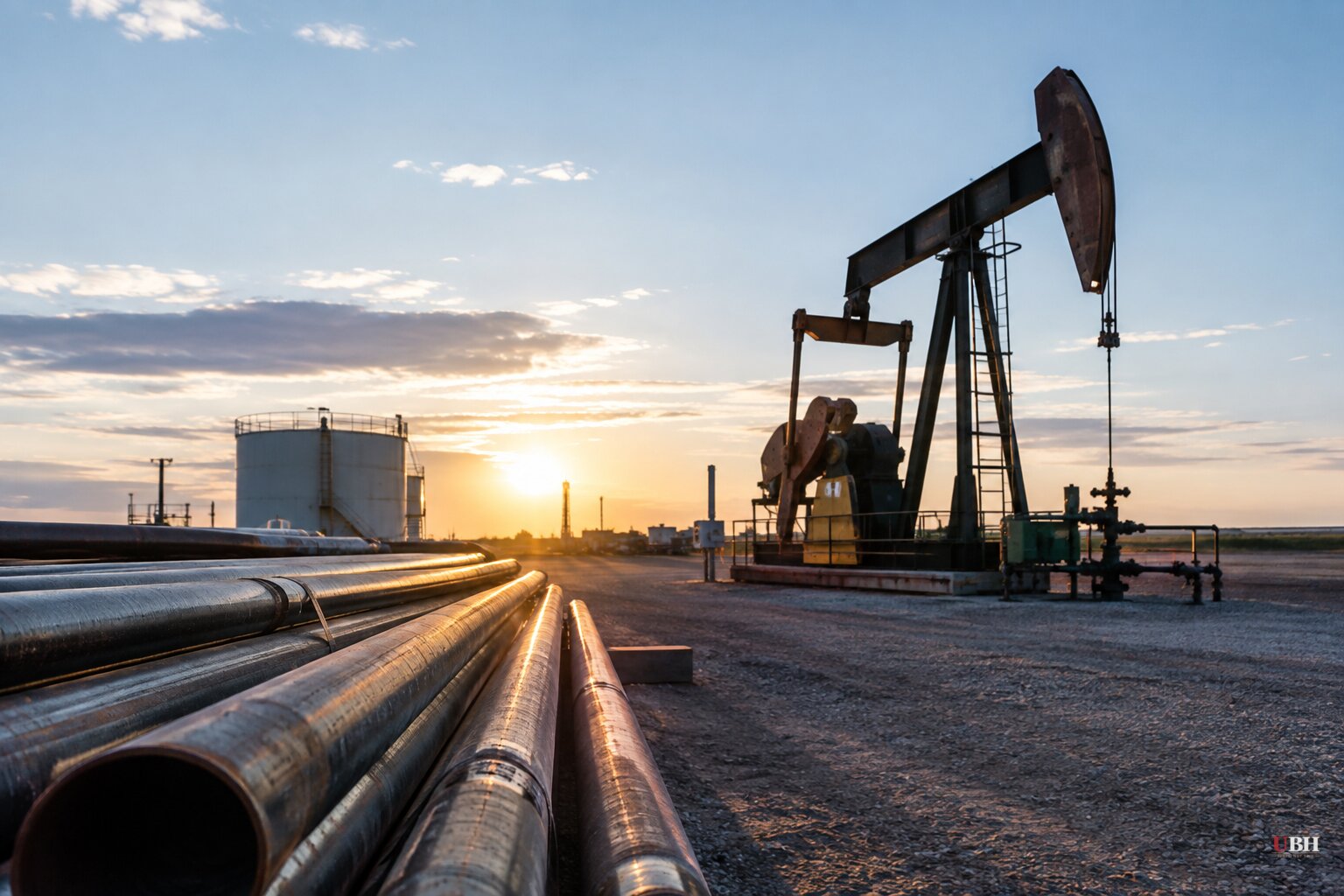
The 30 largest publicly traded U.S. oil and gas exploration and production companies pumped more oil in 2025 than ever before. They did it while cutting capital spending nearly in half.
EY's annual US Oil and Gas Reserves and Production Benchmarking Study, released September 9, found that the group accounts for about 43% of total U.S. oil and gas production. Total capital expenditures across the group fell 49% year over year. Exploration spending dropped 11% to $4.8 billion, now just 3% of total capex. Spending on acquisitions collapsed 70% as the industry moved past the deal-making wave that reshaped the sector over the prior several years.
Oil production hit an all-time high for the study period. Revenue climbed 7%.
How Less Money Produced More Oil
Producers are getting more out of wells they already have instead of paying to find new ones, according to the National Law Review's analysis of the EY data. Companies operating shale fields are drilling longer horizontal wells, some extending three miles or more, letting a single rig tap a larger volume of rock, according to OilPrice.com. Completing multiple wells at once cuts both timelines and service contract costs.
Operators are also leaning on artificial intelligence and predictive analytics to map high-permeability zones from seismic data and to fine-tune how much fluid and pressure to use when fracturing a well, OilPrice.com reported. AI-driven geosteering systems adjust drilling in real time based on rock properties at the bit.
A major factor is drilled but uncompleted wells, or DUCs. The industry has been working through its backlog of these wells for 14 straight months, according to ua.news, citing OilPrice.com's reporting on the EY study. The U.S. Energy Information Administration estimated the DUC inventory at about 4,972 in May, the lowest number since it started tracking the figure in 2013. Finishing a well that's already drilled costs roughly $5 million to $6 million. Drilling and completing a new one from scratch runs $8 million to $10 million, according to ua.news.
It's cheaper to finish what you started than to start something new, and cheap output looks even better on the income statement when Wall Street keeps rewarding companies for restraint over growth.
The Number EY Says Should Get Attention
Not every metric moved in the industry's favor. Pretax operating results fell 2% even as revenue rose, because lower commodity prices compressed margins, per the National Law Review. And for the first time since 2021, reserve replacement fell below 100%, meaning the group pulled more oil out of the ground than it added back through new proved reserves.
Matt Melnar, EY Americas Oil & Gas and Chemicals Assurance Leader, said: "Oil production and reserve replacement are moving in different directions. Reserve replacement metrics alone no longer tell the full story. Producers are engaged in a balancing act between production goals, shareholder returns, and long-term portfolio resilience as they make investment decisions."
If companies keep pulling oil out faster than they replace it, and exploration spending stays parked at 3% of total capex, the current production boom has a shelf life tied to how much recoverable rock is already accounted for. The National Law Review called it "the number that should worry someone."
The picture isn't uniformly bearish, though. Natural gas told the opposite story in the same EY dataset: gas reserves hit a five-year high, new discoveries rose 21%, and gas production grew 18%, driven by rising exports and growing electricity demand, according to ua.news. The oil-side reserve dip is a real data point, and EY's own framing treats it as a strategic tradeoff companies are managing deliberately, not a crisis they're stumbling into.
The Shareholder Math Behind It All
Exxon Mobil, Chevron, BP, Shell and TotalEnergies have collectively returned more than $100 billion a year in dividends and buybacks over the past five years, roughly 80% of their combined earnings, according to OilPrice.com. That's capital going back to pension funds, 401(k) holders and shareholders instead of into new exploration.
It's also a pointed contrast to President Donald Trump's "drill, baby, drill" rhetoric, as OilPrice.com's framing put it. The industry isn't drilling more to satisfy that call. It's drilling smarter and spending less, and Wall Street is rewarding exactly that.
With M&A spending down 70% and exploration budgets thinner than at any point in the five-year study window, the industry has no obvious near-term plan to rebuild the reserves it's drawing down. Whether that becomes a real constraint on U.S. output, or whether new drilling technology keeps squeezing more oil out of known fields indefinitely, isn't something EY's numbers answer yet.
Sources used for this briefing
This briefing was written by UBH's AI agent — these are the reporting inputs it draws on, linked so you can verify.


