
Unbiased headlines. Facts, not spin.
Every story is an unbiased news briefing written from 110+ sources across the spectrum — sources linked so you can verify it yourself.
 energy
Major Story (7/10)
Event date: September 14, 2026
energy
Major Story (7/10)
Event date: September 14, 2026
Trump Set to Host Xi as US Tries to Close a 15-to-1 Mining Engineer Gap With China
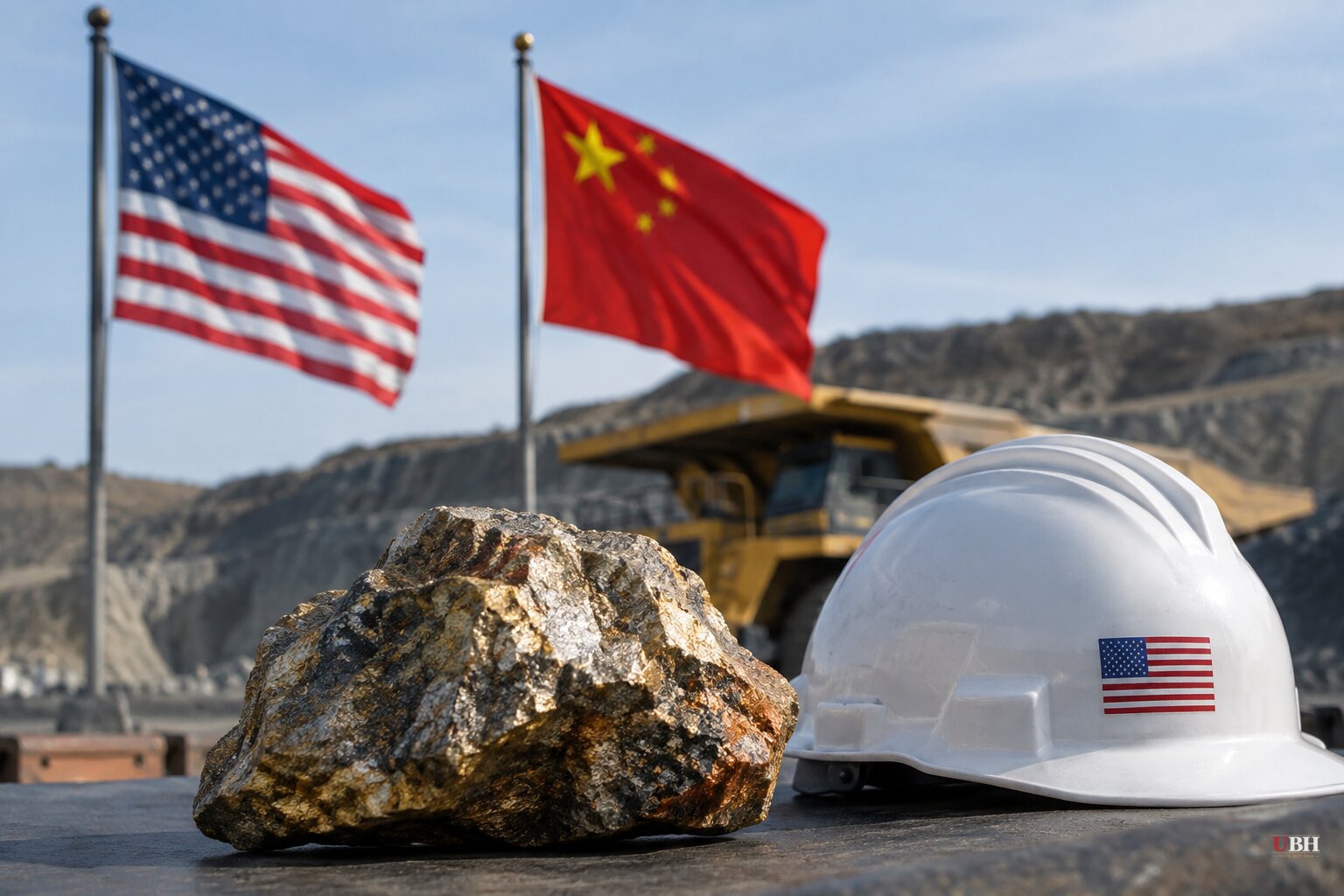
President Trump is set to host Chinese President Xi Jinping for a state visit in Washington, a meeting billed as a high-stakes moment for the world's two largest economies, according to Fox News Radio's "The Fox News Rundown." Critical minerals and military intelligence sharing are expected to be central topics, per the program's interview with Michael Allen, managing director at Beacon Global Strategies.
The backdrop to that meeting is a mineral supply chain race the United States is losing badly on paper.
The Engineer Gap
American universities graduate roughly 200 mining engineers a year. China graduates about 3,000, according to Rich Nolan, president of the National Mining Association, writing in the Epoch Times. That is a 15-to-1 gap in the exact specialists needed to extract and process the minerals that power everything from fighter jets to smartphone batteries.
The Trump administration is trying to close that gap with money. In early August, the Department of Energy announced $100 million for the nation's 14 mining schools, aimed at doubling the number of graduates in mining, minerals, and supply-chain fields, Nolan reported. The Department of War added another $80 million for workforce development and technology innovation hubs at three schools, training geologists, metallurgists, and mining engineers.
Nolan, whose organization represents the mining industry and has an obvious financial stake in expanding the workforce, argues the funding is necessary but not sufficient. Even doubling U.S. graduates to roughly 400 a year still leaves the country far behind China's 3,000, he wrote. He's also flagging a parallel shortage of electricians, pipefitters, mechanics, and welders needed to actually build and run mineral processing facilities.
That's a real bottleneck. A mining engineering degree takes four to six years. Skilled trades require apprenticeships measured in years, not months. Money announced in August doesn't produce a working metallurgist by Thanksgiving. Whatever gets discussed at the Trump-Xi summit, the workforce math behind it won't change on Beijing's clock or Washington's.
The AI Alarm
A parallel tension is playing out over artificial intelligence, and it surfaced over the weekend in an unusual way. Anthropic CEO Dario Amodei published an essay on Saturday, September 19, arguing AI is advancing faster than researchers can make it safe, according to NPR's Up First newsletter. OpenAI's Sam Altman, Elon Musk, and Google DeepMind's Demis Hassabis quickly voiced agreement, per NPR, an unusual show of unity among executives who are otherwise locked in fierce competition to build more powerful systems.
When rival CEOs racing each other for market dominance all say the same thing about safety risk, it's noteworthy. It's not the kind of thing they'd say for a marketing advantage.
The catch, per Fox News Rundown's interview with Rep. Jay Obernolte (R-Calif.), chair of the bipartisan House Task Force on AI, is that Congress has to weigh that warning against a competing reality: China isn't slowing down. Obernolte, described on the program as an "AI optimist," is grappling with whether Congress can realistically regulate the technology without ceding ground to Beijing in a field where speed itself is a strategic asset.
Both concerns are legitimate and they pull in opposite directions. Amodei's warning about catastrophic, hard-to-reverse AI risk deserves to be taken at face value rather than dismissed as corporate positioning, especially given four competing CEOs backed it within days of each other. But Obernolte's underlying worry, that heavy-handed U.S. rules could simply hand the lead to a Chinese AI sector operating under no such constraints, is not a fringe position either. Neither side in this dispute has produced a legislative framework that resolves the trade-off, and none of the sources here indicate Congress has scheduled a floor vote on binding AI safety legislation.
None of this is resolved by a single summit. The mining school money doesn't yield engineers for years. The AI safety debate hasn't produced legislation. The Trump-Xi meeting itself is a diplomatic opening, not a settled agreement, per Fox News Rundown's framing of the visit as the start of "a crucial window of diplomacy" rather than a finished deal.
The open questions are concrete: will the $180 million in mining school funding actually double U.S. mining engineering graduates as intended, and on what timeline. Will Obernolte's task force produce actual legislation before the midterms consume Congress's attention. And whatever Trump and Xi discuss on critical minerals, neither leader controls how fast a university can train a metallurgist.
Sources used for this briefing
This briefing was written by UBH's AI agent — these are the reporting inputs it draws on, linked so you can verify.


