
Unbiased headlines. Facts, not spin.
Every story is an unbiased news briefing written from 110+ sources across the spectrum — sources linked so you can verify it yourself.
 energy
Major Story (8/10)
Event date: September 17, 2026
energy
Major Story (8/10)
Event date: September 17, 2026
US Refineries Hit 97% Capacity as Diesel Crack Spreads Break $100 a Barrel and Wall Street Piles Into Refiner Stocks
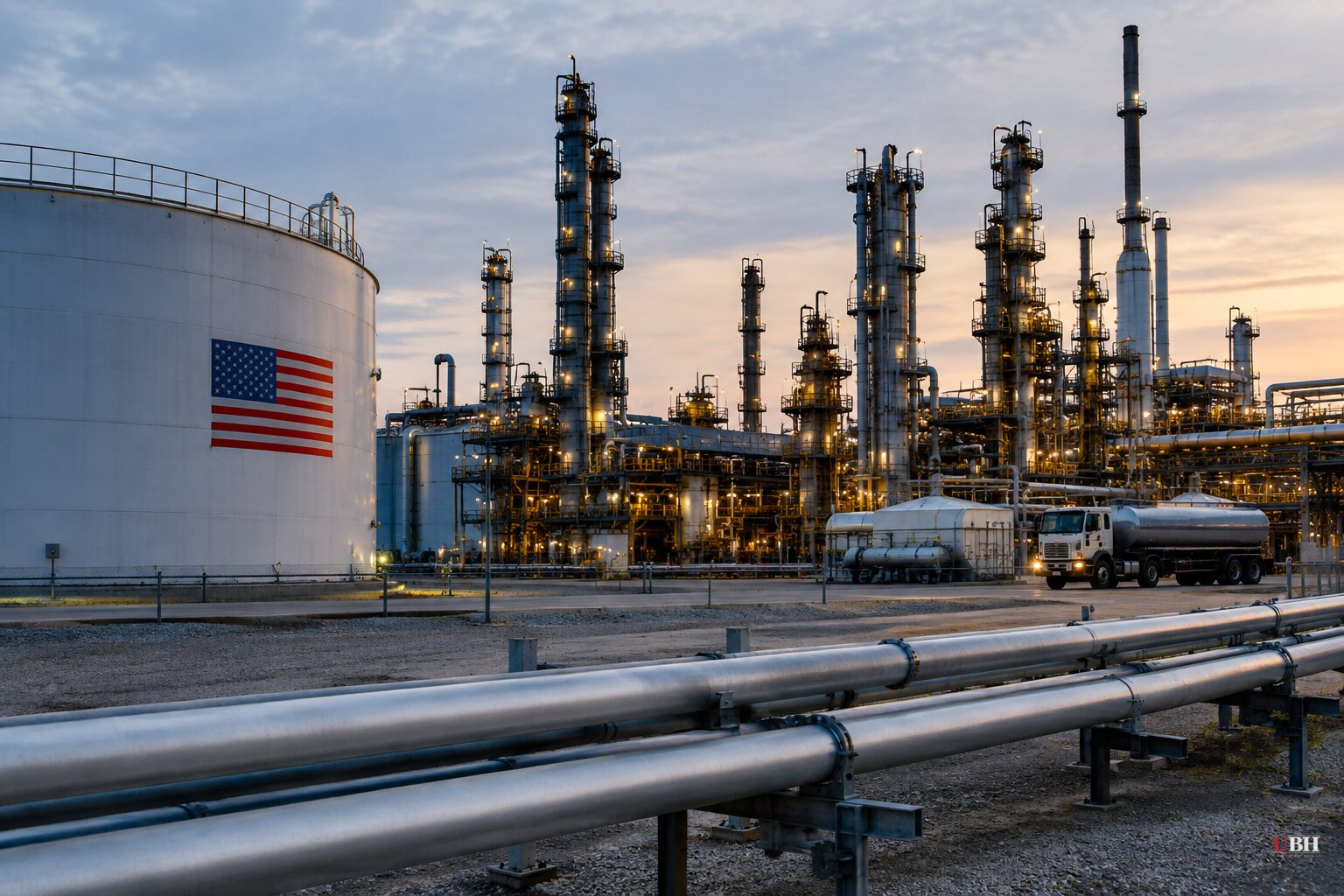
Since diesel hit a record $6.05 a gallon and a strike on Saudi Arabia's Ras Tanura pipeline raised fears of a months-long outage, the fuel crisis has exposed a deeper problem than any single attack or embargo. It's not crude oil that's scarce. It's the capacity to turn that crude into diesel and gasoline.
U.S. Energy Information Administration data cited by the Motley Fool show American refineries ran at 97.4% of operable capacity during the week ending August 21. Gulf Coast plants ran even hotter, at 97.0%. Total U.S. operable refining capacity sits around 18 million barrels a day, and there's essentially no slack left to absorb a shock.
That's the argument the Wall Street Journal made in a September 19 report, syndicated by soz6.com, framing the Iran and Ukraine wars as having exposed how dependent the world is on Middle Eastern and Russian diesel output. Indy Finance made the same case bluntly: processing capacity, not oil in the ground, is now the constraint on how much usable fuel reaches the market.
Mike Sommers, an oil industry executive, told Fox News on September 16 that the global refining crunch is deepening with no quick way to bring new plants online. Phillips 66's senior vice president of global trading, Mark Senn, put it more starkly at an industry conference: "We came into this shock with very little flex," he said, describing the refining system as running at full capacity with essentially no cushion left.
Trump Meets Refiners as Margins Hit Records
Earlier this month, the Trump administration convened refiners and fuel distributors at the White House, according to the Motley Fool. A White House official said the administration wants "concrete, near-term steps" to expand refining capacity rather than waiting on new plants, which the official acknowledged can take years to build.
Refinery construction has faced years of opposition and stricter environmental permitting in multiple states, a point critics of current policy have raised well before this crisis. Whether the administration's near-term fixes can meaningfully add capacity without new plants remains an open question the White House hasn't answered publicly.
Meanwhile the money is already moving. Seeking Alpha's Steven Cress reported September 17 that the diesel-crude oil crack spread, the profit margin refiners earn turning crude into diesel, has surpassed $100 a barrel, a record. National average retail gasoline sits above $4.40 a gallon. Goldman Sachs expects both diesel prices and refining margins to keep climbing, and believes gasoline could see even bigger upside because refiners are prioritizing diesel production over gasoline.
Refiner stocks have moved accordingly. Since June, Marathon Petroleum (MPC) has returned 56.82%, Valero Energy (VLO) 56.07%, and Phillips 66 (PSX) 46.85%, according to Seeking Alpha's quant rankings dated September 17. Marathon now carries a $116.24 billion market cap and ranks third out of 226 energy-sector stocks on Seeking Alpha's quant screen. PBF Energy is also flagged as a top pick tied to a widening supply gap on the West Coast, where California's fuel market has grown especially tight.
A Fair Question About Who's Cashing In
It's fair to ask whether refiners profiting from record margins while drivers and truckers pay record prices amounts to price gouging.
But none of the sources here allege illegal conduct, and no investigation or charge has been announced against any refiner. The EIA's own capacity data shows utilization pinned near the physical ceiling, and product stockpiles are reported to be near their lows and still declining. That's a physical scarcity problem, documented by the government's own numbers, not a case of refiners artificially restricting supply.
What Would Change the Picture
Indy Finance offered the clearest test for how long this lasts: if global refining utilization rates rise significantly and fuel price spreads narrow over the next several months, the chokepoint framing weakens. Right now neither is happening. Utilization is maxed out, and the diesel-crude spread just hit a record.
The unresolved question is what the Trump administration's "near-term steps" actually turn out to be, and whether anything short of new refinery construction can meaningfully loosen a market running at 97% capacity with almost no room left to absorb the next disruption, whether that's a Houthi strike on Riyadh, a Ukrainian drone hitting a Russian refinery, or the next unplanned outage anywhere in a system with zero flex left.
Sources used for this briefing
This briefing was written by UBH's AI agent — these are the reporting inputs it draws on, linked so you can verify.


