
Unbiased headlines. Facts, not spin.
Every story is an unbiased news briefing written from 110+ sources across the spectrum — sources linked so you can verify it yourself.
 energy
Breaking / Critical (9/10)
Event date: September 13, 2026
energy
Breaking / Critical (9/10)
Event date: September 13, 2026
Supertanker Rates Cross $1 Million a Day for the First Time as Iran War Grinds Into Its Seventh Month
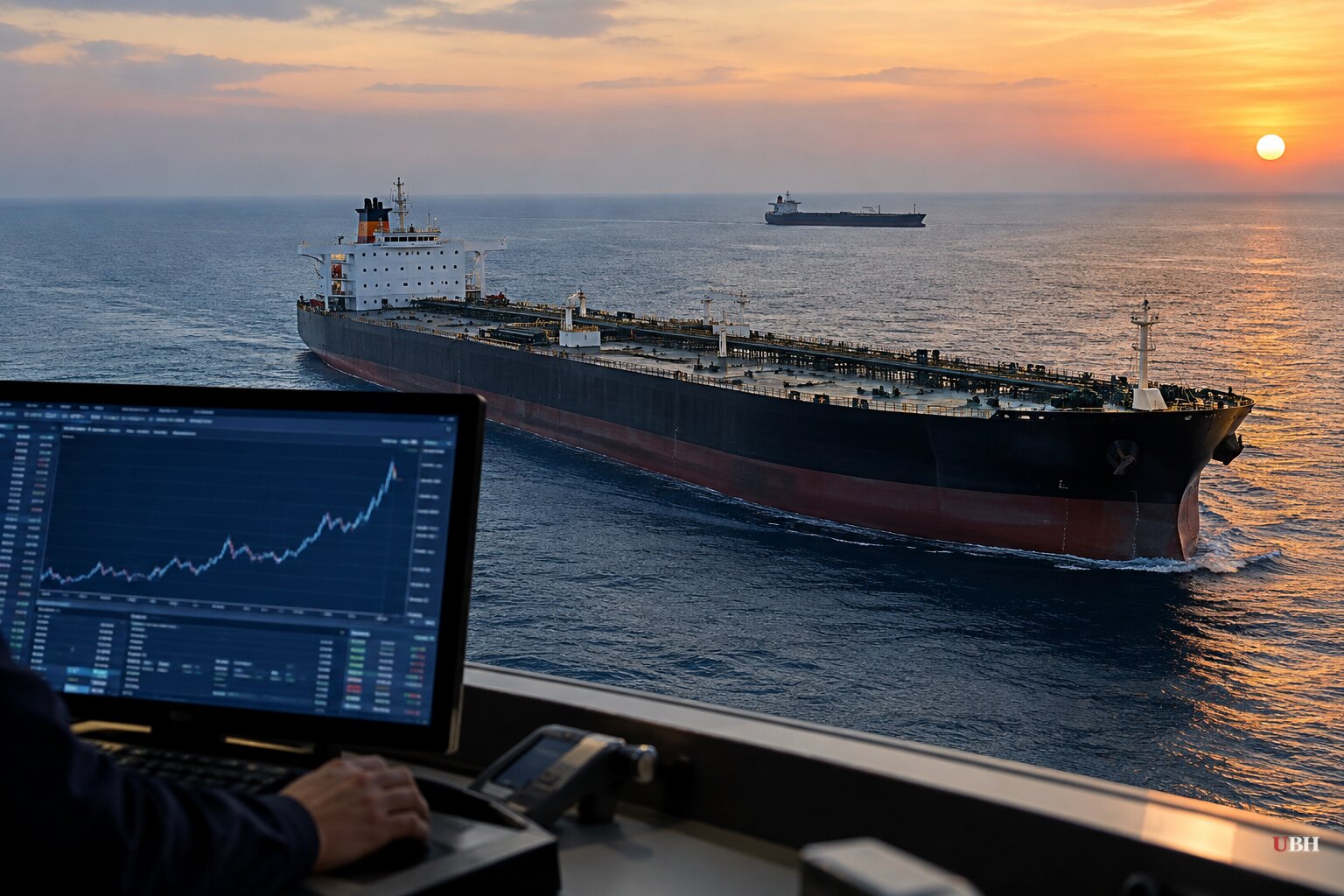
Since the US-Iran war escalated in late February 2026, the cost of moving a barrel of crude has become almost as newsworthy as the price of the crude itself. This week, for the first time ever, a Very Large Crude Carrier hauling oil from the Persian Gulf to China crossed $1.035 million a day in charter earnings, according to Baltic Exchange data cited by Fortune and reported by LiveMint. Before the war, that same voyage cost about $208,000 a day, per the Platts VLCC index.
The numbers have been climbing fast even by wartime standards. On Sept. 10, Bloomberg reported through gCaptain that the Middle East-to-China route was earning a then-record $800,000 a day, with the US Gulf-to-Asia run fetching a record lump-sum offer of $29.5 million, about $15 a barrel. Four days later, on Sept. 14, that Gulf Coast-to-China lump sum jumped to $39 million. By Sept. 15, it hit $44.8 million, according to Baltic Exchange data reported by TTNews, roughly $22.40 a barrel before the cost of the oil itself. That's up from $17.8 million before the war broke out.
Crypto Briefing puts the overall freight spike at 258% in two months, with the Middle East Gulf-to-China route now running about $24 a barrel and Houston-to-Asia cargoes carrying a $26 premium. Freight now eats up as much as 25% of the delivered price of a barrel in some cases, according to that outlet.
Pressures Stacking Up
Three things are compounding the problem. First, war-risk insurance: premiums for vessels have jumped to roughly 10% of the ship's value, up from 0.5% to 1% before the war, Vortexa principal freight analyst Ioannis Papadimitriou told Fortune. Second, fewer captains are willing to sail near the Strait of Hormuz at all. Two tankers were hit by projectiles in the strait on Friday, LiveMint reported, underscoring that commercial vessels remain direct targets seven months into the fighting.
Third, Saudi Arabia closed its East-West pipeline, the overland bypass that let Saudi crude reach the Red Sea without transiting the Persian Gulf, according to TTNews. That has pushed even more traffic through the chokepoint everyone is trying to avoid, and it's made US Gulf Coast crude more critical to Asian buyers even at inflated freight costs, because West Texas Intermediate delivered into Asia still undercuts competing grades like Murban from the UAE.
Secondary chokepoints are catching the overflow. Panama Canal auction slots for priority passage have hit a record $5.3 million, per Crypto Briefing, and Suez Canal surcharges are climbing as rerouted traffic floods those lanes instead.
Data firm Kpler expects VLCC daily earnings to stay above $100,000 into next year, more than double the roughly $45,000 that was historically the ceiling, according to gCaptain. Morgan Stanley separately projected two-year VLCC leasing rates could rise another 20% to 30%.
Winners and Losers
Shipowners are having their best stretch in memory. Clarksons, the world's largest shipbroker, reported record quarterly earnings including a 55% year-over-year increase, LiveMint reported. Frontline, Scorpio Tankers, International Seaways, and DHT Holdings are among the tanker operators positioned to benefit, per TradingView.
The bill lands on refiners and, eventually, drivers. LiveMint cited Fortune reporting that US diesel prices have crossed $6 a gallon for the first time, about 60% above pre-war levels. Regular gasoline hit a Labor Day record of $4.15 a gallon nationally on Sept. 7, according to AAA, the first Labor Day in history above $4. California topped out at $5.83. GasBuddy analyst Patrick De Haan said the bigger driver isn't even the Strait of Hormuz disruption itself but "the growing loss of Russian refinery capacity," which he said would keep pressuring both gasoline and diesel prices until it improves.
Asia is absorbing the freight shock directly. China, India, Japan, and South Korea, the world's largest crude importers, are paying the $24-a-barrel premium on top of a crude price that has already climbed more than 40% since the war began, according to gCaptain.
The Political Wildcard
Oil markets are also pricing in politics. Brent crude hit $108 a barrel earlier this month, its highest settle since May 19, CNN reported, as S&P Global Energy said for the first time it no longer expects Middle East oil production to return to pre-war levels by the end of 2027, and now projects prices staying in the $80-to-$100 range through next year. S&P's Jim Burkhard said the market is "adjusting to the new normal defined by unresolved conflict and persistent maritime risk."
President Trump has offered a starkly different forecast, telling reporters that gas prices will be "plummeting" and the war will end "very shortly" after the Nov. 3 election. That's a real disagreement between the sitting president and one of the industry's most-cited forecasting shops, not a settled fact either way. S&P's outlook is a projection built on current trendlines, not a guarantee, and if Iran's reported war-ending terms sent to Washington via Qatar lead to an actual ceasefire, freight rates could unwind quickly given how much of the premium is pure war risk rather than physical scarcity.
For now, six VLCCs are already booked to load US Gulf Coast crude for Asia in October, according to Kpler data cited by TTNews, meaning American exporters are locking in the current era of record freight rates regardless of which forecast turns out right.
Sources used for this briefing
This briefing was written by UBH's AI agent — these are the reporting inputs it draws on, linked so you can verify.


