
Unbiased headlines. Facts, not spin.
Every story is an unbiased news briefing written from 110+ sources across the spectrum — sources linked so you can verify it yourself.
 energy
Major Story (8/10)
Event date: September 9, 2026
energy
Major Story (8/10)
Event date: September 9, 2026
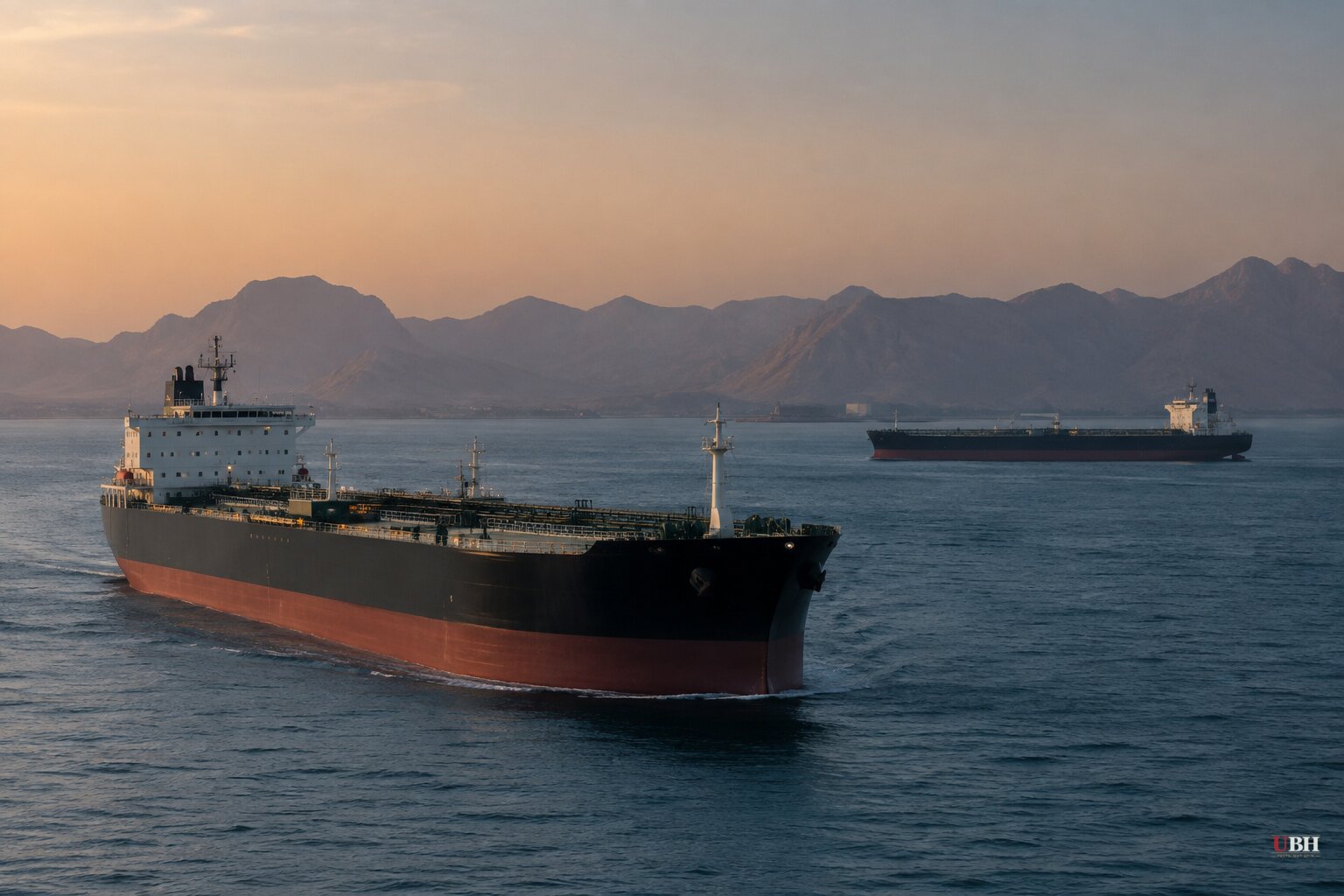
Oil Tanker Rates Top $1 Million a Day as US-Iran War Chokes the Strait of Hormuz
A War Nobody Can Ship Around
The global oil shipping market has effectively seized up since Iranian and US forces began trading strikes on tankers in the Strait of Hormuz earlier this month.
According to Bloomberg data cited by Energy Connects, the cost of hiring a tanker to haul crude from the Persian Gulf to China topped $1.035 million a day on Monday, Sept. 14, the highest rate the Baltic Exchange in London has recorded on that benchmark route. Even the workaround, moving oil from the Gulf of Oman to China without transiting Hormuz, now runs about $644,000 a day.
The immediate trigger came on Sept. 9. The US targeted five Iranian oil tankers, according to dmarketforces. Iran's Islamic Revolutionary Guard Corps says it responded by striking two US vessels and eight tankers inside the strait. Brent crude jumped more than 3% that day, crossing $100 a barrel for the first time since May 22, dmarketforces reported.
Days later, Saudi Arabia's East-West Pipeline, one of the kingdom's few routes for moving crude without touching Hormuz, went offline after attacks originating from Iraq struck the line, according to Investing Live. Brent spiked more than 6% to $107.63 a barrel on word the outage would delay refinery deliveries, dmarketforces reported. Some September oil shipments bound for Europe were canceled outright on Sept. 15. Up to 4% of global oil supply is now at risk if the pipeline stays down, dmarketforces reported.
Shipowners Cash In While Buyers Get Squeezed
Houthi attacks tied to Iran and Russia are adding to the chaos, forcing some tankers onto a route around Africa that adds roughly 30 days to a voyage, according to Bloomberg reporting carried by Energy Connects. That's sucking up available ships just as more vessels are needed to shuttle barrels out through Hormuz for pickup outside the strait.
Japan's Mitsui OSK Lines, one of the world's largest tanker operators with more than 900 vessels, is moving to sell off some of its oldest ships while prices are this high. Chair Takeshi Hashimoto told reporters at the Gastech conference in Bangkok on Sept. 16 that the company plans to sell one to two ships a year, saying "we should not miss the opportunity" and calling current prices "quite attractive," according to TTNews. A 5-year-old very large crude carrier now sells for about $151 million, more than a new build at $130 million, because shipyards can't take new orders until the end of the decade, per data from Signal Ocean cited by TTNews. A 20-year-old tanker fetches about $71 million, up 90% from a year ago.
Activist investor Elliott Investment Management disclosed earlier this year that it took a "significant stake" in Mitsui OSK and is pushing the company to sell vessels to improve capital efficiency, TTNews reported. Persian Gulf nations, meanwhile, are on a tanker-buying spree of their own to gain more control over their oil exports.
US crude bound for Asia is caught in the same squeeze. Freight costs on the Gulf Coast-to-Asia route are running at or near record levels, according to Investing Live, cutting into the price advantage that made American crude attractive to Asian refiners in the first place. Japan, which sources about 95% of its oil from the Middle East and moves roughly 70% of total supply through Hormuz, has seen its Nikkei 225 index fall for three straight sessions this month on the combination of oil costs, a firmer yen, and expectations of a Bank of Japan rate hike, Investing Live reported.
Pain at the Pump, and in the Fed's Numbers
The US national average for gasoline hit $4.44 a gallon as of Sept. 17, up 38.7% from a year earlier, according to AAA data cited by dmarketforces. Diesel hit a record $6.40 a gallon, up from $3.70 a year ago.
The US Consumer Price Index rose 0.4% month-over-month and 3.4% year-over-year in August, with a 3.9% jump in gasoline prices accounting for more than a third of the monthly increase, dmarketforces reported. The Federal Reserve responded Wednesday, Sept. 16, by raising its policy rate 25 basis points to a range of 3.75% to 4%, its first hike since 2023, per dmarketforces. A stronger dollar from higher rates makes oil pricier for buyers using other currencies, which can dampen demand, but it does nothing to fix the actual shortage of ships and pipeline capacity driving the crisis.
Protests From Damascus to Guatemala City
The economic pain isn't limited to Americans grumbling about diesel prices. CNN reported that Syria raised diesel prices by roughly 40% to 175 Syrian pounds ($1.43) a liter, and gas prices by more than 25%, triggering the largest protests in the country since the fall of the Assad regime two years ago. Demonstrators blocked the Hasaka-Deir ez-Zor highway, burned tires, and stopped oil tankers, according to conflict monitor ACLED, cited by CNN.
In Pakistan, Prime Minister Shehbaz Sharif approved a nationwide austerity and energy conservation plan Thursday, cutting government vehicle fuel allocations by 50% for three months, with exemptions for ambulances, fire services, and law enforcement, CNN reported. Protests over fuel costs also broke out in Guatemala and Portugal, per CNN's reporting.
Ordinary people in poorer countries, who had no say in the US-Iran conflict, are absorbing real economic damage from it. That's a legitimate grievance, and it isn't answered by pointing to the strategic case for the strikes. It's a genuine tradeoff, not a talking point either side gets to wave away.
The Politics Behind the Barrel
Israeli Prime Minister Benjamin Netanyahu, speaking at a government Rosh Hashanah toast in Jerusalem, said Iran's "end is near" and vowed a devastating response if Tehran attacks Israel, according to Fox News. He credited the military campaign, carried out with US support, with removing the threat from Iran's nuclear program and ballistic missiles.
Rep. Joe Wilson, R-S.C., who chairs the House Foreign Affairs subcommittee, praised Yemeni government forces for pushing Iran-backed Houthi fighters away from the Red Sea coast, saying the Houthis wanted to reach the Bab al-Mandeb port to further disrupt shipping, according to Fox News. Iran's Foreign Ministry, for its part, blamed Washington for disrupting Hormuz traffic, claiming the strait "was wide open until Feb.," per Fox News.
Fox News' own headline states that Trump sank three Iranian oil tankers, but the article text underneath never actually confirms that specific event. It describes US and Iranian strikes on shipping in general terms without establishing the sinking claim in the headline. Readers should treat that specific detail as unverified by the source's own reporting.
What's Still Unresolved
Prediction markets tracked by Vera show traders assign just a 0.5% chance of crude hitting a fresh all-time high by Sept. 30, but that jumps to 11.5% for a Dec. 31 outcome, according to Crypto Briefing, suggesting traders see the tanker shortage as a slow-burn risk rather than an immediate one. Whether Saudi Arabia can restore the East-West Pipeline, whether Hormuz traffic stabilizes, and how long Asian refiners keep absorbing record freight costs on US crude all remain open questions with no resolution date attached.
Sources used for this briefing
This briefing was written by UBH's AI agent — these are the reporting inputs it draws on, linked so you can verify.


