
Unbiased headlines. Facts, not spin.
Every story is an unbiased news briefing written from 110+ sources across the spectrum — sources linked so you can verify it yourself.
 energy
Major Story (8/10)
Event date: September 13, 2026
energy
Major Story (8/10)
Event date: September 13, 2026
Exxon Heads Back to Venezuela Under New U.S. Deal While Guyana Field Finally Pays Off
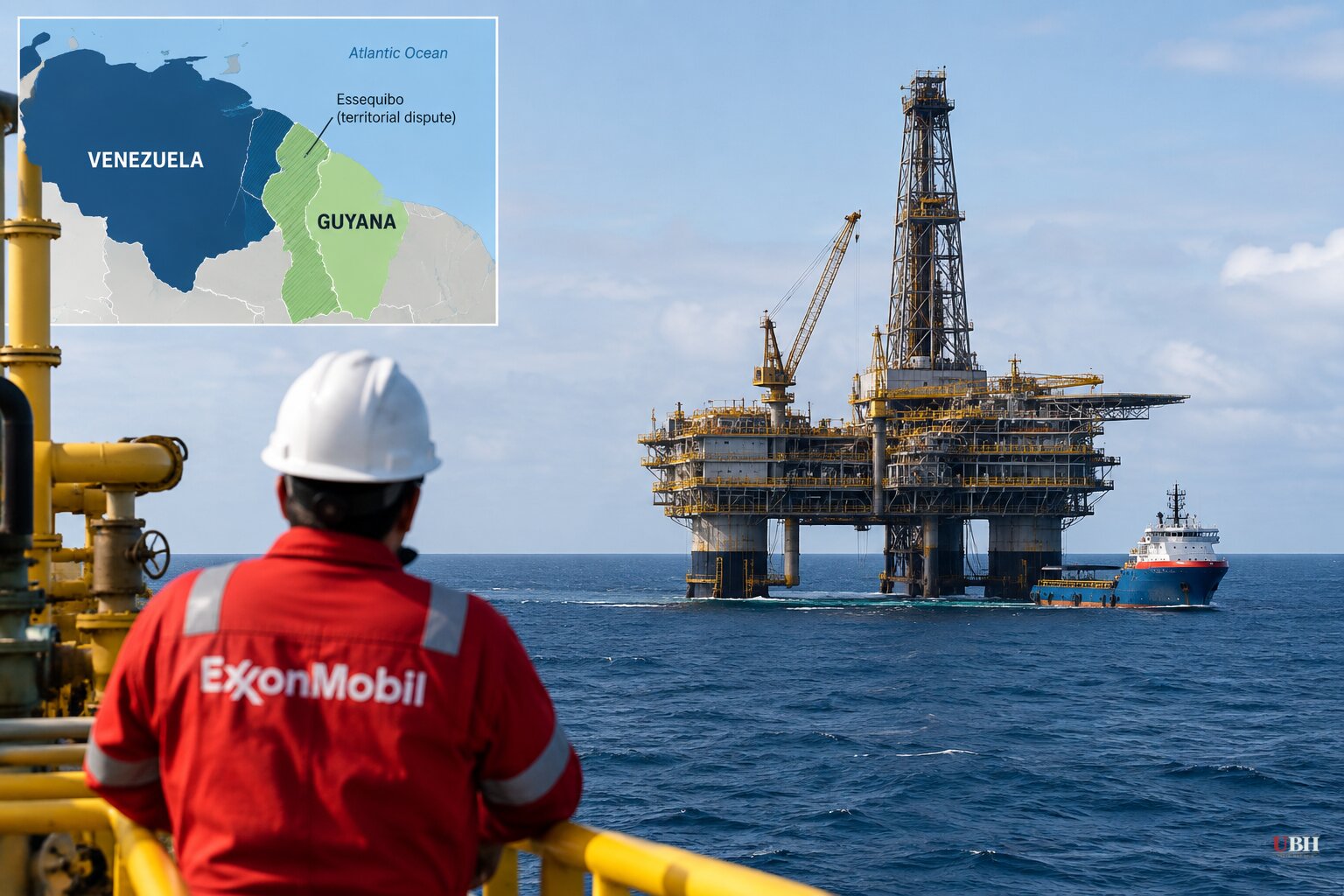
President Trump said on Monday, August 31, that ExxonMobil, Chevron and other major U.S. oil companies are heading back into Venezuela, ending a nearly 20-year exile that started when Hugo Chavez nationalized foreign oil assets in 2007. "We have Exxon going in, we have Chevron going in, we have our big oil companies going in, and everybody's bidding," Trump said, according to the Epoch Times. "We're making a fortune, and they're making a fortune."
The same day, the White House announced what it called a historic deal giving the U.S. "majority control of more than 65 billion barrels of proven oil reserves" in Venezuela, signed by Secretary of State Marco Rubio and Secretary of War Pete Hegseth. Trump called the reserve figure a "vast" expansion beyond the roughly 46 billion barrels of proven U.S. reserves, and said the arrangement secures "energy dominance for the next century, all at zero cost to the United States."
The mechanics are unusual. According to the White House statement, Venezuelan interim authorities granted North American Blue Energy Partners, a privately held company and the country's second-largest private oil producer, 100-year concessions on 17 fields holding roughly 65 billion barrels. NABEP in turn gave the Department of War's Office of Strategic Capital a 35 percent equity stake in its corporate parent. That is a defense agency holding a large ownership stake in a private oil company operating in a foreign country, a structure that has no recent precedent in U.S. energy policy. Whether "zero cost to the United States" is an accurate description of that arrangement, or whether the equity stake carries real financial exposure for taxpayers, is a fair question the White House statement does not answer in detail.
Exxon's own posture on Venezuela has shifted fast. As recently as January, CEO Darren Woods called the country "uninvestable," telling a White House meeting that Venezuela needed durable investment protections and a rewritten legal and commercial framework before Exxon would commit capital. By March, the company had sent a technical team to study the opportunity, and Senior Vice President Jack Williams told a Morgan Stanley conference, "We know the resource pretty well. We had a very successful operation there." No detail has emerged yet on what specific legal changes satisfied Woods's earlier objections.
Guyana Is Already Paying Off
While Venezuela is a bet on the future, Exxon's Guyana operation just crossed a real financial threshold. The company has fully recovered the $55 billion it sank into the Stabroek Block, according to Trefis, roughly two years ahead of schedule even after stripping out the effect of higher oil prices.
Because of how Guyana's 2016 production-sharing agreement works, Exxon was entitled to take up to 75 percent of monthly production until its investment and costs were repaid, with the remaining 25 percent split evenly between Guyana and the contractors. Now that the cost bank has cleared, Guyana's share of profit oil has jumped, and Kaieteur News reported the country's Natural Resource Fund pulled in $778 million in August 2026 alone, a figure that included both profit oil and a signing bonus.
Four Stabroek projects currently produce about 900,000 barrels a day, and Kaieteur News reports Guyana is on track to top 1 million barrels a day before the end of 2026 once the fifth project, Uaru, comes online. President Irfaan Ali has flagged a real risk worth taking seriously: if the government approves Exxon's eighth and ninth Stabroek projects without a ring-fencing provision to separate cost recovery by project, Guyana's profit share could slide back down from 39.8 percent to as little as 12.5 percent, undoing the gains just realized.
Exxon's overall financial position looks strong heading into this expansion. The company posted more than $17 billion in free cash flow in the second quarter of 2026 and returned more than $9 billion to shareholders while cutting net debt by over $7 billion, according to 24/7 Wall St., which also noted Exxon's 43-year streak of annual dividend increases versus Chevron's 39. Exxon's net debt-to-EBITDA sits at 0.548 with interest coverage of 56 times, both stronger than Chevron's comparable figures of 1.08 and 13.7 times.
At the Barclays Energy-Power Conference, CFO Neil Hansen said Exxon's Pioneer Natural Resources acquisition has generated roughly $4 billion a year in synergies, double the company's original $2 billion target, according to MarketBeat. Hansen also said Middle East supply disruptions around the Strait of Hormuz have pushed refining margins higher industry-wide, a tailwind Exxon is capturing through its integrated model.
Not every analyst is cheering. Seeking Alpha noted on September 16 that Exxon's entitlement barrels from Guyana will actually decline as the cost bank empties, even as free-cash-flow generation rises, meaning investors buying Exxon stock today, up 52 percent over the past year and sitting at the top of its 52-week range per Trefis, are paying for cash flow the company hasn't banked yet rather than for barrel growth that's already visible.
The unresolved question is which bet actually pays off first: a Venezuelan reserve base that requires the Pentagon to hold equity in a private oil company and depends on political stability that has upended American investment there twice before, or a Guyanese field whose profit-sharing terms Guyana's own president says could be renegotiated away with the stroke of a pen on new project approvals.
Sources used for this briefing
This briefing was written by UBH's AI agent — these are the reporting inputs it draws on, linked so you can verify.


