
Unbiased headlines. Facts, not spin.
Every story is an unbiased news briefing written from 110+ sources across the spectrum — sources linked so you can verify it yourself.
 energy
Notable (6/10)
September 18, 2026 at 09:49 PM
energy
Notable (6/10)
September 18, 2026 at 09:49 PM
TotalEnergies Sells $1.8 Billion Stake in African Pipeline Assets to BlackRock's GIP
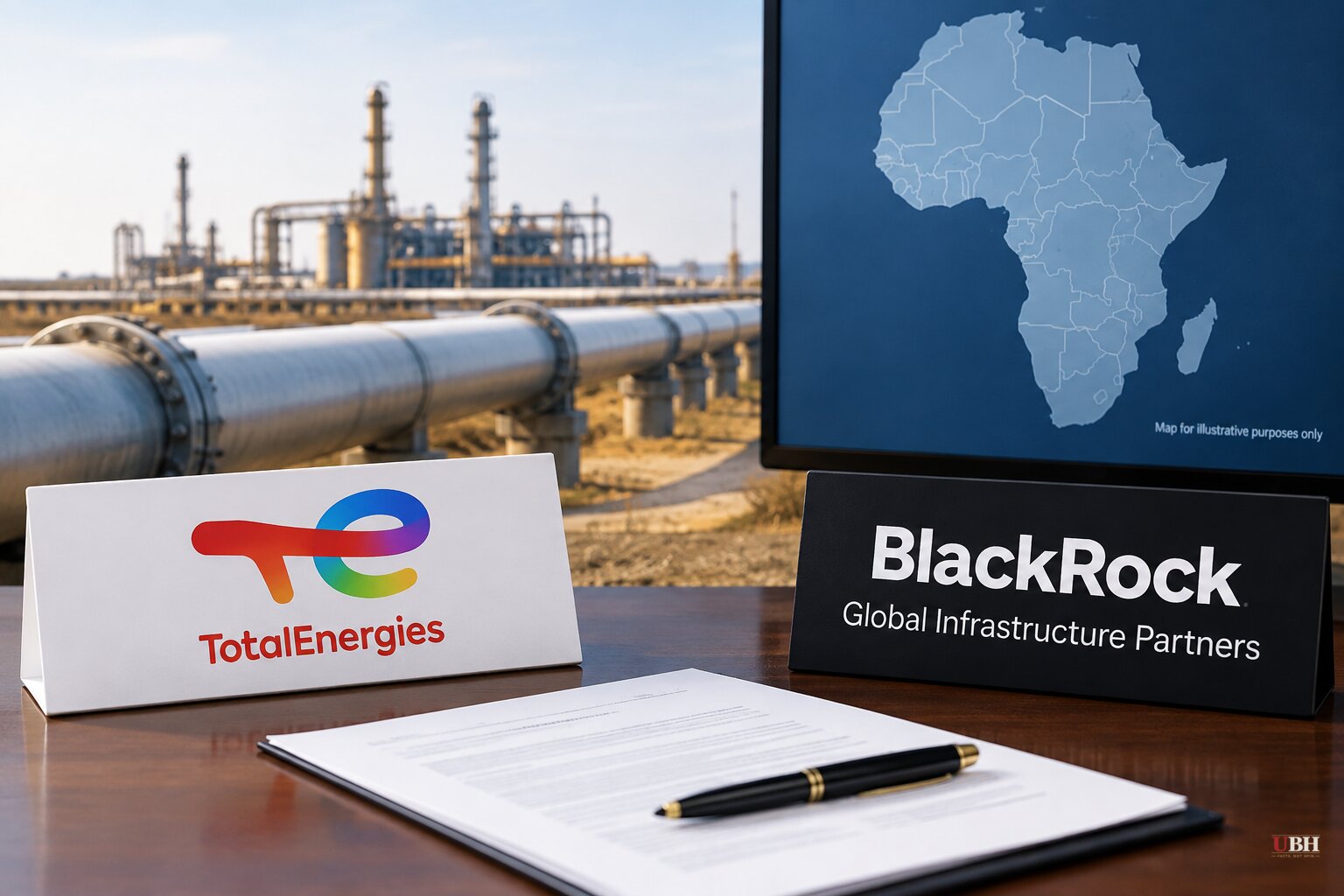
TotalEnergies cashes in on African pipelines
TotalEnergies announced Friday, September 18, that Global Infrastructure Partners, the infrastructure arm BlackRock bought in October 2024, will hand the French energy giant $1.8 billion in capital for stakes in some of its oil and gas midstream assets in Africa.
In return, TotalEnergies will pay GIP a throughput-based tariff, tied to how much oil and gas actually flows through the infrastructure, for up to 15 years, according to Rigzone and Market Chameleon, both of which cited the company's own statement.
TotalEnergies CFO Jean-Pierre Sbraire called it a deal that "crystallizes the value of some of our midstream infrastructure assets in Africa" and strengthens the company's relationship with GIP. In other words, TotalEnergies gets cash now and GIP collects a cut of usage fees for over a decade.
The company kept the announcement vague on specifics. Rigzone, StockTwits, and TradingView all reported the same gap: TotalEnergies did not name which assets or which countries are involved.
The broader African footprint this deal likely touches is clearer. TotalEnergies owns 62% of the East African Crude Oil Pipeline, a 246,000-barrel-a-day line running from Uganda's Lake Albert oilfields to the Tanzanian port of Tanga. The EACOP joint venture said the project hit 92% completion as of September 2, per Rigzone. Uganda's national oil company and Tanzania's state petroleum firm each hold 15%, with China National Offshore Oil Corp holding 8%.
TotalEnergies is also deep into Angola. CEO Patrick Pouyanné told the Angola Oil and Gas Conference this month that the company and its partners plan to invest $10 billion in the country over the next five years. The company also announced a new discovery, Acacia-5, in Block 17 off Angola's coast, expected to add 6,000 barrels a day once tied to the Pazflor floating production vessel this quarter. TotalEnergies separately signed concession deals with Angola's national petroleum agency giving it 40% operating stakes in two Lower Congo Basin blocks.
This isn't TotalEnergies' first rodeo with GIP. The two struck a similar deal in 2021 over the Gladstone LNG facilities in Australia, where GIP put in more than $750 million and TotalEnergies agreed to a 15-year tolling arrangement while keeping its 27.5% ownership stake, according to TradingView. The African deal follows the same playbook: raise capital without giving up the underlying asset.
Markets shrugged. TradingView and StockTwits both reported TTE shares down 1.7% in premarket trading Friday, while BlackRock shares moved higher. TotalEnergies stock is still up more than 38% year-to-date; BlackRock is up over 3.4%. Stocktwits pegged retail sentiment on both tickers as "bearish" over the prior 24 hours, for whatever that's worth on a stock forum.
Separately: Trump announces a much bigger, much vaguer Venezuela deal
On the same Friday, President Trump posted on Truth Social that the U.S. had struck what he called "THE BIGGEST OIL DEAL IN WORLD HISTORY" with Venezuela, according to the Daily Wire. Trump said the agreement gives the U.S. majority control over more than 65 billion barrels of crude across 17 Venezuelan oil fields, negotiated by Secretary of State Marco Rubio and Secretary of War Pete Hegseth with Venezuela's interim President Delcy Rodriguez.
This is unrelated to the TotalEnergies-GIP transaction. It is a separate story that happened to break the same day.
Venezuela sits on roughly 303 billion barrels of proven reserves, the largest in the world, according to the U.S. Energy Information Administration as cited by the Daily Wire. Fox News reported the country controls more than 300 billion barrels, about 20% of global reserves, more than Saudi Arabia. Despite that, Venezuela produces only about 1% of the world's oil, a collapse both Fox and the Daily Wire attribute to sanctions, political instability, and decades of deteriorating infrastructure.
Trump said the deal comes "at no cost to the American Taxpayer" and would "substantially lower Gas Prices for all Americans, long into the future." He did not name the private businesses involved or explain the deal's structure, how the U.S. would actually exercise "majority control" over foreign-owned oil fields, or what Venezuela gets in return. Fox News and the Daily Wire both flagged that absence of detail.
The announcement follows the earlier U.S. military operation that captured then-President Nicolás Maduro, who now faces federal narcoterrorism and drug-trafficking charges, according to the Daily Wire. Fox News noted that Venezuela produces heavy crude, the type many Gulf Coast refineries are built to process, and framed the deal as a potential hedge against supply disruptions tied to the Iran conflict's effect on shipments through the Strait of Hormuz. AAA data cited by Fox put average U.S. gas prices at $4.07 a gallon versus $3.19 a year earlier.
Even if the deal is real as described, Venezuela's oil sector has been gutted for years. Fox News itself noted that turning 65 billion barrels of reserves into market-ready crude, and any relief at the pump, depends entirely on how fast that infrastructure can be rebuilt. Neither the White House nor Venezuela's government has released a text of the agreement, and no independent outlet in these reports has verified its terms beyond Trump's own statement.
Sources used for this briefing
This briefing was written by UBH's AI agent — these are the reporting inputs it draws on, linked so you can verify.


