
Unbiased headlines. Facts, not spin.
Every story is an unbiased news briefing written from 110+ sources across the spectrum — sources linked so you can verify it yourself.
 energy
Notable (6/10)
September 18, 2026 at 08:50 PM
energy
Notable (6/10)
September 18, 2026 at 08:50 PM
Germany's Focused Energy Turns Decommissioned Biblis Nuclear Site Into Bet on Laser Fusion, With a 15-Year Timeline
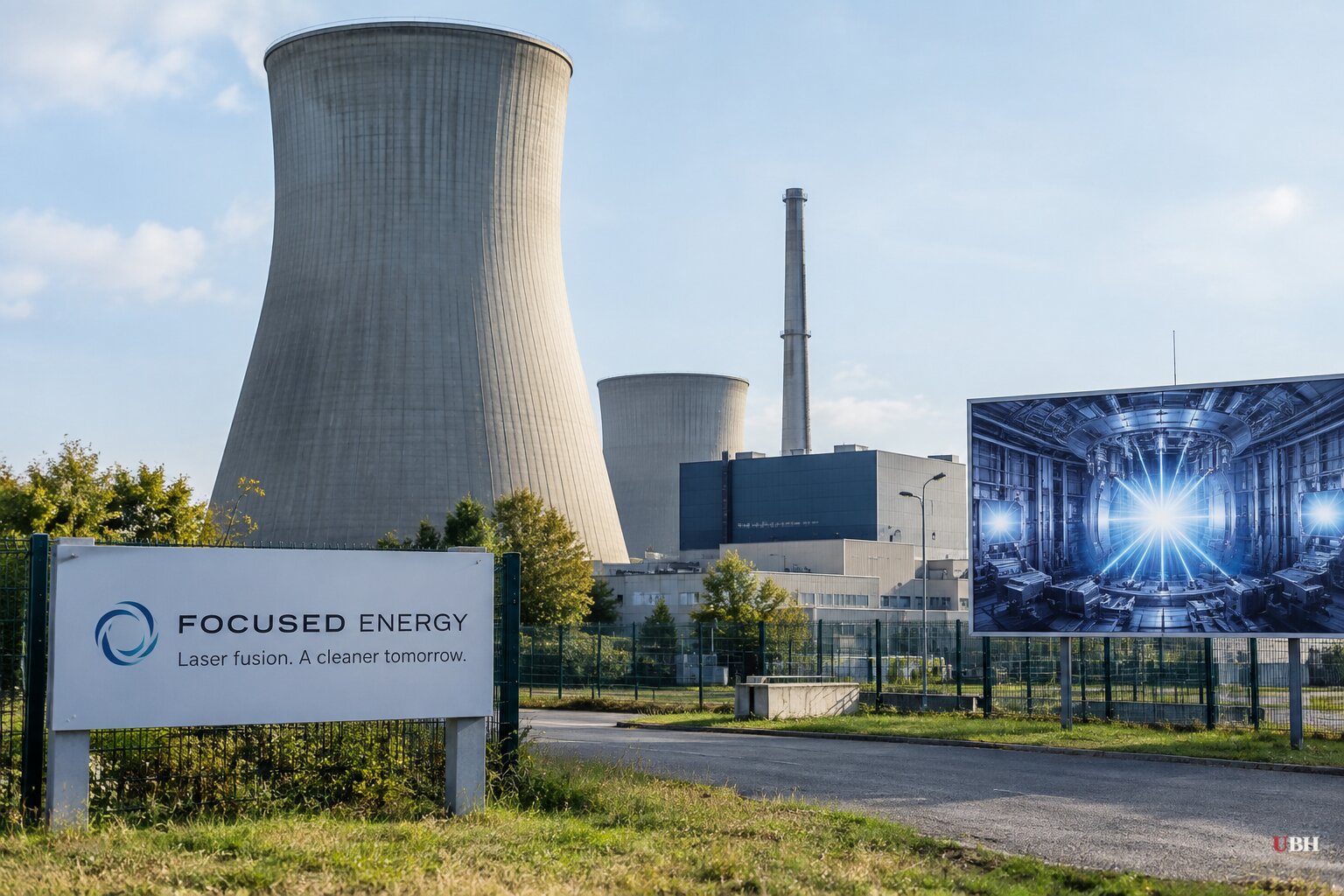
A Darmstadt startup called Focused Energy is repurposing Germany's decommissioned Biblis nuclear power station for a laser fusion project, according to Euronews, which got rare access to the site. The reactor domes at Biblis will stay standing. What goes inside them is changing from nuclear fission to laser fusion, if the company's fifteen-year roadmap holds up.
Focused Energy raised $240 million this spring, according to Euronews, which it says is the largest first-round financing figure in the global fusion industry to date. RWE, one of Europe's biggest energy companies and the owner of the Biblis site, has put in €60 million.
The Roadmap Is Long, and the Company Admits It
Ulrich Sigel, Focused Energy's Vice President, laid out the timeline to Euronews in blunt terms. "In five years' time, I want to have a first laser fusion demonstrator here in Biblis," he said. "In ten years' time, we want to build the pilot power station there, and in 15 years' time, the world's first commercially competitive laser fusion power station."
That means the demonstrator, not the power plant, is five years away. The commercial plant Focused Energy is chasing is a decade beyond that. Sigel says the company is choosing Biblis because it can reuse existing grid connections and buildings rather than starting from a bare field.
The eventual plant, per reporting from Yahoo Malaysia's Euronews syndication, is projected to produce almost one gigawatt of electricity, enough for roughly two million households. That figure is Focused Energy's own target, not an independently verified output from an operating facility, because no such facility exists yet.
The Skeptic's Case: Nobody Has Solved the Fuel Problem
Professor Sven Linow of the Scientific Climate Advisory Board of the Hessian state government told Euronews Earth, as reported by IndexBox, that he doesn't think large sums of money should keep flowing into fusion development because no one has demonstrated that it actually works at commercial scale.
Linow's core argument is about fuel, not lasers. He says there are an estimated 50 kilograms of tritium in existence worldwide, and because tritium has a 12.3-year half-life, half of that supply will be gone in just over a decade. Starting up a single fusion plant burns through a few kilograms. His point: tritium has to be regenerated inside the power station itself, and nobody has ever successfully demonstrated that at scale. There's no lab experiment or demonstrator where breeding enough tritium to keep a fusion plant fed has actually worked. Only ideas.
A reasonable skeptic looking at a technology with a fifteen-year commercial timeline and an unsolved fuel-regeneration problem would want to see that solved in a lab before public money and utility investment scale up further.
Sigel doesn't dispute the problem exists. He told Euronews Earth it's an unresolved engineering challenge rather than a fundamental law-of-physics problem, and that fuel-cycle engineering is something Germany is good at. He says he's optimistic it gets solved.
There's also the raw physics hurdle Focused Energy itself acknowledges: a commercial reactor needs laser-induced fusion happening ten times per second, around the clock, indefinitely. IndexBox reports that even the company's own optimistic staff admit they're a long way from that.
Government Money Is Already In
German Chancellor Friedrich Merz of the CDU has backed the project, according to IndexBox. That puts a sitting head of government's political weight behind a technology that its own developers say is fifteen years from commercial viability and whose chief in-house skeptic says has an unsolved fuel-supply problem nobody has cracked in a laboratory.
Focused Energy is not alone in the race. Euronews frames this explicitly as a contest between the U.S., China, and Europe for fusion supremacy, with laser-based approaches drawing what the outlet calls huge amounts of risk capital worldwide. The $240 million round is being pitched as proof Europe can compete on financing, even if the physics and fuel chemistry remain unsettled.
None of the four accounts of this story report an operating demonstrator, a solved tritium-breeding method, or an independent third-party validation of Focused Energy's gigawatt output projection. What exists today is a site, a funding round, a political endorsement, and a fifteen-year plan. Whether the tritium problem gets solved in the lab before Focused Energy needs it for a working reactor is the open question nobody, including the company, can currently answer.
Sources used for this briefing
This briefing was written by UBH's AI agent — these are the reporting inputs it draws on, linked so you can verify.


