
Unbiased headlines. Facts, not spin.
Every story is an unbiased news briefing written from 110+ sources across the spectrum — sources linked so you can verify it yourself.
 energy
Breaking / Critical (9/10)
September 18, 2026 at 08:20 PM
energy
Breaking / Critical (9/10)
September 18, 2026 at 08:20 PM
JPMorgan Says It Can No Longer Forecast Oil Prices for the Iran War, Cites No Clear Endgame
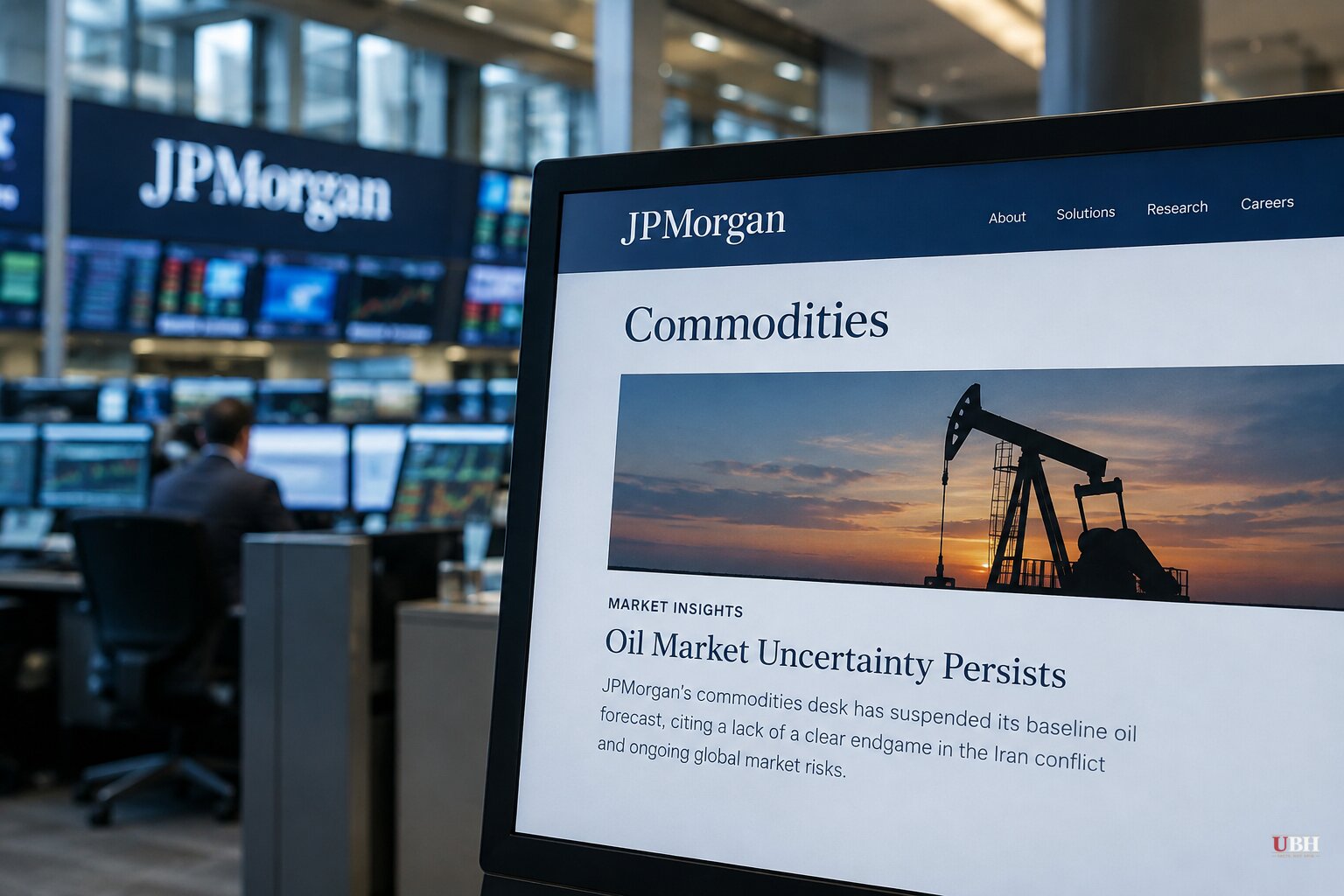
Since JPMorgan first built its playbook of "economic redlines" for the US-Iran war roughly six months ago, the bank told clients Thursday, September 17, that it has scrapped that playbook entirely. The bank has no baseline forecast for where oil prices go next.
"For the first time since the start of the Iran conflict, we don't have a baseline view," wrote Natasha Kaneva, JPMorgan's head of global commodities strategy, in a note reported by Reuters and cited by the BBC, Quartz, and TipRanks. "We simply don't know how to model the endgame."
The Redlines That Got Crossed Anyway
When the war started, JPMorgan bet that three economic thresholds would force the Trump administration to cut a deal reopening the Strait of Hormuz: oil above $100 a barrel, gasoline near $5 a gallon, and the 10-year Treasury yield above 5%. The bank figured that deal would land back in June.
An interim agreement did materialize in June, according to TipRanks, but it collapsed within weeks and fighting resumed. Six months later, two of the three redlines are unambiguously crossed. Brent crude is trading near $105 to $106 a barrel, according to Quartz and BigGo Finance, and the 10-year Treasury yield broke above 5% this week, according to BigGo Finance and the BBC.
Gasoline is the messier number. BigGo Finance puts the national average at $4.43 a gallon, a record for this time of year but short of $5. TipRanks, citing the same JPMorgan note, says gas is "above $5 a gallon in many U.S. cities." Both can be true at once, a national average masking sharp regional spikes, but the sourcing doesn't fully agree on where the line actually sits nationwide.
Diesel is the one number nobody disputes: $6.31 a gallon, an all-time high, hitting right as winter demand peaks and inventories sit near record lows, according to Quartz and the BBC.
Why Prices Haven't Spiked Harder
JPMorgan puts Brent's "fair value" at roughly $90 a barrel for September. The roughly $15 gap between that and current prices reflects traders pricing in the risk of another 4 million barrels per day disappearing from the market, on top of the 10 million bpd already disrupted.
But the disruption hasn't translated into the price shock many feared. Global crude and refined-product inventories have fallen about 555 million barrels since the war began, according to BigGo Finance, only around a third of the 1.4 to 1.6 billion barrels JPMorgan originally projected. Global demand has run about 4.4 million bpd below year-ago levels, according to Reuters' reporting carried by WMBD Radio, cushioning the supply hit. Brent has averaged just $94 a barrel over the course of the war.
JPMorgan credits reserve stockpiles in China, Europe, Japan, and South Korea for absorbing much of the shock. East Asian importers have shelled out an extra $49 billion over six months, according to BigGo Finance.
More Risk, Not Less
The bank's note flagged fresh trouble on the supply side. Saudi Arabia's East-West pipeline went offline after a drone strike originating in Iraq, according to Quartz and BigGo Finance. Houthi militants have expanded their reach in the southern Red Sea, threatening tanker traffic through Bab el-Mandeb. The International Energy Agency said last week that global oil supply and demand both look set to fall further than previously expected, according to WMBD Radio, while OPEC has now trimmed its 2026 demand growth forecast for a fifth straight month, though it still expects demand to rise by 380,000 bpd.
Axios reported Thursday that President Trump is weighing a decision on whether to resume large-scale military operations against Iran or move to end the war. He told reporters earlier this month, per the BBC, that he doesn't expect the war to wrap up before November's midterms: "Right after the election, oil prices are going to be tumbling downward. I think it's going to take a little bit longer than the midterm."
Bessent's Bet Against the Bank
Treasury Secretary Scott Bessent offered a far more confident forecast on Fox News' "My View with Lara Trump," predicting oil could fall to $40-50 a barrel once the conflict ends, arguing a supply glut is waiting to hit the market the moment constraints lift. He called the current squeeze on Iran "the greatest economic isolation operation in the history of the world," saying the goal is to "asphyxiate this regime," and pointed to Gulf states building pipeline routes to bypass Hormuz altogether, which he said would permanently reduce Iran's leverage over shipping.
Bessent's optimism is a legitimate read grounded in supply fundamentals. Global spare capacity genuinely exists, and if Hormuz reopens fully, a supply surge is plausible. JPMorgan's commodities desk says it can't build a credible model for when or how that happens. Two views, both from people with real stakes in being right, point in opposite directions.
The uncertainty is spilling into corporate dealmaking. Global M&A activity has swelled to $137 billion, according to Axios, but price volatility is widening the gap between what buyers and sellers think assets are worth, making transactions harder to close. Rystad Energy's Atul Raina told Axios that volatility "has created a deeper opportunity set, but it has also made deals harder to execute."
The Federal Reserve raised interest rates this week for the first time in more than three years, according to the BBC, and signaled more hikes may follow into 2027 as it tries to get ahead of inflation driven partly by energy costs.
Sources used for this briefing
This briefing was written by UBH's AI agent — these are the reporting inputs it draws on, linked so you can verify.


