
Unbiased headlines. Facts, not spin.
Every story is an unbiased news briefing written from 110+ sources across the spectrum — sources linked so you can verify it yourself.
 energy
Major Story (8/10)
September 18, 2026 at 07:29 PM
energy
Major Story (8/10)
September 18, 2026 at 07:29 PM
Irish Finance Minister Publicly Disputes Trump's Claim That Ukraine Is Driving the Global Energy Crisis
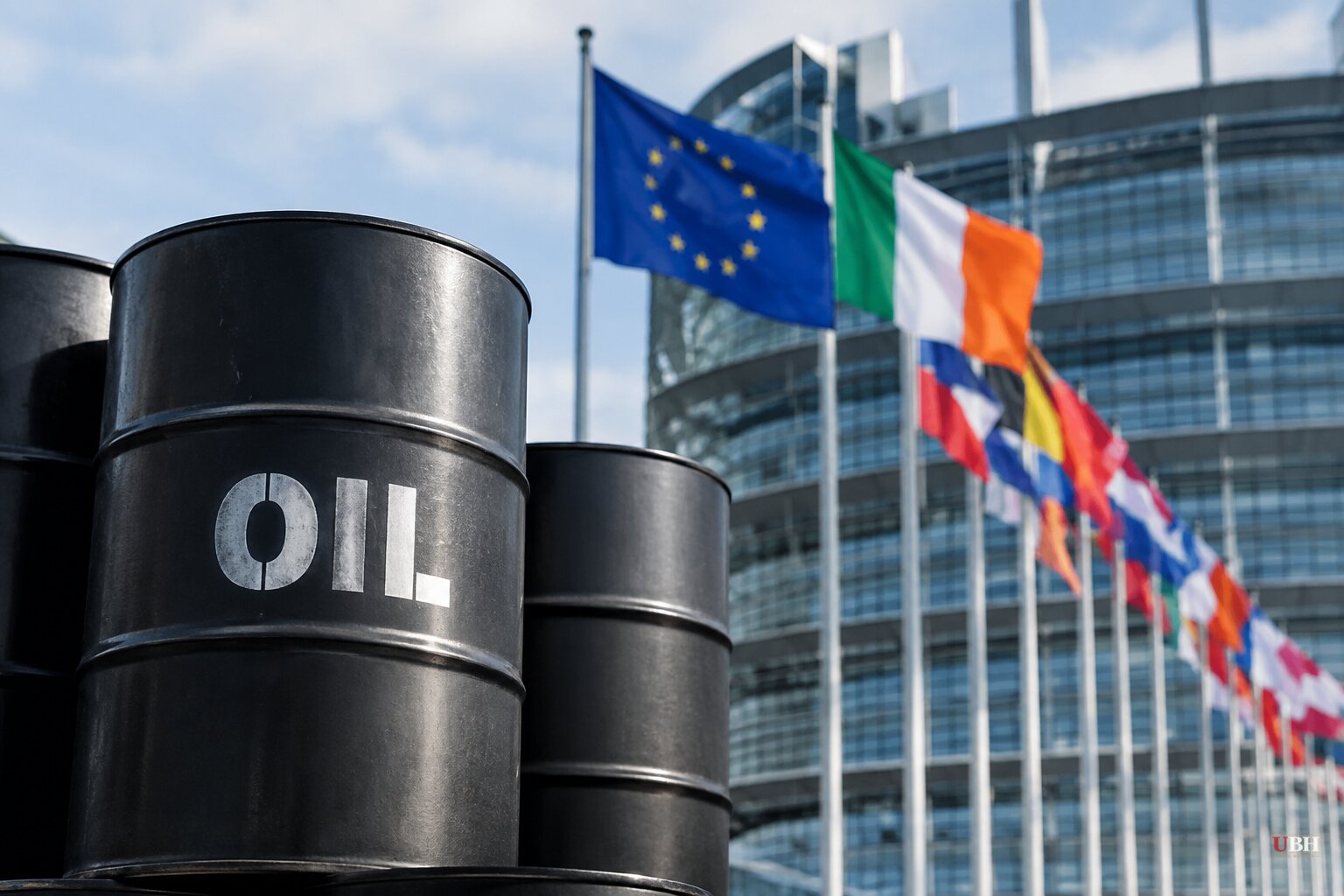
Since eurozone finance ministers gathered in Dublin on Friday, September 18 with bond yields at multi-decade highs and oil parked above $100 a barrel, the meeting has produced a direct rebuttal to President Trump's own explanation for the crisis.
Irish Finance Minister and Deputy Prime Minister Simon Harris told Euronews' 12 Minutes With that Trump has it backwards. Trump has blamed Ukraine's strikes on Russian diesel refineries for the shortage driving prices up. Harris says that's not the main story.
"The reason there's a major energy crisis in the world right now is because the Strait of Hormuz is closed," Harris said, according to Euronews. "The greatest economic intervention we could see is de-escalation in the Middle East."
Harris pointed to a brief lull in the Iran conflict over the summer, when he said commodity markets fell fast and pump prices eased, as evidence of where the real pressure is coming from. Oil is currently hovering around $108 a barrel.
Harris didn't deny Ukraine's refinery strikes are squeezing Russian output, since Russia remains one of the world's largest producers. But he framed Hormuz, the transit route for roughly 20% of global oil and gas, as the dominant factor. That's a fair distinction to draw, and it's also the one most consistent with the numbers. Hormuz-linked disruption has forced countries to burn through roughly 500 million barrels of strategic reserves by the end of August, according to a McKinsey Global Institute analysis, equivalent to five days of world consumption. The U.S. Strategic Petroleum Reserve alone has fallen below 300 million barrels, down from 400 million at the end of 2025.
Trump's side of the argument
Trump's team hasn't backed off the Ukraine framing, and there's a real mechanism behind it worth stating plainly. Ukrainian strikes on Russian refineries do reduce the diesel and fuel oil reaching global markets, and that's a genuine supply hit layered on top of the Hormuz shock. Vice President JD Vance, speaking at the All-In Summit, argued the bigger risk is a U.S. pullback from the region entirely. "The alternative here, which is the United States effectively says to the Middle East, 'you're on your own,' would mean necessarily a worldwide energy crisis, so long as the Iranians keep on shooting at shipping," Vance said, according to Fox News.
Trump has also claimed the U.S. campaign has crippled Iran's ability to threaten shipping at all, telling reporters this week that Iran's navy and air force have been "decimated" and that 159 Iranian vessels are now "at the bottom of the sea." That claim has not been independently verified in these sources.
A new attack complicates the picture
The crisis got worse this week. Saudi Arabia's East-West Pipeline, also known as Petroline, was hit by multiple drones launched from Iraq, according to the Saudi foreign ministry, causing injuries and forcing a precautionary shutdown. Satellite imagery reviewed by CNN shows visible damage to a pumping station near Al Mesba'ah.
Trump told reporters in Dublin he believes Iran was "probably" behind the attack. No formal accusation or evidence has been presented in these sources, and the Islamic Resistance in Iraq, an umbrella group of Iran-backed militias, has denied responsibility. The Iraqi government says it has opened an investigation and closed several border crossings as a precaution. CNN also reported that Saudi Crown Prince Mohammed bin Salman called Trump twice urging strikes on the Houthis, who have separately seized a Red Sea island and port, and that Trump declined.
The unexpected climate wrinkle
One consequence few anticipated: global carbon emissions from fossil fuels are now projected to fall 0.5% this year, according to a Carbon Brief analysis of International Energy Agency data reported by upday. Coal use has actually risen, but that's been outweighed by sharp drops in oil and gas burning as the Hormuz disruption throttles supply. Supply shocks have achieved what carbon policy hasn't managed to do on its own, though nobody at the Dublin meeting is calling it a win.
Windfall tax back on the table
At Eurogroup, at least six member states asked for a formal discussion of an EU-wide windfall tax on power companies posting outsized profits from the volatility, Harris said, according to The Irish Times. "Some energy companies are making extraordinarily large profits on the back of this energy crisis," he said, "not on the basis of enterprise or innovation." EU energy commissioner Valdis Dombrovskis said the Commission is ready to support member states pursuing the idea, though Harris stressed no consensus exists yet and the group only had an "initial discussion."
ECB President Christine Lagarde told the same gathering that energy prices are now a "significant variable" in the bank's inflation projections, adding the ECB will keep assessing "meeting-by-meeting" as the picture shifts. Eurogroup President Kyriakos Pierrakakis said second-quarter eurozone growth beat expectations despite the turmoil, but said the bloc needs to "accelerate its path towards greater energy independence."
None of that resolves the underlying dispute between Dublin and Washington over what's actually driving prices. It also doesn't answer who fired the drones at Petroline, an unresolved question the Iraqi government says it's still investigating.
Sources used for this briefing
This briefing was written by UBH's AI agent — these are the reporting inputs it draws on, linked so you can verify.


