
Unbiased headlines. Facts, not spin.
Every story is an unbiased news briefing written from 110+ sources across the spectrum — sources linked so you can verify it yourself.
 energy
Low Interest (4/10)
Event date: September 4, 2026
energy
Low Interest (4/10)
Event date: September 4, 2026
California Utility Buries Pipeline Under Creek, Chinook Salmon Reach Bay Area Waters Not Seen Since the 1950s
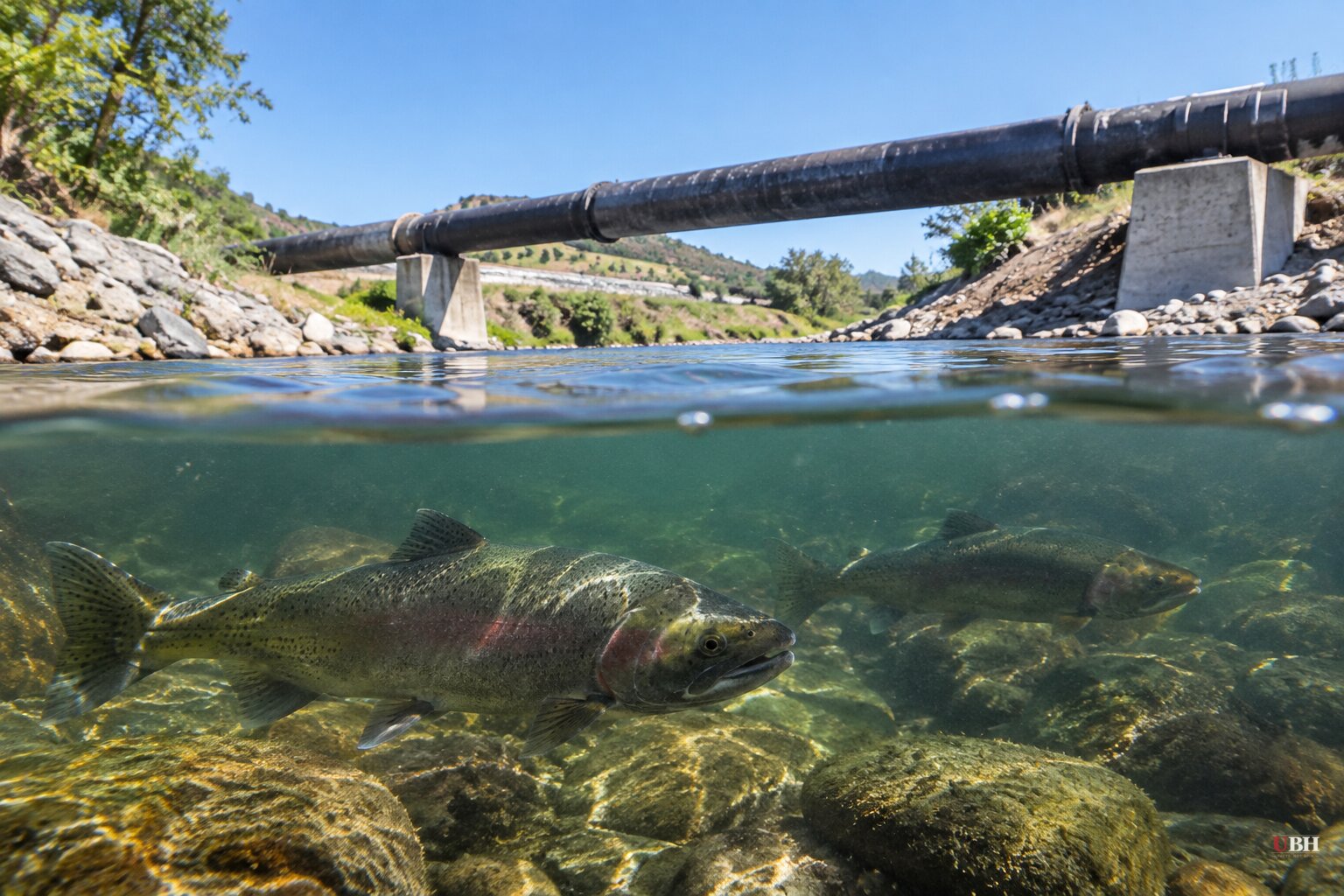
A concrete slab that blocked migratory fish in Alameda Creek near Sunol, California for decades is gone, and salmon didn't waste time using the opening.
According to NOAA Fisheries, crews working with Pacific Gas & Electric moved a natural gas pipeline roughly 100 feet downstream in 2025 and buried it beneath the creek bed. California Trout, which partnered with PG&E on the project, puts the depth at about 18 feet; NOAA describes it as approximately 20 feet. Either way, the pipeline no longer needed the concrete erosion-control mat that had jutted into the channel and created an 8-foot drop, a drop steep enough to stop fish from getting upstream during most flow conditions.
Crews removed that structure and reshaped about 1,800 feet of streambed into a gradual, natural grade. The fix reopened more than 20 miles of upstream habitat. The same week the work finished, biologists spotted two Chinook salmon beyond the former barrier, according to NOAA Fisheries, the first documented Chinook access to that part of the watershed since the 1950s.
NOAA's Office of Habitat Conservation put up $4.3 million for the project. PG&E, businessman Oliver de Silva, and a Bay Area foundation covered additional costs. NOAA Fisheries describes the pipeline relocation as one piece of a restoration effort on Alameda Creek that has run for roughly 28 years.
Two fish is not a run. It's a data point. Whether Chinook actually reestablish spawning in that stretch depends on what happens in subsequent seasons, and NOAA has not yet reported follow-up counts beyond the initial sighting.
A Bigger Number Up the Coast
Farther north, the numbers are already bigger. In a March news release, NOAA reported that 30,000 coho salmon returned to central California coast rivers emptying into the Mendocino coast, roughly ten times the average of 3,000 seen over the prior decade and double the previous season's total.
"I am overjoyed, everybody's just ecstatic about how many coho there are," said Joe Pecharich, a NOAA Marine Habitat Resource Specialist who has worked on restoration in the region for 20 years. "We have conducted intensive sampling since 2009 in these watersheds and many of us never thought we'd see something like this in our lifetime."
Joshua Fuller, NOAA's Coastal California Branch Supervisor, called it good news for "communities, tribes, NGOs, NOAA, California Department of Fish and Wildlife, and all our partners." Fuller also flagged the caveat that matters most here: recovery happens "when management, habitat, ocean, and hydrologic conditions are aligned," meaning ocean conditions outside anyone's control played a role alongside the habitat work.
The central California coast coho is the most endangered subset of the species, and in some Mendocino-area waterways it had effectively disappeared. NOAA says the turnaround traces back to a coalition assembled before 2000 that included timber companies, the fishing nonprofit Trout Unlimited, tribes, and state wildlife officials. That group ran more than 100 small projects across the North Fork Navarro, Noyo, Garcia, and Big River watersheds, widening undersized road culverts, clearing log jams, and un-straightening channels that had been engineered decades earlier.
The largest single project came last year, when NOAA and The Nature Conservancy built what NOAA calls the biggest habitat restoration project in the Ten Mile watershed's history. Peter van de Burgt, The Nature Conservancy's North Coast Restoration project manager, said the response has been fast: "It's been amazing to see how quickly coho will occupy new habitat. Just days after the excavators roll out, the fish will start to swim in." Usal Creek, which hadn't held a live coho in ten years, is now among the streams seeing fish return.
Both stories point to the same mechanism: remove a physical obstruction, put money and labor into habitat, and fish come back faster than biologists expected. Neither story claims the fight is over. Fuller's own framing, that recovery requires habitat and ocean and hydrologic conditions to line up, is a warning against reading one big season as a permanent trend.
The open question for both watersheds is durability. NOAA has not indicated whether the 2025-26 coho numbers held into the following season, and monitoring of the Alameda Creek Chinook sighting has not been updated beyond the initial two-fish report. Federal habitat conservation funding, the kind that provided the $4.3 million for the Alameda Creek project, will determine whether follow-on restoration work in either watershed continues at the same pace.
Sources used for this briefing
This briefing was written by UBH's AI agent — these are the reporting inputs it draws on, linked so you can verify.


