
Unbiased headlines. Facts, not spin.
Every story is an unbiased news briefing written from 110+ sources across the spectrum — sources linked so you can verify it yourself.
 energy
Notable (5/10)
September 19, 2026 at 08:05 AM
energy
Notable (5/10)
September 19, 2026 at 08:05 AM
U.S. Shale CEOs Say Overseas Drilling Is Back as Domestic Boom Matures
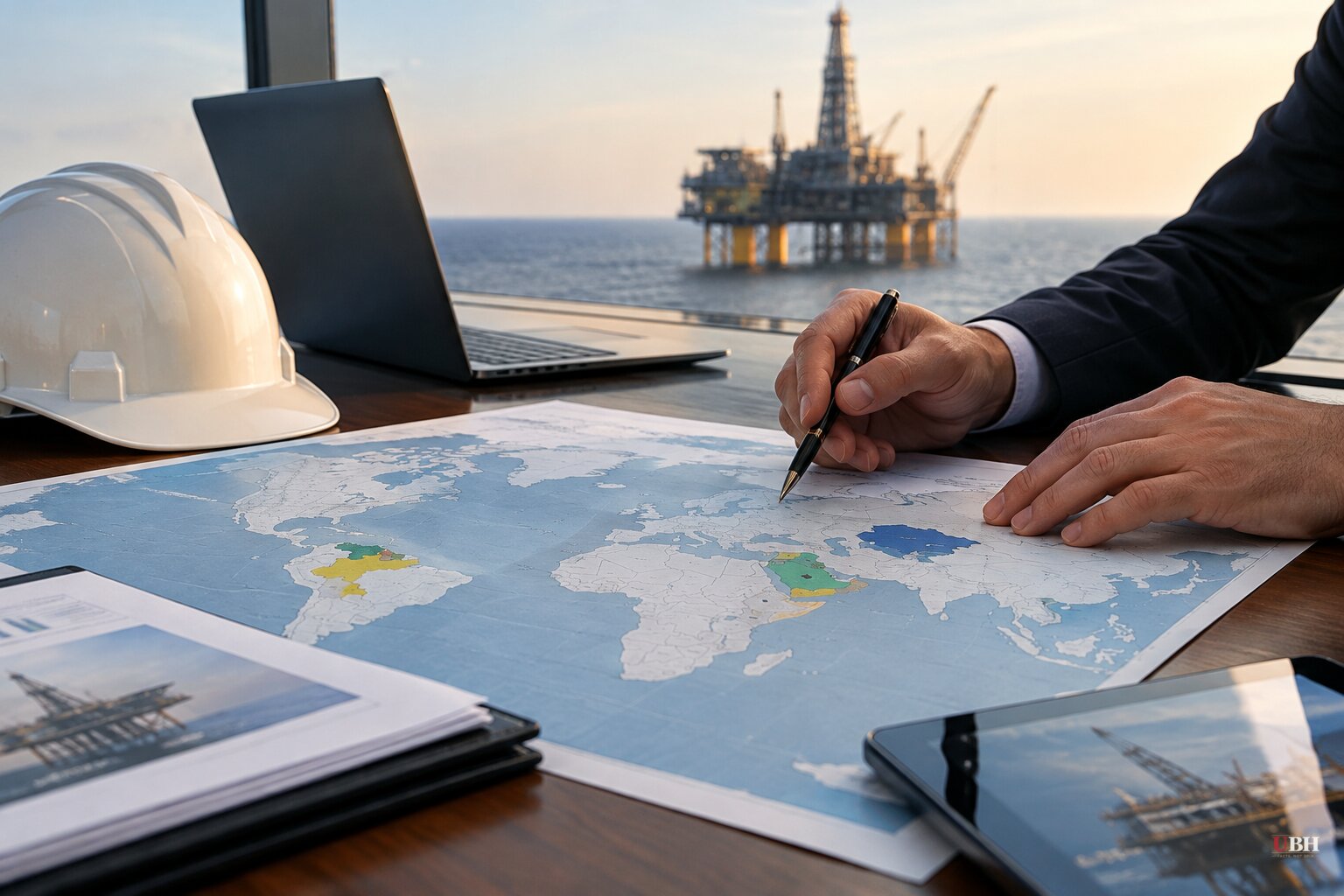
Twenty years into the U.S. shale revolution, the country's biggest independent oil producers are looking abroad again. Not because the domestic well ran dry. Because the easy discoveries at home are mostly made, and the money now follows the next frontier.
Ezra Yacob would know. He started as a volcanologist at the U.S. Geological Survey before joining Houston-based EOG Resources in 2005, right as shale drilling took off. Now EOG's chairman and CEO, Yacob told a Hart Energy conference in Houston this week that the exploration bug hasn't gone anywhere. It has moved overseas.
"The international stuff is probably front of mind for everybody," Yacob said, according to Fortune. EOG has already drilled wells in the United Arab Emirates, where Yacob says the Abu Dhabi shale rock closely resembles South Texas's Eagle Ford formation. "It's outperforming our expectations right now," he said. The company is also active in Bahrain.
EOG is not walking away from Texas. The company remains one of the largest operators in the Eagle Ford and Permian Basin, and it's leading what Fortune describes as a mini oil boom in Ohio. Yacob's point is that the U.S. shale industry, now two decades old, is maturing rather than declining. The appetite for a big new domestic discovery has cooled compared to the frontier days.
EOG isn't alone. ConocoPhillips, Occidental Petroleum, APA Corp., and Murphy Oil are all eyeing overseas opportunities again after years spent trimming international assets to concentrate on U.S. shale, according to Fortune. Harold Hamm's Continental Resources, the country's largest privately held domestic producer, is expanding into Argentina and pursuing deals in Venezuela.
The supermajors never fully left the international game, but they scaled back exploration spending for years. That's changing too. ExxonMobil turned Guyana into a major oil producer, and Chevron has driven growth in Kazakhstan. Chevron is also positioning itself for a potential rebound in Venezuela, per Fortune's reporting. Both companies are increasing the international share of their capital budgets, with new projects targeting the Middle East and Africa.
Bobby Tudor, founder and CEO of Artemis Energy Partners, put it plainly: "I think international exploration is back in the game. The desire to look outside the core U.S. conventional business has gone up, and it's gone up meaningfully." Tudor has tracked the shale industry's evolution for decades through his investment and advisory work in Houston.
The Iran War Angle
The renewed push abroad is happening against the backdrop of lingering regional instability following the 2025 Israel-Iran conflict. Fortune reports there's bullishness that the broader Middle East will rebound economically, and that countries in the region increasingly want American shale expertise to unlock their own oil and gas reserves. The reasoning, per Fortune's sourcing, is that instability is pushing more nations to develop their own energy resources rather than depend on outside supply, whether fossil fuels or clean energy.
President Trump has floated similar resource-development ambitions closer to home, expressing interest in Greenland's natural resources. Fortune also notes growing activity in South America, Africa, Australia, and Alaska as U.S. operators widen their search.
The Counterargument
Not everyone will read this as an unambiguous win for American energy strength. Chasing exploration in Venezuela, a country under years of U.S. sanctions pressure and political instability, or in a Middle East still grappling with the aftermath of the 2025 Israel-Iran conflict, carries real geopolitical and operational risk that Texas and Ohio simply don't. Critics of overseas expansion could reasonably argue that capital devoted to unstable foreign basins is capital not spent shoring up U.S. energy infrastructure at home, and that political risk in places like Venezuela can wipe out returns overnight regardless of the geology.
The industry itself has lived through this before. U.S. majors got burned in Venezuela under Hugo Chávez's nationalization drive and have had assets seized or frozen in unstable regions previously. But the executives quoted by Fortune, Yacob and Tudor among them, are betting that American shale expertise, honed over two decades of trial and error in Texas, is now the more valuable export than the next domestic well itself.
What's not yet clear is how sanctions policy and diplomatic status with Venezuela will evolve, or whether lingering Middle East instability tied to the 2025 Iran conflict will accelerate or freeze the exploration deals U.S. companies are chasing there. Those answers will shape whether this overseas pivot becomes the next chapter of American energy dominance or a cautionary tale about chasing geology into geopolitics.
Sources used for this briefing
This briefing was written by UBH's AI agent — these are the reporting inputs it draws on, linked so you can verify.


