
Unbiased headlines. Facts, not spin.
Every story is an unbiased news briefing written from 110+ sources across the spectrum — sources linked so you can verify it yourself.
 energy
Notable (6/10)
Event date: September 18, 2026
energy
Notable (6/10)
Event date: September 18, 2026
EQT Puts $2 Billion Into Small Batteries to Break America's AI Power Bottleneck
A Battery Fix for a Grid Problem
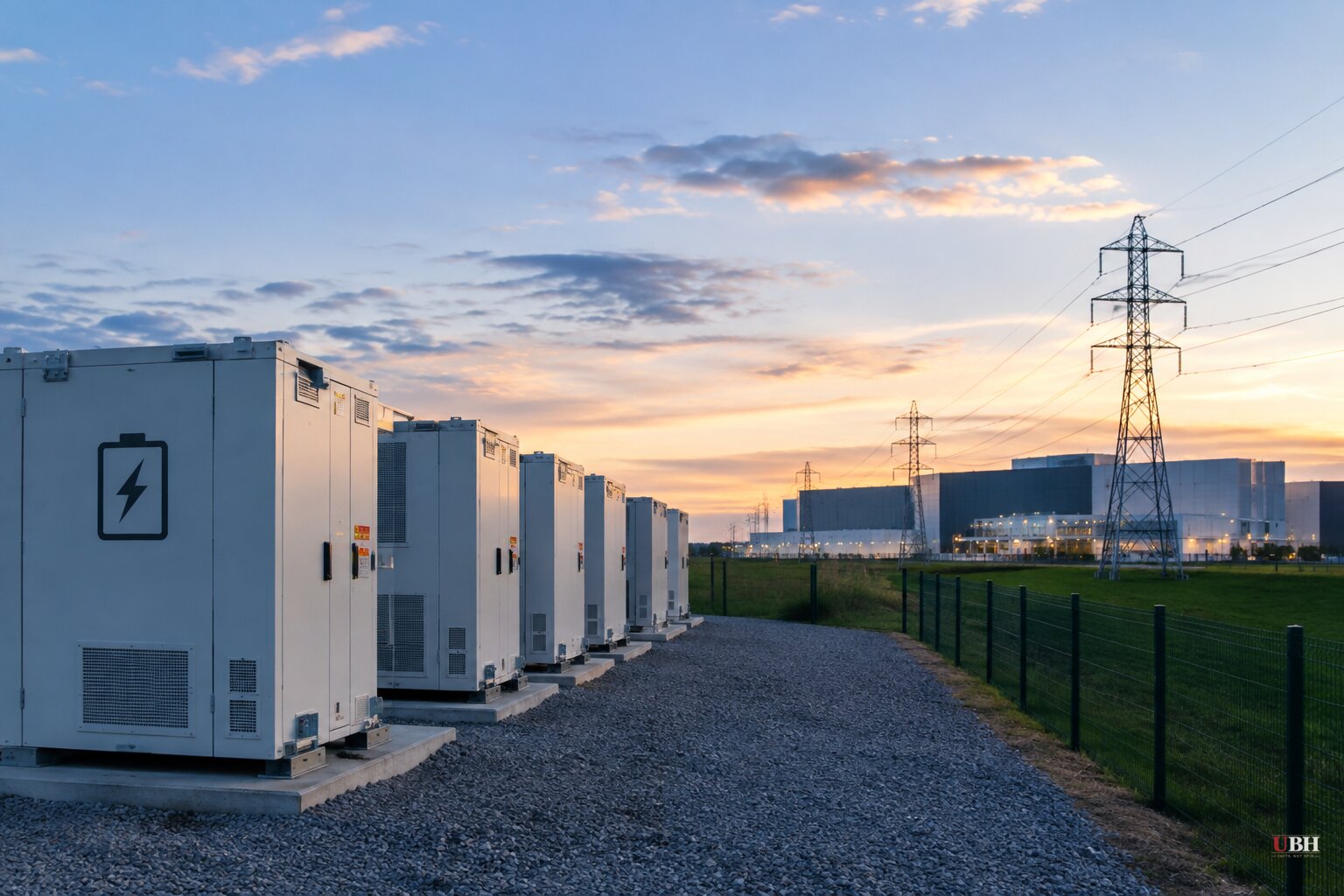
EQT Infrastructure is backing a plan worth up to $2 billion to scatter small batteries across industrial sites in 13 states, according to Bloomberg and Crypto Briefing. The goal isn't to power data centers directly. It's to free up room on the grid so data centers can plug in faster.
The investment runs through Madison Energy Infrastructure, an EQT portfolio company. Madison Chief Executive Officer Richard Walsh told Bloomberg the plan is to install batteries capable of discharging four hours of power at a time, starting inside PJM Interconnection's 13-state grid, which stretches from Illinois to New Jersey and serves roughly 65 million people. The target is 1 gigawatt of new capacity by 2028, enough to power around 750,000 homes.
The logic is simple. Batteries get installed at places like wastewater treatment plants, cutting those facilities' draw on the local grid. That frees up capacity data centers can then use, without waiting years for a new transmission line or substation to get built. EQT is the sole equity investor and Madison is lining up additional debt financing on top of that, per Crypto Briefing.
The bottleneck this is meant to solve is real and well documented. Data center operators can build a physical facility in about 18 months. Getting it connected to the grid can take years, and PJM's territory is one of the worst chokepoints in the country.
Congress Moves to Keep Costs Off Regular Ratepayers
While private capital works the supply side, the House is working the cost side. Lawmakers passed the Ratepayer Protection Act on a 417-3 vote, according to the Daily Signal. The bill, sponsored by Rep. Gabe Evans, R-Colo., directs state public utility commissions to consider federal guardrails before approving new data center and AI facility construction.
Two things matter in the text. First, it stops utility companies from shifting data centers' power costs onto ordinary residential ratepayers. Second, it requires state regulators to make sure data center developers can actually finish what they start, so a half-built project doesn't leave costs stranded for someone else to cover.
Evans told the Daily Signal the bill is as much a national security measure as a cost bill. "We have to have the digital infrastructure in the United States to keep American data in the United States," he said, warning that without it "the next most likely location is Communist China."
A 417-3 vote is about as close to universal agreement as Congress gets on anything involving Big Tech. Even in a divided Washington, few lawmakers want to explain to constituents why their electric bill went up to subsidize a hyperscale data center down the road.
The China Question in the Grid Itself
Separately, the Trump administration has moved to tighten scrutiny of foreign-made equipment inside the power grid, according to Breitbart's reporting on CNBC coverage. Trump signed an executive order declaring a national emergency over what he called an "extraordinary foreign threat" tied to bulk-power system equipment, giving the Energy Department authority to block or condition transactions involving grid and data center hardware.
The order builds on an April presidential determination naming transformers, transmission lines, substations, high-voltage circuit breakers and power control electronics as essential to national defense.
The exposure isn't small. Yury Dvorkin, an associate professor at Johns Hopkins University, told CNBC that China's share of certain transformer and switchgear categories runs near 30 percent, and it accounts for over 40 percent of U.S. battery imports. Ben Boucher of Wood Mackenzie flagged substation transformers specifically as a hyperscaler dependency. Laveena Iyer of The Economist Group said scrutiny of China's role in U.S. power infrastructure has "only risen over the past eight months," a shift from earlier focus that centered on computing chips alone.
Hitachi Energy has already committed $1 billion to build domestic grid manufacturing capacity, a move that predates the executive order and suggests industry saw this coming before Washington acted.
An emergency declaration and new DOE authority over private transactions may or may not be the right tool compared to letting the market and companies like Hitachi respond on their own. No investigation or enforcement action against a specific company has been announced under the order as of this writing. The order gives the government a lever it hasn't yet pulled.
What a Working Model Looks Like
Quincy, Washington, offers a preview of what gets built when the incentives line up. Fox News reported that two decades of Microsoft data center investment there has funded a new high school, a hospital and a $31 million water-reuse utility that the EPA says saves an estimated 138 million gallons of groundwater a year. Microsoft says future facilities nationwide will use similar closed-loop cooling and will ask utilities to set data center rates high enough to cover the infrastructure costs without raising bills for residents, according to the same report.
Whether that promise holds up outside a small, cooperative town remains to be tested. Between EQT's battery bet, the Ratepayer Protection Act now headed to the Senate, and the Energy Department's untested new authority over Chinese grid equipment, the next 18 months will show whether any of these fixes actually land before the AI industry's power demand outruns them.
Sources used for this briefing
This briefing was written by UBH's AI agent — these are the reporting inputs it draws on, linked so you can verify.


