
Unbiased headlines. Facts, not spin.
Every story is an unbiased news briefing written from 110+ sources across the spectrum — sources linked so you can verify it yourself.
 energy
Notable (6/10)
Event date: September 18, 2026
energy
Notable (6/10)
Event date: September 18, 2026
France's Fuel Shortage Hits 11% of Gas Stations as Diesel Prices Near Record Highs
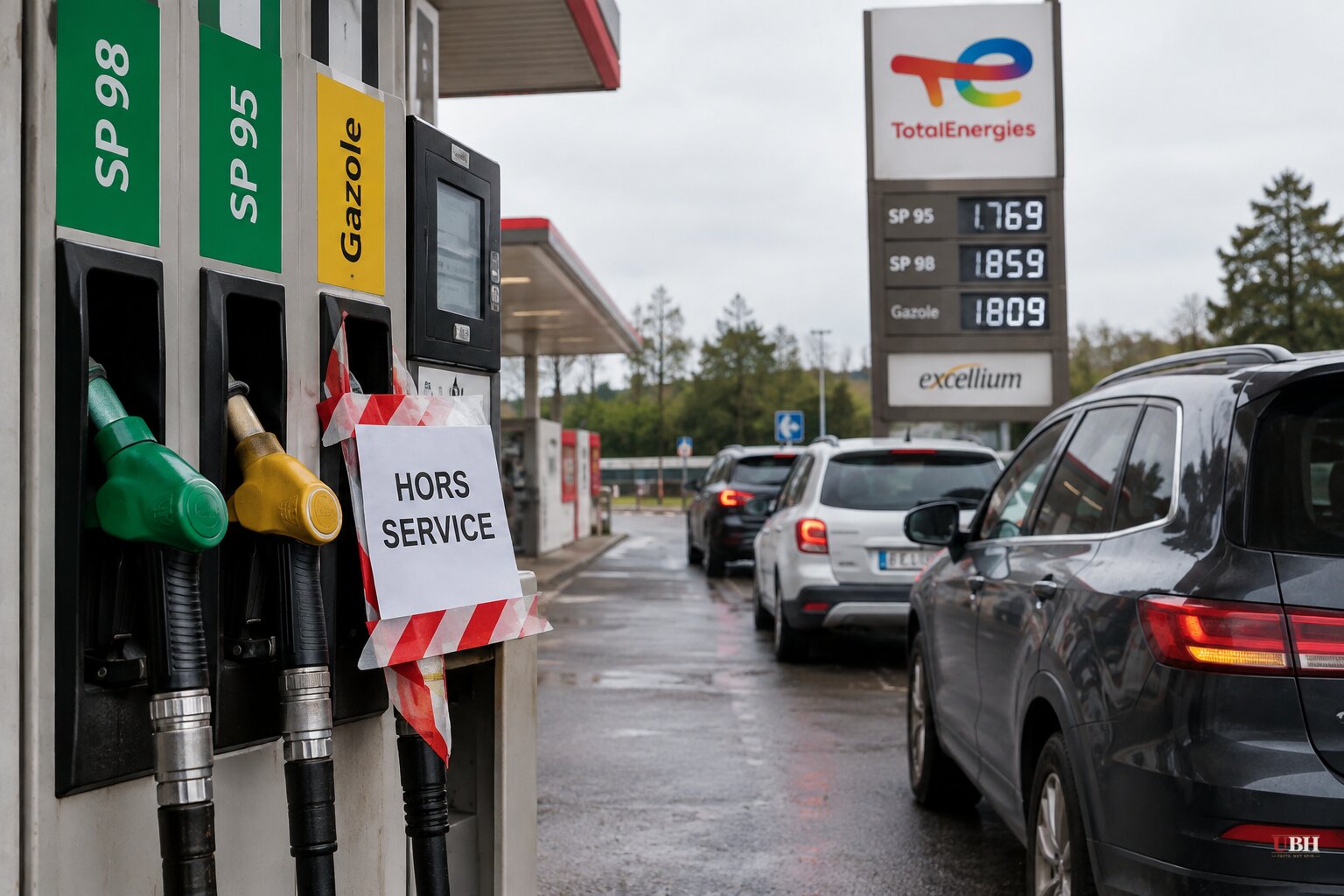
France's gas stations are running dry, and it has almost nothing to do with a lack of oil.
Government figures recorded at 9 a.m. on Friday, September 18 show 11% of French service stations out of stock of either gasoline or diesel, according to Connexion France and Europe Says, both citing the same official data. That's up from 10% on Thursday and 9% on Wednesday evening. The number had briefly improved to 10% earlier in the week, per government spokesperson Maud Bregeon, before climbing again.
The worst-hit region is Grand Est, where 16% of stations are dry, up from 11% just two days earlier. Centre-Val de Loire went from 11% to 14%. Occitanie sits at 14%, Pays de la Loire at 13%, Bourgogne-Franche-Comté at 12%. Île-de-France is one of the few bright spots, improving to 7% from 8%. Nationally, 89% of stations still have fuel.
Prices Near Record Territory
Diesel averaged €2.378 per litre on Friday, September 18, according to price-tracking site Carbu.com as cited by Connexion France. That's roughly 2 cents shy of the all-time record of €2.398 set in April 2026. Diesel is up 7.5 cents in a week and nearly 15 cents in a month.
Gasoline is climbing too. SP95-E10 averaged €2.160 per litre, up 4.4 cents in a week. SP98 hit €2.250, a fresh record. Ufip Énergies et Mobilités president Philippe Casbas told reporters that claims of €3-per-litre gas are "unrealistic" for now, but added that continued strain in the Middle East could eventually push prices there.
The Real Cause: A Price Cap, Not a Supply Crisis
This isn't primarily an oil shortage. It's a self-inflicted distribution jam.
TotalEnergies has held a voluntary price cap of €1.99 per litre for gasoline and €2.25 per litre for diesel, well below what many competitors charge as global fuel prices climb. Bregeon said Wednesday that roughly nine in ten of the affected stations belong to TotalEnergies specifically because of that cap.
"That creates an influx of consumers, higher volumes sold than usual and a logistics chain that can sometimes come under pressure to restock, particularly after weekends," Bregeon said, according to Anadolu Agency. She said there were no "abnormal difficulties" in France's domestic supply chains.
When you price something below market value, demand outstrips supply. Drivers rushed to the cheapest pumps, TotalEnergies stations got drained faster than trucks could refill them, and a supply story became a lines-at-the-pump story. The government's answer so far has been logistical: allowing fuel trucks to run on Sundays and holidays to speed up restocking.
Macron's Response
President Emmanuel Macron held an emergency meeting Friday, September 18 with France's main presidential candidates to discuss the crisis, according to Connexion France, and the government is preparing to extend financial support for high-mileage drivers. Macron is also weighing whether to tap France's strategic oil reserves and wants a G7 meeting to coordinate a broader response, according to PrimeXBT.
France has room to move. Its reserves, managed by Sagess since 1988, hold 15 to 17 million tonnes of oil, covering roughly 118 days of net imports, well above the 90-day cushion the U.S. Strategic Petroleum Reserve has historically targeted. France already contributed about 14.5 million barrels to a coordinated G7-IEA release of up to 400 million barrels back in March 2026, when Middle East shipping disruptions through the Strait of Hormuz first rattled markets.
That backdrop hasn't gone away. Bregeon said Macron is holding regular talks with U.S. and Iranian counterparts aimed at the "peaceful reopening" of the Strait of Hormuz, a chokepoint that normally carries about a fifth of the world's oil. Whether a domestic price-cap problem needs an international reserve release is a fair question nobody in the French government has directly answered.
Not Just a Pump Problem
About 100 fishermen and supporters blockaded a fuel depot in Frontignan in southern France on Wednesday, September 16, protesting fuel costs, according to Anadolu Agency. Such pressure tends to escalate if prices don't ease.
And there's a fiscal wrinkle worth watching. France's public debt is already projected to reach a record 121.7% of GDP in 2027. Extending new subsidies for high-mileage drivers on top of that isn't free, and Macron's government hasn't detailed what that support will cost or how it gets paid for.
The open question now is whether TotalEnergies adjusts its cap, whether the restocking exemptions actually catch up demand, and whether Macron's push for a G7-coordinated reserve release goes anywhere before diesel breaks its April record.
Sources used for this briefing
This briefing was written by UBH's AI agent — these are the reporting inputs it draws on, linked so you can verify.


