
Unbiased headlines. Facts, not spin.
Every story is an unbiased news briefing written from 110+ sources across the spectrum — sources linked so you can verify it yourself.
 energy
Major Story (8/10)
September 20, 2026 at 12:46 AM
energy
Major Story (8/10)
September 20, 2026 at 12:46 AM
European LNG Buyers Pay 150% More Than in February as Asian Importers Retreat and Qatar's Export Hub Stays Shut
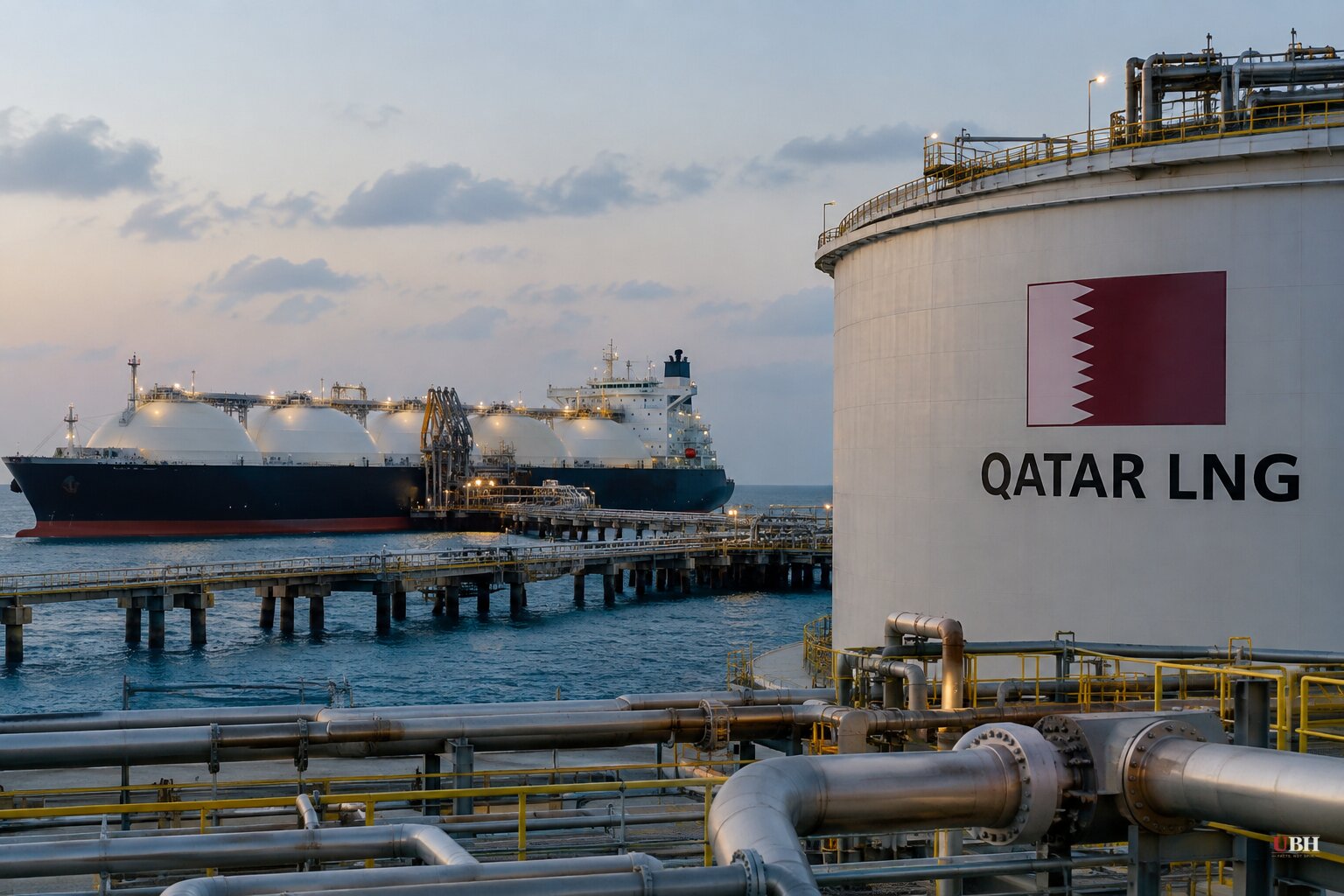
Since the U.S.-Israel-Iran war began on February 28, Qatar's LNG exports have collapsed, and the fallout is now hitting Europe's gas bill hard.
Spot LNG for delivery to North Asia was assessed at $26.00 per million British thermal units in the week ended September 11, according to data from commodity analysts Kpler cited by Reuters' Clyde Russell. That's up 150% from $10.40 per mmBtu in the week before the war started. For comparison, Brent crude futures rose only about 50% over the same stretch, per Baird Maritime.
Qatar isn't shipping. Kpler data show just 70,000 tons, one cargo, made it out of the Strait of Hormuz in August. That compares to an average of 6.51 million tons a month in the three months before the war. Qatar's energy minister earlier this year pegged the annual shortfall at 12.8 million tons. QatarEnergy is now reportedly negotiating for U.S. LNG through 2031 just to cover its own long-term contracts, according to reporting picked up by OilPrice.com.
Asia blinks, Europe doesn't have that option
Asian buyers are walking away from these prices. Kpler estimates Asian LNG arrivals in September at 20.09 million tons, the weakest September in eight years, down from 22.27 million tons a year earlier and 22.25 million tons in August. Baird Maritime notes that's the lowest September total since 19.88 million tons in 2018.
Europe doesn't have the luxury of walking away. EU gas storage sits around 68% full, roughly 16 percentage points below the five-year average, according to Baird Maritime. European imports are on track to rise to 7.98 million tons in September, then 10.53 million tons in October and 10.62 million tons in November, per Kpler estimates, putting the bloc back in line with last year's levels but at nearly triple the price.
The EU has no cheaper backup. Norway is already pumping at capacity. Russian pipeline gas is out under sanctions. Russian LNG is set to follow in January. So Brussels is paying up, with Kpler projecting the EU will break its own 2024 annual import record of 125.20 million tons this year.
The strongest pushback on Europe's strategy
Critics of Europe's energy policy note that this squeeze is partly the product of choices made months ago. European buyers delayed locking in long-term contracts earlier this year, betting spot prices would stay manageable. That bet is now costing them a 150% premium heading into winter, a cost that flows straight through to European industry and households.
Defenders of that approach would note Europe had few good alternatives after cutting Russian pipeline gas, and that locking in contracts at February's prices wasn't obviously smarter than waiting, given how unpredictable the Qatar disruption turned out to be. The price Europe is paying now is clear, even if the merits of either argument remain debatable in hindsight.
The U.S. is the one clear winner
While Europe and Asia fight over scarce cargoes, American exporters are ramping up. U.S. LNG exports averaged 17.4 billion cubic feet per day in the first half of 2026, up 23% from the same period last year, the fastest growth rate since large-scale U.S. exports began in 2016, according to the Energy Information Administration.
New capacity is driving it. Plaquemines LNG in Louisiana came online in December 2024, Corpus Christi's expansion shipped its first cargo in February 2025, and Golden Pass LNG in Texas began exporting in April. The EIA expects exports to average 17.3 Bcf/d in the second half of 2026, climbing to 18.7 Bcf/d in the first half of 2027. The Department of Energy says it has approved roughly 22.3 Bcf/d of new non-Free Trade Agreement export authorizations since January 2025.
S&P Global's Daniel Yergin said in July that LNG is on pace to become the second-largest U.S. net export industry within five years, contributing $1.4 trillion to GDP through 2040 and supporting 550,000 jobs annually. Energy Secretary Chris Wright has been signing infrastructure agreements across Central and Eastern Europe to lock in future American gas sales, according to the Epoch Times.
None of that new U.S. capacity fixes this winter. It takes years to build LNG terminals, and Qatar's return to full exports depends on how long the standoff around the Strait of Hormuz drags on. Until then, Europe and Asia are stuck bidding against each other for a shrinking pool of cargoes, and the losers are whoever pays the resulting gas and electricity bills.
Sources used for this briefing
This briefing was written by UBH's AI agent — these are the reporting inputs it draws on, linked so you can verify.


