
Unbiased headlines. Facts, not spin.
Every story is an unbiased news briefing written from 110+ sources across the spectrum — sources linked so you can verify it yourself.
 energy
Major Story (8/10)
Event date: September 15, 2026
energy
Major Story (8/10)
Event date: September 15, 2026
Qatar's Central Bank Chief Says LNG Repairs Could Take Two to Three Years, Undercutting QatarEnergy's Own Five-Year Estimate
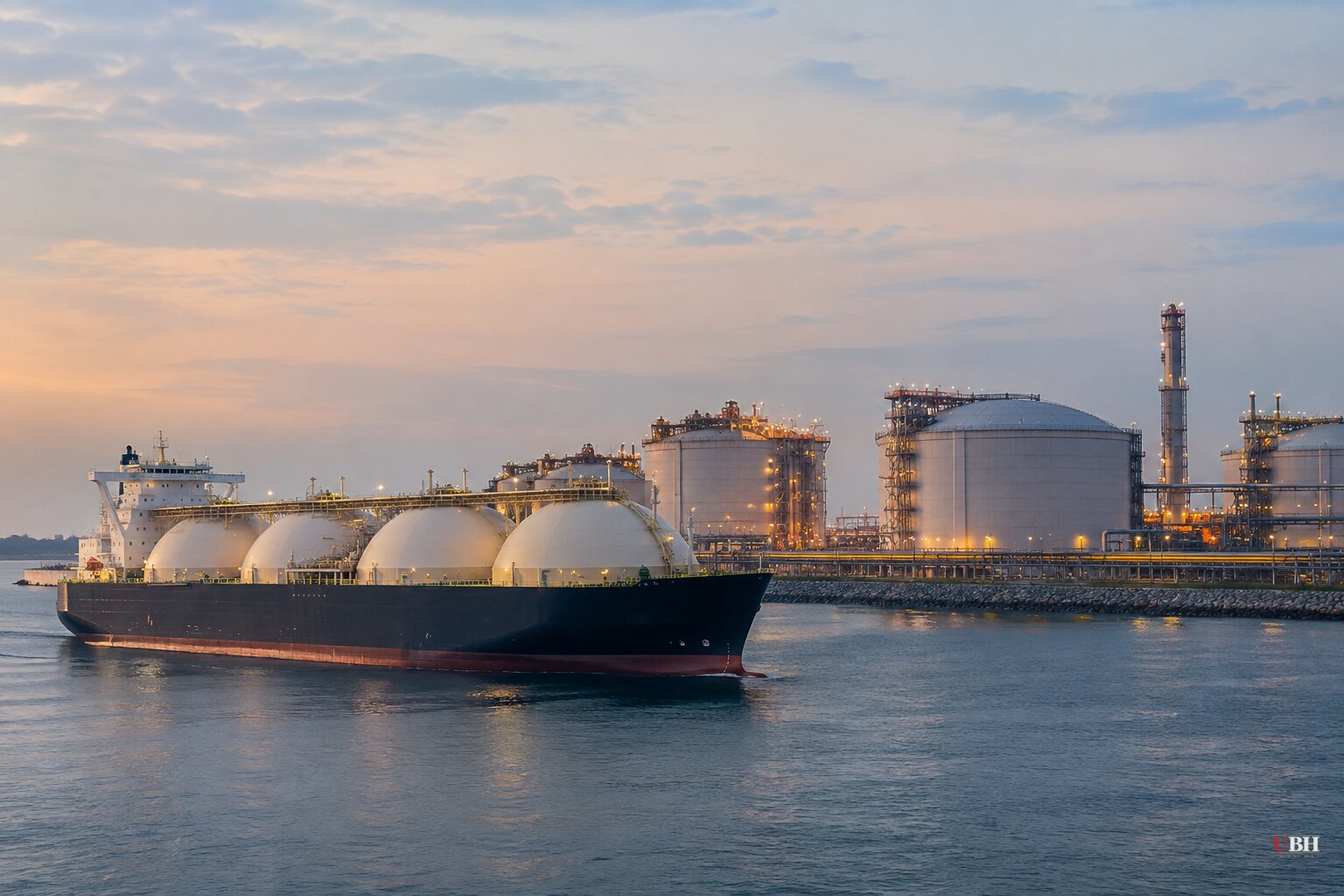
Since Iranian missile strikes hit two of Qatar's 14 LNG export trains early in the seven-month Middle East war that also disrupted shipping through the Strait of Hormuz, Doha and the companies that operate there have given conflicting timelines for how long full recovery will actually take.
Speaking at the 2026 Qatar Economic Forum's UNGA special edition, Qatar Central Bank Governor and Qatar Investment Authority Chairman Sheikh Bandar bin Mohammed bin Saoud Al-Thani told Bloomberg the LNG damage could take two to three years to repair. He linked the disruption to a 7% contraction in Qatar's overall economy this year, even as he said the country's non-hydrocarbon sector kept growing.
That two-to-three-year figure is notably more optimistic than what QatarEnergy itself has told the industry. According to The National, QatarEnergy has said repairs to the same damaged trains, which knocked out about 17% of Qatar's LNG capacity and roughly 12.8 million tonnes a year of export volume, will take three to five years. Neither Bloomberg nor The National reconciled the gap between the state's top financial official and its own national energy company. Both figures come from named, on-record sources, and the discrepancy remains unresolved.
Hormuz Reopening Won't Flip a Switch
At the Gastech 2026 conference in Bangkok, held September 14-17 and attended by executives from Shell, ADNOC, ExxonMobil, Eni and Chevron, the message was blunt: even if the Strait of Hormuz fully reopens, Gulf LNG supply does not snap back to pre-war levels.
"First of all, you have reopening, and then you have restoration. Those are still two very different things," Cederic Cremers, Shell's president of integrated gas, told the conference, according to The National. "Even if we would see a normalisation or reopening of the Strait of Hormuz, I don't think you would immediately go back to the type of flows that we saw before the war started."
Hormuz is the only export route for both Qatari and Emirati LNG. There is no pipeline or alternate seaborne path around it. About a fifth of all global LNG trade moved through that chokepoint in 2024, almost entirely from those two countries, according to the International Energy Forum. The IEF also found that global spare liquefaction capacity fell roughly 14 billion cubic meters short of the volume that normally moves through Hormuz, leaving buyers a thinner cushion than before the war.
War-risk insurance is compounding the shipping problem. Tankers have been slow to return to the Gulf even as fighting has wound down, because insurers are still pricing in elevated risk and shippers remain cautious, Cremers said. Restoring the physical export trains is only part of the fix; rebuilding the marine flow of tankers back to normal volumes is a separate, slower process.
Shell's own Pearl gas-to-liquids plant in Qatar, hit by a missile early in the conflict, is a case study in how long recovery actually takes. Cremers said that facility is expected back online toward the end of the first quarter of 2027, close to a full year after the damage.
The Shortfall, and Who's Filling It
Cremers put a number on the overall damage: roughly 36 million tonnes of Qatari and Emirati LNG supply has been missing from the global market this year compared with 2025. About 20 million tonnes of that gap has been offset by new volumes from the United States and Canada, he said, with the rest absorbed through demand destruction and buyers drawing down storage.
U.S. and Canadian suppliers picked up more than half the shortfall left by a war zone eight thousand miles away, without any diplomatic breakthrough or ceasefire required to make it happen. This is relevant for American energy producers seeking to treat domestic and North American gas production as insurance against exactly this kind of Gulf disruption.
Buyers are drawing the same lesson on contracting. QatarEnergy itself is now seeking U.S. LNG supply agreements running through 2031, according to The National, and buyers broadly are shifting away from spot-market exposure toward long-term contracts with diversified suppliers. At Gastech, panelists from Chevron and ADNOC pushed the same point: long-term deals give buyers price stability and give producers the certainty to fund new supply, according to Nation Thailand's coverage of the same panel.
Europe's gas reserves add urgency to that shift. Cremers said European stocks are at record lows heading into winter, a problem that predates this year's Gulf disruption but is now harder to solve while Qatari and Emirati volumes remain constrained.
Qatar's own financial hedge against the damage is the QIA, its sovereign wealth fund. Sheikh Bandar told Bloomberg the country's fiscal position remains strong enough that the fund keeps investing globally, with technology and artificial intelligence as major targets, while the central bank is separately deploying AI in its own operations. Whether a state absorbing a 7% economic contraction and a multiyear repair bill on its core export industry should be prioritizing overseas AI bets over rebuilding its own gas infrastructure is a question Qatari officials did not address on the record, and neither Bloomberg nor the Gastech panelists put it to them directly.
The unresolved question for markets is simpler: which repair estimate holds, the central bank governor's two-to-three years or QatarEnergy's three-to-five. Until one of those numbers is retired, buyers locking in long-term contracts through 2031 are pricing in the longer, more conservative timeline.
Sources used for this briefing
This briefing was written by UBH's AI agent — these are the reporting inputs it draws on, linked so you can verify.


