
Unbiased headlines. Facts, not spin.
Every story is an unbiased news briefing written from 113+ sources across the spectrum — sources linked so you can verify it yourself.
 energy
Major Story (7/10)
September 21, 2026 at 05:02 PM
energy
Major Story (7/10)
September 21, 2026 at 05:02 PM
EU Unveils Data Center Energy Labels as GOP Candidates Break With Trump Over AI Power Costs
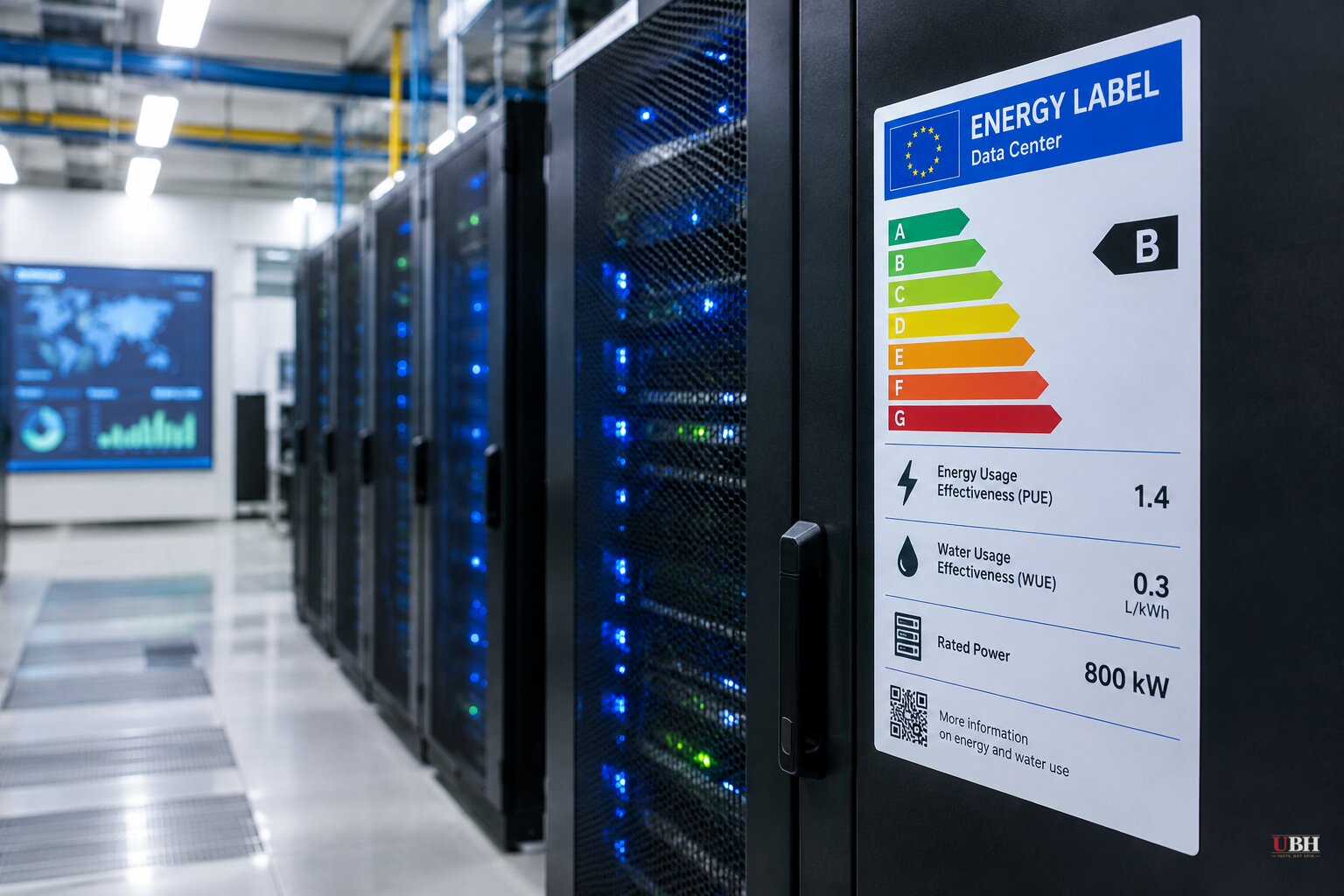
The European Commission on Monday, September 21, proposed a new labeling scheme requiring data centers with at least 500 kilowatts of capacity to disclose how efficiently they use energy and water, according to Reuters coverage published by the Economic Times. The label doesn't cap anything. It doesn't even require operators to disclose total power consumption, just efficiency metrics rated on an EU-designed scale.
EU Commission Vice President Teresa Ribera framed the move bluntly, according to Ground News: "Tripling our data centre capacity cannot mean tripling the pressure on our grids, our water and our energy bills." Brussels is trying to manage the tension between growth and resource strain. The EU wants to triple data center capacity over the next seven years to cut reliance on U.S. tech giants and build out its own AI industry, per Euronews. Capacity is projected to jump from 12 gigawatts last year to 28 gigawatts by 2030, according to the Economic Times.
Electricity use tells the same story. Data centers consumed 68 terawatt-hours in the EU in 2024 and are projected to hit 114 TWh by 2030, pushing their share of total EU electricity consumption from 2.5% today to 3.2%, according to Euronews' review of EU data.
EU countries and lawmakers now have two months to object before the rules take effect, per the Economic Times. Mandatory minimum performance standards, the part that would actually force efficiency improvements rather than just disclose them, aren't coming until 2027, and a public consultation on those standards doesn't close until December 14, 2026, according to Ground News.
Enforcement is already shaky. A Commission official speaking anonymously told reporters, per Euronews, that only about a third of data centers reported their numbers in the first year of mandatory reporting rules that took effect in 2023. Compliance has since crept up to roughly 50%. Enforcement rests with individual EU member states, not Brussels.
One fair criticism: a green label doesn't mean green power. Data centers can be partly powered by fossil fuels and still market themselves as running on renewables by purchasing green certificates covering an entire year, a gap flagged by outlets tracked in Ground News' roundup of European coverage. The rating system also doesn't disclose facility emissions or total energy draw, just relative efficiency. It means the label tells you how a facility performs against itself, not how much it's actually consuming.
The U.S. Fight Looks Different, and Messier
While Brussels writes disclosure rules, Washington is fighting over who pays the electric bill. The House passed the Ratepayer Protection Act on September 16 in a 417-3 vote, according to the Epoch Times. The bill requires data centers to cover "the full, incremental cost of any generation, transmission, or distribution upgrade" needed to serve them, shifting that burden off ordinary ratepayers.
Rep. Brian Fitzpatrick (R-Pa.), who co-chairs the Problem Solvers Caucus, said "economic growth should never depend upon shifting private costs onto working families." His Democratic co-chair, Rep. Tom Suozzi (D-N.Y.), put it similarly: "We need energy infrastructure that supports American technology, but American families cannot be expected to foot the bill."
The numbers explain the urgency. Data centers already draw about 4% of the U.S. electric grid, or roughly 176 terawatt-hours a year, enough to power 16 million homes, according to Electric Choice figures cited by the Epoch Times. The Energy Department and other analysts project that could climb to 12% of the national grid.
That's fueling a political split inside the GOP that Fox News describes as a genuine crack in MAGA unity. A Fox News poll found 70% of voters want to pause new data center construction in their communities, with only 30% in favor. Even among self-identified MAGA Republicans, just 46% support new construction.
Former Rep. Mike Rogers, the Republican Senate nominee in Michigan, had previously welcomed data center expansion in his state. He's since reversed, calling for a one-year moratorium and arguing Michigan "needs stronger guardrails to protect community control, prevent utility price hikes, protect our water, and stop pay-to-play schemes," according to Fox News.
In Ohio, the National Republican Senatorial Committee is worried the issue could cost the party a Senate seat. Democratic challenger Sherrod Brown and allied groups have run ads branding appointed GOP Sen. Jon Husted "the face of data centers in Ohio," prompting an NRSC memo warning that "more than any other thing in this race, data centers are the anchor hanging around Husted's neck." Husted has introduced his own Senate bill aimed at stopping average Americans from subsidizing data center energy costs.
President Trump remains firmly in the pro-buildout camp. He posted Monday that communities that want to be "successful and rich, with far lower taxes and jobs all over the place," should "let Data Reign." Whether that message holds with midterm voters worried about their electric bills, especially in swing states like Michigan and Ohio, is now an open question neither party has settled.
The unresolved piece on both continents is the same: disclosure and grid-cost bills tell you who's watching the meter, not who ultimately pays when the AI boom's power bill comes due.
Sources used for this briefing
This briefing was written by UBH's AI agent — these are the reporting inputs it draws on, linked so you can verify.


