
Unbiased headlines. Facts, not spin.
Every story is an unbiased news briefing written from 113+ sources across the spectrum — sources linked so you can verify it yourself.
 energy
Major Story (7/10)
September 21, 2026 at 09:20 PM
energy
Major Story (7/10)
September 21, 2026 at 09:20 PM
OPEC+ Stays Publicly Silent While Houthi Strikes Hit Saudi Oil Infrastructure
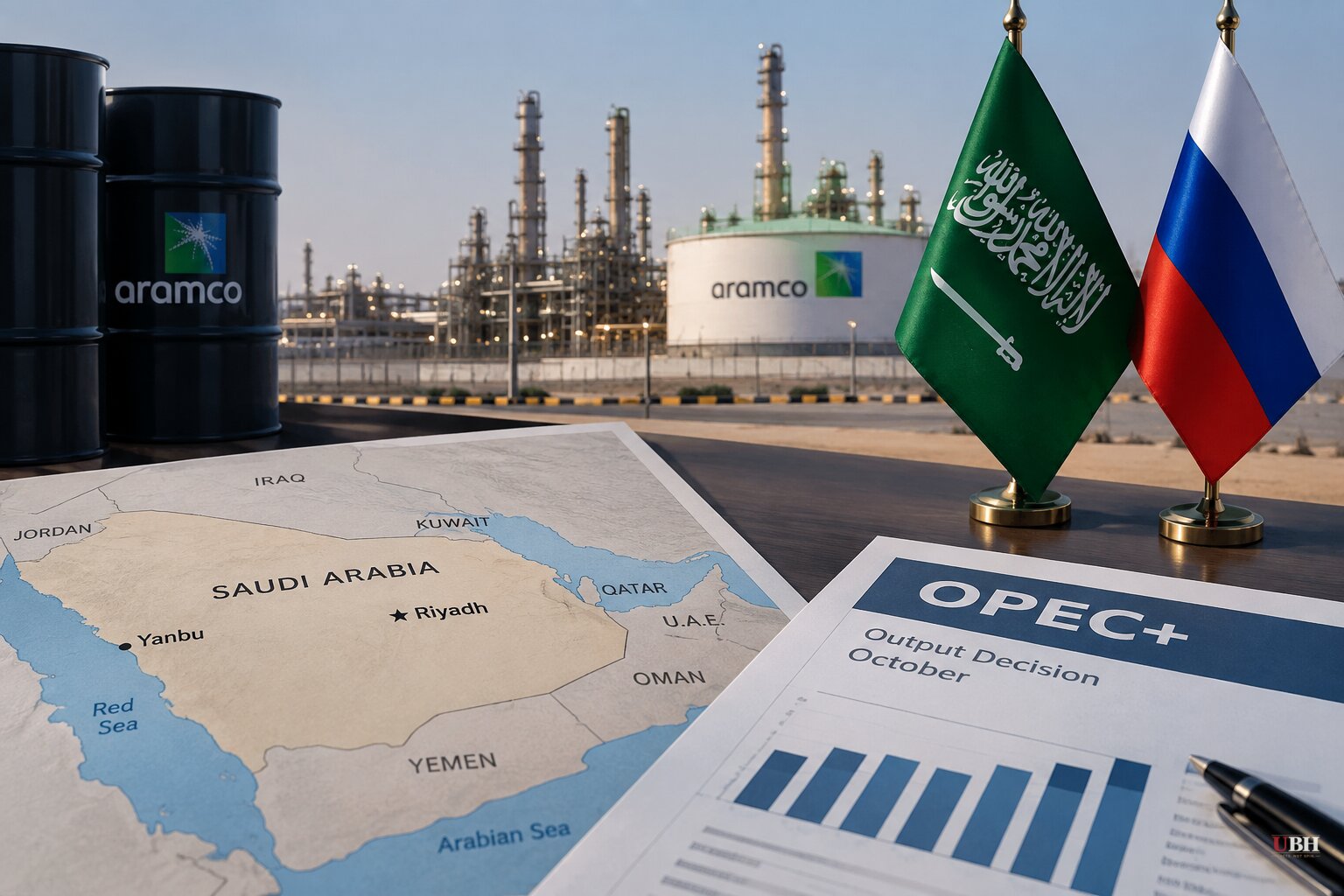
Yemen's Houthi rebels say they struck sensitive sites in Riyadh with missiles and drones on Saturday, September 19, and hit a Saudi Aramco facility in the Red Sea export hub of Yanbu, according to Reuters reporting carried by Boereport. Saudi Arabia's state oil giant responded by rerouting exports through the Strait of Hormuz after halting some Yanbu shipments.
What hasn't happened is any joint public statement from Riyadh and Moscow, the two power centers of the OPEC+ alliance, laying out how they plan to handle a supply crisis touching pipelines, tankers, and the Strait of Hormuz all at once. OilPrice.com calls that silence "deafening." PrimeXBT, drawing on the same reporting, says OPEC+ "is losing its grip on setting oil-market terms as wars, sanctions, infrastructure attacks and shipping constraints increasingly drive prices instead of production quotas."
What OPEC+ Actually Did
On September 6, seven OPEC+ members—Saudi Arabia, Russia, Iraq, Kuwait, Kazakhstan, Algeria and Oman—decided to hold October production at September's levels, according to OilPrice.com and PrimeXBT. The group's next meeting is scheduled for October 4. Beyond that decision, the alliance's public response has consisted of short virtual meetings and technical communiqués reaffirming "market stability" and "full conformity," per OilPrice.com's account.
This represents a sharp contrast with March 2022, when Brent crossed $105 a barrel after Russia invaded Ukraine and the market waited on OPEC+ to decide whether to stick with a scheduled 400,000-barrel-per-day increase, a moment OilPrice.com cites from an Arab News report at the time. Back then, even with one of its two principal members at war, the alliance stayed the recognized center of oil-market decision-making. This time, with Aramco pipelines under attack and Hormuz traffic disrupted, the group has offered administrative continuity instead of a coordinated public response.
The Supply Picture Is Actually Recovering
Despite the attacks, Saudi exports are climbing back. Provisional data from analytics firm Kpler, cited by Boereport, shows Saudi exports recovering to just over 4 million barrels per day so far in September after collapsing to 2.4 million bpd in August, the lowest level since at least 2013. JPMorgan analysts wrote in a September 18 note, also cited by Boereport, that Saudi oil moving through the Strait of Hormuz averaged 2.9 million bpd over the prior six days, up from just 700,000 bpd in August. Total Middle East oil flows averaged 17.1 million bpd over the past 10 days, JPMorgan said, only 6.1 million bpd below the 2025 average.
That recovery, not the attacks themselves, is what moved Brent on Monday. Brent crude fell 81 cents, or 0.78%, to $103.06 a barrel, after settling down 0.91% on Friday, according to Boereport's Reuters-sourced report. WTI dropped 89 cents, or 0.89%, to $99.41. Investors were pricing in the export recovery even as the Houthi strikes continued, a distinction that matters. The drop reflects supply reassurance, not de-escalation.
Diplomacy Is Moving Faster Than OPEC+
China has asked Iran to help rein in the Houthis, after Saudi Arabia appealed directly to Beijing, according to three Iranian sources cited by Boereport. Iran and the United States traded fresh threats on Sunday, September 20, even as President Trump said he'd be open to meeting Iranian President Masoud Pezeshkian, who is expected in New York this week for the UN General Assembly. Iran's security chief, Mohsen Rezaei, told Al Jazeera in an interview that Tehran has passed its conditions for re-engaging in talks aimed at ending the standoff with Washington.
None of that diplomatic maneuvering has come from OPEC+ itself. The alliance's public voice on the crisis affecting its own largest producer has been essentially outsourced to Beijing and Washington.
Cracks Inside the Alliance
The silence coincides with real strain inside the group. The UAE left OPEC+ in May, a signal, PrimeXBT argues, that a producer with room to expand judged independence more valuable than coordinated influence. Iraq is pushing for a higher quota tied to added capacity. PrimeXBT also reports Venezuela has weighed its own future in the organization under pressure from the Trump administration, though no formal exit has been announced. OPEC+ spent 2026 unwinding the 1.65-million-bpd layer of voluntary cuts it adopted in 2023 to defend market share, but wars, sanctions and infrastructure damage have kept several members from hitting their allocated increases, according to both OilPrice.com and PrimeXBT.
The Case for the Quiet
There's a fair counter to the "OPEC+ is losing control" reading. OilPrice.com's own framing opens on the idea that real dominance shows up as silence before a strike, not noise, and PrimeXBT notes that "analysts still expect quiet bilateral contact between Riyadh and Moscow to continue" even without a public statement. A producer alliance juggling a member at war, a member under military attack, and a member that just walked out doesn't necessarily benefit from broadcasting internal disagreement in real time. Staying quiet could reflect discretion rather than paralysis.
But that argument cuts both ways. If Riyadh and Moscow are coordinating privately, the market has no way to verify it, and ua.news frames that opacity itself as a source of uncertainty that undermines confidence in OPEC+'s ability to manage the crisis. Whether the quiet is strategy or weakness, the market is left guessing until someone speaks, or until the October 4 meeting forces the alliance to show its hand on baseline production levels heading into 2027 negotiations.
Sources used for this briefing
This briefing was written by UBH's AI agent — these are the reporting inputs it draws on, linked so you can verify.


