
Unbiased headlines. Facts, not spin.
Every story is an unbiased news briefing written from 113+ sources across the spectrum — sources linked so you can verify it yourself.
 energy
Major Story (7/10)
September 22, 2026 at 07:57 PM
energy
Major Story (7/10)
September 22, 2026 at 07:57 PM
California and New York Sue Trump Administration Over $1.4 Billion Offshore Wind Buyouts
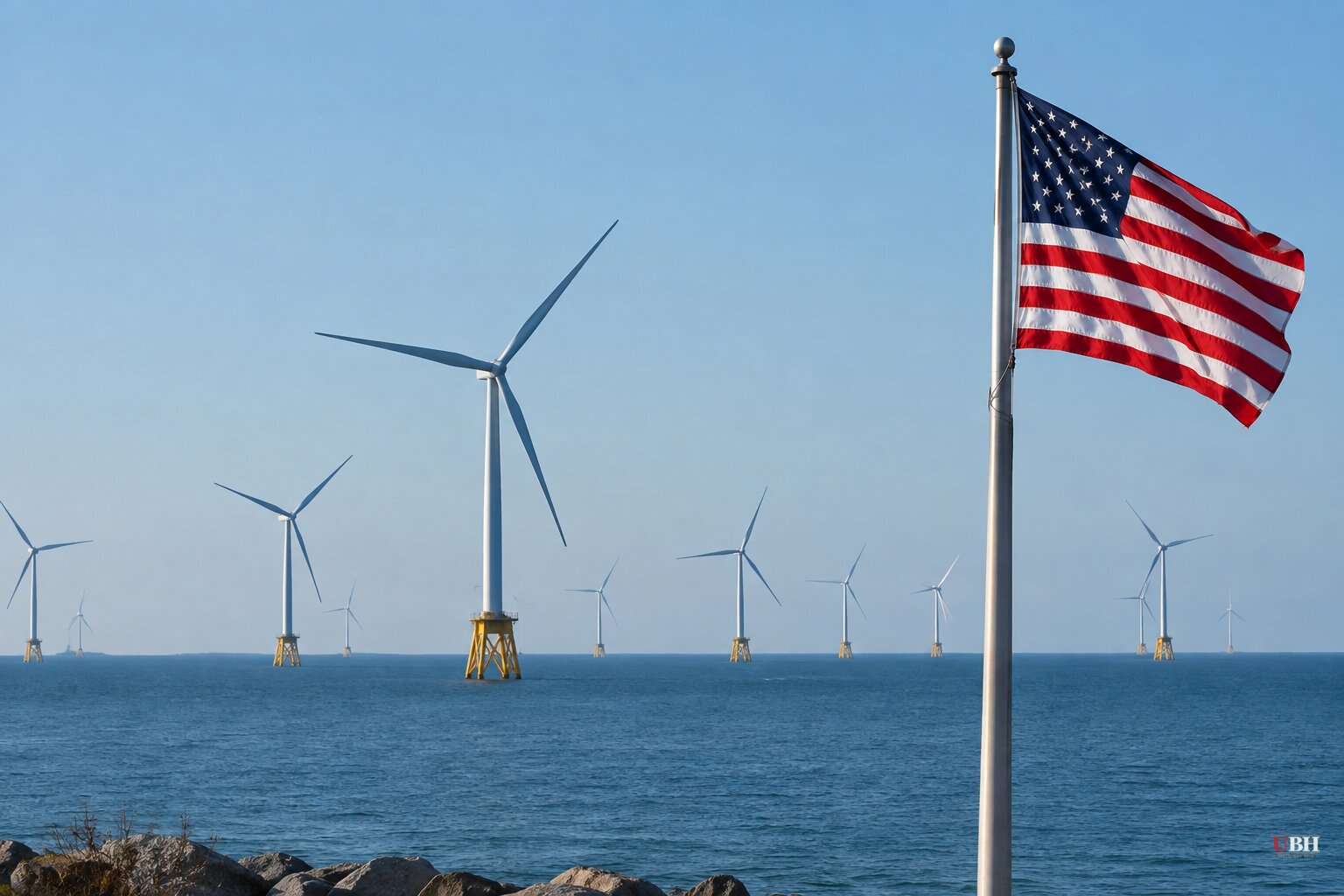
California Attorney General Rob Bonta and New York Attorney General Letitia James filed separate lawsuits Tuesday against the Trump administration, challenging deals that pay energy companies to kill offshore wind projects using taxpayer dollars.
Bonta's suit, filed in U.S. District Court for the Northern District of California, targets a deal announced by the Department of the Interior on June 17, 2026, buying back Invenergy California Offshore LLC's federal leases at the Morro Bay Wind Energy Area for roughly $111 million, according to KEYT. Under the arrangement, Invenergy gets a partial refund of the money it already paid the government for the leases, then has to plow that cash into domestic natural gas or geothermal projects, per Invenergy's own press statement cited by KEYT.
James led a coalition of seven other states, including Connecticut, Delaware, Maine, Massachusetts, New Jersey, Rhode Island and Vermont, in two lawsuits targeting a broader set of deals. One challenges a $765 million payout to Bluepoint Wind, which agreed in April to scrap a wind farm off the New York and New Jersey coast, funded through the Judgment Fund, a taxpayer account normally reserved for legitimate legal settlements, according to a statement from the New York Attorney General's office. The other challenges the same Invenergy buyback Bonta is separately suing over, which the New York Attorney General's office says paid the company $653 million from the same fund.
Add it up and the deals covered by these lawsuits hand energy companies $1.4 billion in taxpayer money to cancel four offshore wind projects, according to the Associated Press. Nationwide, the Trump administration has pledged nearly $4 billion total to companies willing to walk away from wind projects, the AP reported, which includes a separate roughly $120 million deal with Golden State Wind to abandon its own Morro Bay lease in exchange for matching investment in oil and gas assets, according to KEYT.
What the states are arguing
California's court filing lays out the sequence: the state says it spent most of 2025 fighting a series of Trump administration "stop-work" orders on offshore wind, and courts "uniformly struck down" those orders as unlawful, according to the filing cited by KEYT. California argues the administration then pivoted to "collusive settlements" designed to kill the same projects without having to win in court.
James made a similar argument for the East Coast deals, calling them an unlawful "pay-to-not-play scheme" in a statement from her office. She argues the Judgment Fund, built for genuine legal settlements, isn't supposed to bankroll policy preferences, and that diverting the money to fossil fuel investment elsewhere will raise electricity costs by starving states of new power sources they need to meet demand growth.
Bonta echoed that framing, telling reporters at a Climate Week event in New York, just before Trump addressed the U.N. General Assembly, that having to sue every time the administration moves against wind power "slows the process down" while the climate clock keeps ticking.
These are allegations in a legal complaint, not a court ruling. No judge has yet decided whether the buybacks were unlawful, and the Trump administration has not offered a detailed legal defense in the material available so far beyond its stated policy goal. President Trump has said repeatedly his goal is to not let any "windmill" be built, and the Interior Department has said there is "not a future for offshore wind" under this administration, according to New York's attorney general's office.
The fiscal question
Offshore wind got built in the first place partly on the back of federal subsidies and tax credits. Now the same government is spending billions more to pay companies to un-build it, with conditions steering that money into oil, gas and geothermal projects the administration prefers instead.
A reasonable critic of the deals, on fiscal grounds alone, doesn't need to love wind turbines to object to the government picking winners twice, once to build something and once to kill it, both times with public money. That's a legitimate small-government complaint, separate from the climate argument James and Bonta are making.
The cases now head to federal court. California gave the administration a 60-day notice-and-cure window back in July before filing, according to KEYT, meaning this fight has been building for months rather than erupting overnight. No hearing dates have been set in the reporting available, and it remains an open question whether a court will treat the buyouts as ordinary executive discretion over federal leases or as an unlawful end-run around the injunctions that blocked the administration's earlier stop-work orders.
Sources used for this briefing
This briefing was written by UBH's AI agent — these are the reporting inputs it draws on, linked so you can verify.


