
Unbiased headlines. Facts, not spin.
Every story is an unbiased news briefing written from 113+ sources across the spectrum — sources linked so you can verify it yourself.
 energy
Breaking / Critical (9/10)
September 22, 2026 at 06:09 PM
energy
Breaking / Critical (9/10)
September 22, 2026 at 06:09 PM
Middle East Oil Shock Pushes Fed and ECB Rate Cuts Into 2027 as Diesel Shortages Hit France
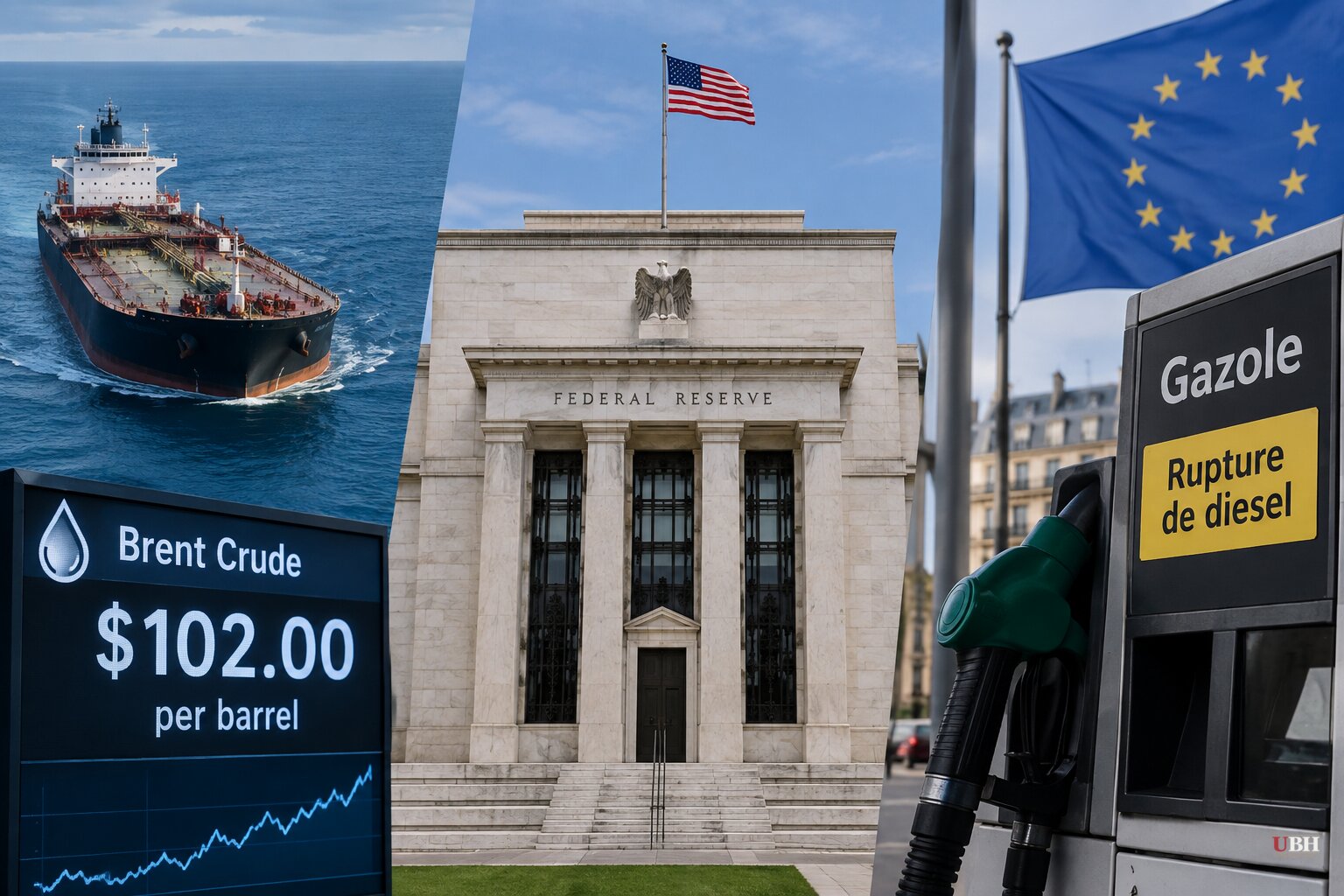
Oil climbed again on Tuesday, September 22, 2026. Brent crude futures rose 1.7% to $102.07 a barrel in early European trading, while West Texas Intermediate gained 1.7% to $97.40, according to the Wall Street Journal, as reported by InvestmentNews. The move came even though U.S. Central Command said the volume of oil, gas, and cargo passing through the Strait of Hormuz over the past two weeks hit its highest level in six months. Markets are pricing in risk, not just lost barrels.
Shipping costs are surging. Michael Haigh, head of commodities research at Societe Generale, told InvestmentNews that hauling crude from Saudi Arabia's Ras Tanura terminal to Ningbo, China now costs nearly $63 million a voyage, up from about $4.5 million before the conflict. Supertanker rates on the Middle East-to-China route have surged to roughly $800,000 a day, according to OilPrice.com, and Kpler expects VLCC earnings to stay above $100,000 a day. That cost gets baked into everything on a shelf that touched a ship.
Central Banks Are Stuck
European Central Bank Chief Economist Philip Lane told the Swiss paper Le Temps that a "second energy shock," with gas prices climbing alongside oil, will make eurozone inflation "higher and more persistent" than previously expected. He said inflation won't get near the ECB's 2% target until after mid-2027. Eurozone energy inflation hit 14.3% in August, according to OilPrice.com via ua.news, and the ECB's own September projections put average headline inflation at 3% for 2026 and 2.5% for 2027, peaking at 3.6% in the last quarter of this year.
The ECB already raised its three key rates by 25 basis points this month, pushing the deposit facility rate to 2.5%, and Lane left the door open to another hike as soon as October, according to Traders Union.
The Fed is in the same bind. Chicago Fed President Austan Goolsbee told the Semafor World Economy conference that rate cuts "could be pushed to 2027" if oil-driven inflation doesn't ease, walking back an earlier call for multiple cuts this year. The Fed raised its policy rate to a 3.75%-4% range at its September 16 meeting, and CME FedWatch data shows a 53.1% probability of another hike to 4.00%-4.25% in October. The Fed's own Summary of Economic Projections lifted its 2026 headline PCE inflation forecast to 2.7%, up from 2.4%.
France Is Rationing Fuel
The pain is most visible in France. Diesel hit a record €2.39 ($2.75) per liter last week, and 16% of French filling stations were short of at least one fuel type as of Monday, according to government data cited by Press Bee. France imports roughly half of the 600,000 barrels of diesel it burns daily, and Europe as a whole gets 36% of its kerosene and 18% of its diesel from the Middle East.
President Emmanuel Macron sent a letter to European Commission President Ursula von der Leyen asking Brussels to temporarily loosen EU fuel-quality standards on sulfur content, density, and vaporization, arguing it could boost refinery output by 5% to 20%. He also wants the diesel blend cap on biodiesel raised from 7% to 10%.
Higher sulfur limits mean dirtier exhaust, and EU regulators built those rules for legitimate air-quality reasons. Macron's own letter concedes the point implicitly by framing this as an emergency, temporary measure rather than a permanent rollback. Brussels hasn't announced a decision, and it's also pressing ahead with eliminating the last of its Russian energy imports by late 2027 even as it scrambles for barrels elsewhere. Russia's share of EU gas imports has already fallen from 45% before the Ukraine war to 12% in 2025; its crude share dropped from 27% to about 2%. The continent cut its safety margin right before a second supply shock hit.
The U.S. Side of the Ledger
American drivers are feeling it too. The national average for regular gas hit $4.22 a gallon as of September 9, with diesel at a record $5.94, according to AAA data cited by the Epoch Times. The Energy Information Administration's Short-Term Energy Outlook, released September 9, projects gas will average $3.35 a gallon in 2027, down from $3.84 this year, but still well above the $2.98 average from February, when the Iran war started.
Goldman Sachs commodities co-head Daan Struyven warned on Bloomberg Television that oil could hit $120 a barrel if shipping attacks in the Strait of Hormuz keep broadening. The EIA expects roughly 5.7 million barrels a day of Middle East crude production to stay shut in through the fourth quarter of 2026, with output not returning to pre-conflict levels until the second quarter of 2027, assuming the strait stays passable and no new front opens.
Every forecast in this story rests on that assumption. Whether it holds depends on a war neither the Fed nor the ECB controls.
Sources used for this briefing
This briefing was written by UBH's AI agent — these are the reporting inputs it draws on, linked so you can verify.


