
Unbiased headlines. Facts, not spin.
Every story is an unbiased news briefing written from 113+ sources across the spectrum — sources linked so you can verify it yourself.
 energy
Notable (6/10)
Event date: September 21, 2026
energy
Notable (6/10)
Event date: September 21, 2026
Washington's $9.5 Billion Hydrogen Bet Stalls While 90% of U.S. Hydrogen Still Comes From Fossil Fuels
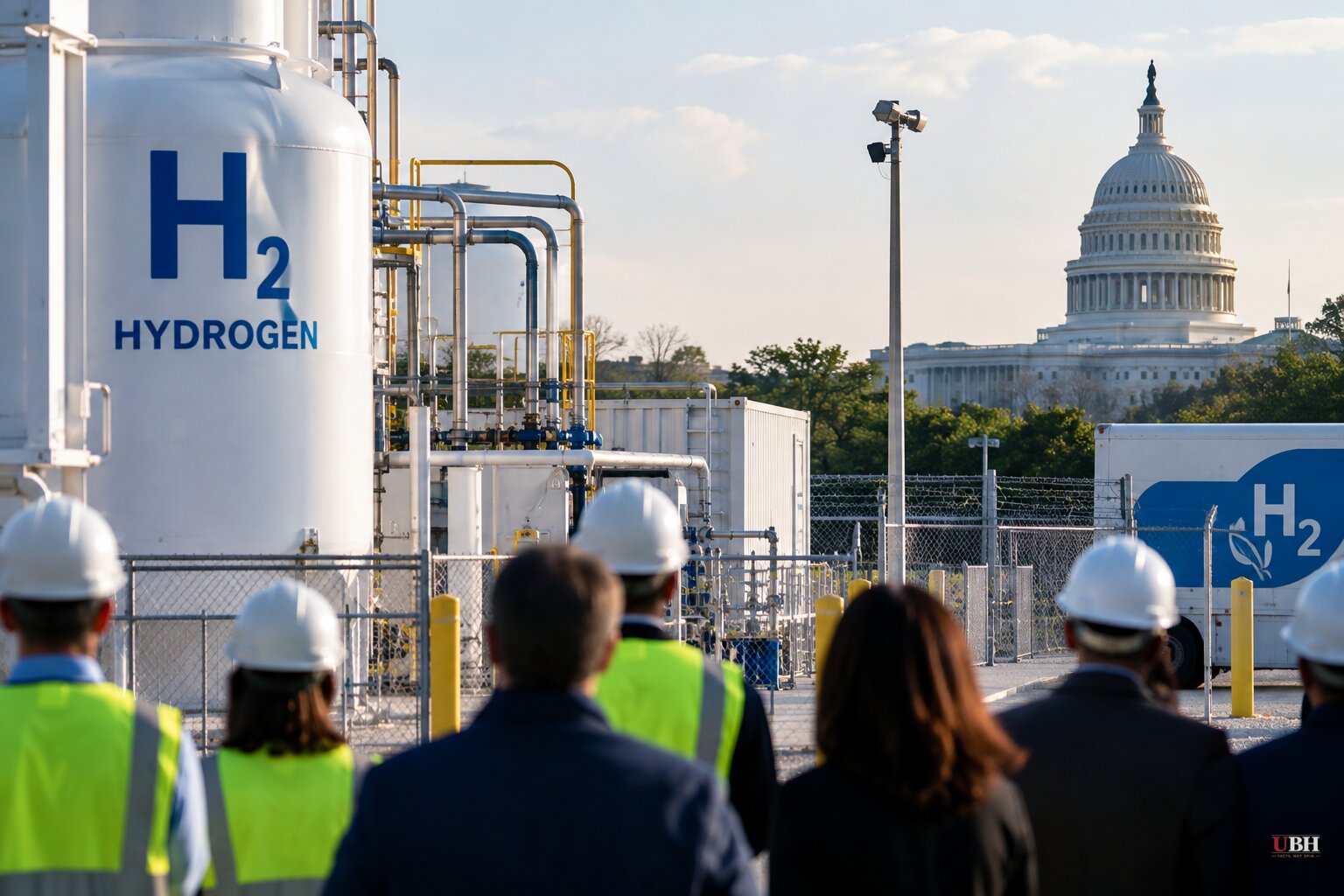
The federal government promised hydrogen would help remake American energy. Three years later, the receipts don't match the pitch.
The National Clean Hydrogen Strategy and Roadmap, released in June 2023 under the Biden administration, projected $9.5 billion in federal spending across hydrogen hubs and projects. The promise: 100,000 jobs by 2030 and a 10% cut in economy-wide emissions by 2050, according to reporting by the Epoch Times via RealClearInvestigations.
That money hasn't materialized the way it was sold. The Trump administration's Department of Energy has reviewed the pipeline of proposed hydrogen projects and found many involved unproven startups or ventures created mainly to capture Biden-era funding commitments, RealClearInvestigations reported. "We want to make sure that we support applications with a pathway to commercial viability," a DOE official told the outlet. "There might come a day when the technology changes and the math makes sense; we're not closing the doors on hydrogen forever."
The Argument For, and Against
Frank Wolak, executive director of the Fuel Cell and Hydrogen Energy Association, makes the case that killing the industry now cedes ground to China. "The need for this industry is sound; there is a sense of global competitiveness and a need for action," Wolak told RealClearInvestigations. "As far as the U.S., we need to ask, 'How are we going to use our resources to respond to this global activity?'"
H. Sterling Burnett of the Heartland Institute isn't buying it. "It never made sense economically; it only makes sense if you really believe humanity was destroying the earth," Burnett said, according to the same report.
Both men are describing the same underlying problem: hydrogen has never proven it can compete on cost without a federal subsidy. Wolak's competitiveness argument reflects a real strategic concern. China has poured its own money into hydrogen infrastructure, and abandoning the field entirely does have geopolitical consequences. But that leaves Burnett's core question unanswered: whether taxpayers should be the ones financing a market the private sector has largely declined to build on its own.
What's Actually Being Built
Clean Energy Group's updated project map provides hard numbers. More than 90% of U.S. hydrogen projects under construction or operating are tied to fossil fuels—grey hydrogen from natural gas, blue hydrogen paired with carbon capture, or turquoise hydrogen from methane pyrolysis, according to the group's 2026 analysis.
Green hydrogen, the electrolysis-based version politicians pitched as the climate solution, is shrinking. The Fortescue plant in Arizona and Plug Power's New York facility were both cancelled, Clean Energy Group reported, following the cancellation of funding for two green hydrogen hubs and the early sunsetting of the 45V Clean Hydrogen Production Tax Credit.
Investment hasn't dried up entirely. The industry attracted $400 million between January and March 2026, a 27% jump from the prior quarter, Clean Energy Group found. But most of that went to two blue hydrogen projects: a Linde plant in Beaumont, Texas, supplying ammonia for fertilizer, and Wabash Valley Resources' Indiana facility, doing the same. Both lean on the 45Q Carbon Capture and Storage tax credit rather than the now-diminished 45V credit.
The climate math on blue hydrogen isn't encouraging. Clean Energy Group cites prior analysis showing blue hydrogen only cuts emissions 9-12% compared to grey hydrogen, and notes hydrogen itself acts as an indirect greenhouse gas with roughly 35 times the warming impact of carbon dioxide over its atmospheric lifetime.
Enter Natural Hydrogen, and the Stock Pitches Riding Along
A different category of hydrogen story has emerged this year, driven partly by AI's power appetite. Naturally occurring "geologic" hydrogen, deposits found underground rather than manufactured, is being marketed as a potential answer to data centers' growing energy needs.
MAX Power Mining Corp. (CSE: MAXX; OTC: MAXXF), a Saskatchewan-focused exploration company, has issued a string of press releases describing its Lawson Complex as what it calls the "world's first large-scale commercial discovery" of natural hydrogen. Its own September 21 release describes a fifth well, Lawson 5, stepping out 30 kilometers to test the edges of a broader geological formation the company calls the Genesis Trend, and says an "extensive completions program" is planned but has not yet been completed. An independent evaluation by GLJ Ltd. identified "prospective" hydrogen and helium zones at a related well near the Montana border. That's prospective, not proven or produced.
Nothing in MAX Power's own materials shows hydrogen being extracted and sold at commercial volumes. The company's claim to a world-first discovery is its own characterization, distributed through GlobeNewswire and paid "editorial coverage" wires like Financial Content and hydrogen-central, which also list the company alongside Alphabet, IBM and Kyndryl as part of the broader AI energy ecosystem. This framing inflates the comparison, since those are large, established, publicly traded operating companies and MAX Power is an early-stage exploration outfit trading over the counter.
A similar promotional pattern shows up in an unrelated sector: Nightfood Holdings (OTCQB: NGTF), operating as TechForce Robotics, put out its own AI-linked wire release this month touting a new Taiwan manufacturing subsidiary for chip-packaging inspection tools, positioning itself alongside established players like Applied Materials and KLA Corporation. Both cases follow the same script: a microcap company attaches itself to the AI infrastructure narrative to generate investor attention, well ahead of any proven revenue at scale.
The unresolved question sits at the intersection of both stories. The IEA found Big Tech's capital spending topped $400 billion in 2025 and projected a 75% increase in 2026, and Reuters reported Microsoft, Amazon, Alphabet and Meta plan to spend more than $600 billion on AI in 2026 combined. That demand for power is real and growing. Whether hydrogen, in any of its colors, ever becomes the answer at a price anyone will pay without a subsidy remains exactly what it was in 2023: unproven.
Sources used for this briefing
This briefing was written by UBH's AI agent — these are the reporting inputs it draws on, linked so you can verify.


