
Unbiased headlines. Facts, not spin.
Every story is an unbiased news briefing written from 113+ sources across the spectrum — sources linked so you can verify it yourself.
 energy
Major Story (8/10)
Event date: September 16, 2026
energy
Major Story (8/10)
Event date: September 16, 2026
LNG Buyers Race to Cut Ties With the Gulf as Global Gas Prices Near 2022 War Levels
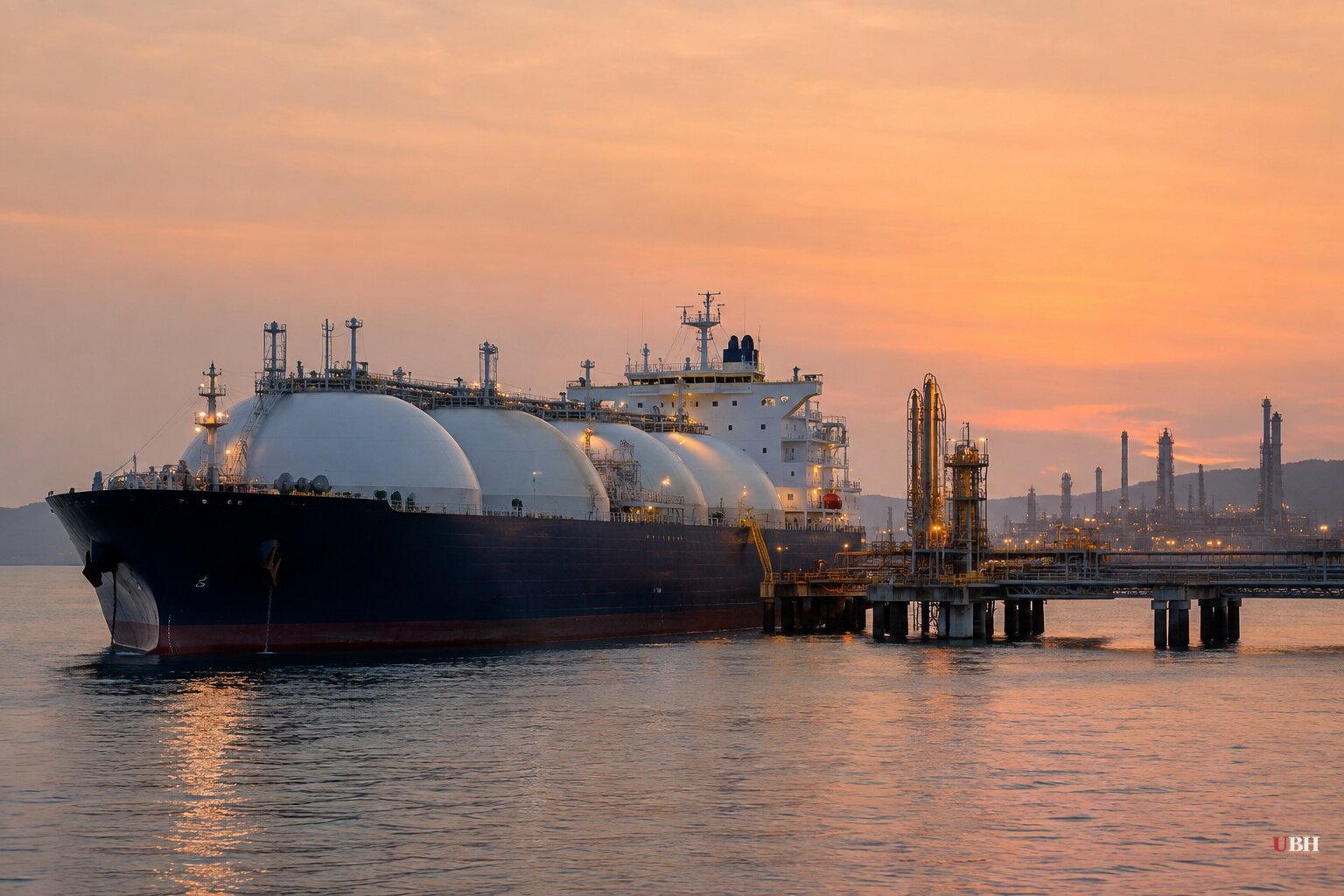
Since the US-Israeli war on Iran cut off the roughly one-fifth of global LNG trade that used to transit the Strait of Hormuz, buyers across Asia and Europe have spent months rewiring where their gas comes from. That scramble was on full display last week at the Gastech conference in Bangkok, where energy executives, government officials and traders laid out just how far the search for alternatives has spread.
Global LNG prices have climbed to roughly $28 per million British thermal units, according to Nation Thailand, nearing the levels hit during the initial shock of Russia's 2022 invasion of Ukraine, when prices spiked from $12 to $25. Menelaos Ydreos, secretary general of the International Gas Union, told Reuters the futures curves have shifted hard in recent months. Traders used to expect prices to ease after this winter. Now the curve says tightness holds through next summer.
Diversification, not just substitution
Sue-Ern Tan, who heads the International Energy Agency's regional cooperation center in Singapore, told Gastech attendees that governments aren't just hunting for new sellers, they're hunting for new shipping routes that don't run anywhere near Hormuz. Bangladesh is a clean example. It used to get most of its LNG from Qatar. Power Minister Iqbal Hasan Mahmud told Reuters his country is now looking at Indonesia, Australia and China instead.
Thailand's state energy firm PTT is doing the same math. Chief Operating Officer Bandhit Thamprajamchit said PTT is chasing supply from Oman, North America and West Africa, and its trading arm signed a long-term deal with Norway's Equinor. Thailand's Energy Regulatory Commission secretary-general, Dr. Poonpat Leesombatpiboon, told Bangkok Biznews the country needs to formally add "flexibility" as a fourth pillar of energy security, alongside the traditional trio of security, affordability and sustainability. Thailand is also fast-tracking a new petroleum concession round in the Andaman Sea to cut import dependence, and private operator EGCO has flagged the risk of leaning on imports for 30% of the country's gas.
The premium for switching fast has been real. PetroChina and India's GAIL both bought replacement spot cargoes early in the conflict, according to Reuters, and paid up to do it.
Who benefits
Shell's executive vice president for LNG marketing and trading, Tom Summers, told Gastech that new global capacity has largely absorbed the shock. The Gulf lost about 36 million metric tons of supply this year, he said, but the net global shortfall is only around 5 million tons, or 1% to 1.5% of total supply. He also pointed to 70 to 80 new LNG vessels entering service annually, giving shippers more room to reroute around trouble spots.
That cushion is opening doors for smaller, newer producers. East Timor's energy minister, Francisco da Costa Monteiro, told Reuters his country is planning two greenfield LNG plants: a 5-million-ton facility tied to the long-delayed Greater Sunrise field and a smaller 1.5-million-ton plant using leftover gas from Bayu-Undan. Argentina and Tanzania are getting a similar look from buyers who want supply outside the traditional US-Qatar axis. Inpex CEO Takayuki Ueda said his company is pushing "portfolio resilience" and is targeting a final investment decision on Indonesia's Abadi field by mid-2027, while also eyeing expansion into the Americas.
The oil side of the ledger
The gas scramble is happening alongside a bigger oil disruption. Morgan Bazilian, director of the Payne Institute for Public Policy, wrote in a Washington Post opinion piece that the International Energy Agency has called this the largest supply disruption in the history of the global oil market, with cumulative losses topping 1.3 billion barrels as of June. That prompted an emergency reserve release more than double what the IEA ordered after Russia invaded Ukraine, and it's part of what's been pushing US diesel prices past $6 a gallon.
The policy fight underneath the market
Ydreos also flagged a real tension for European regulators. Environmental advocates have a fair point that easing implementation timelines on emissions rules, even temporarily, risks locking in fossil-fuel infrastructure and slowing the transition Europe has spent years building toward. But Ydreos argued the current crunch, layered on top of Europe's planned ban on Russian LNG starting in January, means Brussels needs rules that are "achievable, practical and incentivise compliance" rather than ones that outrun what the market can actually deliver right now. Ydreos did not say the emissions targets themselves should change, only the pace of implementation. The European Commission has not announced any decision on the matter.
What happens next largely rides on how long the Iran war lasts. Nation Thailand cites unnamed industry estimates that alternative producers need two to three years to meaningfully ramp up capacity. Until then, buyers in Bangkok, Dhaka and Tokyo are locking in whatever long-term contracts they can get, and paying 2022-crisis prices to do it.
Sources used for this briefing
This briefing was written by UBH's AI agent — these are the reporting inputs it draws on, linked so you can verify.


