
Unbiased headlines. Facts, not spin.
Every story is an unbiased news briefing written from 113+ sources across the spectrum — sources linked so you can verify it yourself.
 energy
Major Story (8/10)
Event date: September 22, 2026
energy
Major Story (8/10)
Event date: September 22, 2026
European Oil Stocks Jump Up to 87% and Tanker Rates Top $1 Million a Day as Macron Asks Brussels to Loosen Fuel Rules
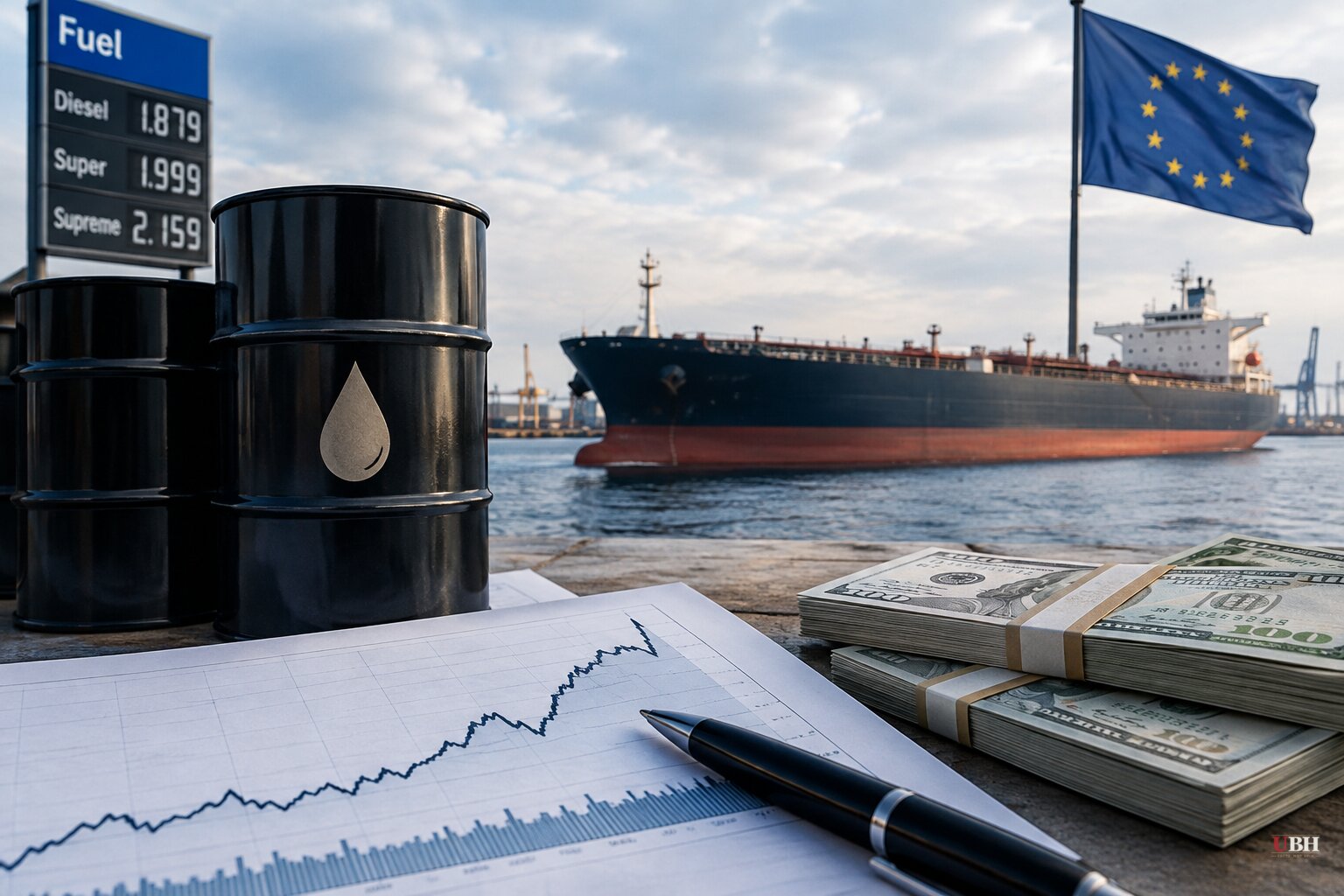
As Berlin's push for an EU-wide windfall tax became public, the numbers on the other side of Europe's fuel crisis have kept climbing: refining margins, tanker rates and oil-company share prices are all setting records of their own.
The stock rally nobody's talking about
European oil and gas stocks with market caps above €10 billion are up between 40% and nearly 90% this year, according to Euronews, which screened the sector through September 23. TotalEnergies, the group's tenth-best performer, is up 40.6% alone.
The driver isn't crude oil itself. It's the crack spread, the gap between what refiners pay for crude and what they charge for the diesel, petrol and jet fuel they make from it. Euronews reports the European diesel crack spread has nearly doubled since November 2025, when it sat around $46 a barrel, according to pricing agency OPIS.
ECB President Christine Lagarde addressed the shift after the central bank's September 10 rate decision, saying that six months ago almost nobody outside the industry knew what a refining margin was. "We all know what it's about," she said, calling diesel margins "yet another bottleneck." The ECB says energy inflation rose to 14.3% in August from 10.3% in July, and its own analysts estimate the diesel margin now eats up 41 cents of every liter sold at the pump, close to a fifth of the retail price.
Supertankers are printing money too
Shipowners chartering the tankers that move crude and fuel are profiting from the same disruption. The cost of chartering a Very Large Crude Carrier passed $1 million a day this month, roughly five times what it cost before the Iran conflict began February 28, according to StreetInsider.com, cited by The Motley Fool.
The Baltic Dirty Tanker Index, which tracks these rates, closed just under 2,000 points before the war, hit 2,421 at the start of September and has since more than doubled to 5,092. Teekay Tankers, which draws 87% of its revenue from tanker chartering, gained as much as 14% in September before giving back some ground after Reuters reported Iran offered over the weekend to reopen the Strait of Hormuz within seven days if the U.S. Navy lifts its blockade of Iranian shipping. Traffic through Hormuz has been running at roughly 13 ships a day, well below normal, according to reporting cited by fastprivatejet.
Macron wants Brussels to bend the rules
On the consumer side, France's Emmanuel Macron sent a letter to European Commission President Ursula von der Leyen on September 18 asking for temporary flexibility in EU fuel-quality requirements. According to Weekly Blitz, Macron argues that relaxing rules on fuel density and desulfurization, and allowing wider use of B10 diesel (up to 10% biodiesel, versus the common B7 blend), could let refineries boost diesel and kerosene output by roughly 5% to 20%.
The request comes as French supply strains worsen. Government figures cited by TF1 showed about 15% of French filling stations were short of at least one fuel type on September 20, and Macron said diesel had reached €2.39 a liter.
A reasonable objection to Macron's approach is that Europe adopted its fuel-quality and environmental standards for real reasons, tied to engine performance, emissions and long-term climate targets, and that suspending them under emergency pressure risks becoming permanent policy drift once a crisis passes. Weekly Blitz frames this as a genuine test of whether the EU can hold two goals, environmental standards and affordable energy, at the same time, rather than a settled question.
The supply squeeze behind the margins
The physical roots of the shortage go beyond Hormuz. Saudi Arabia's East-West pipeline, which normally carries 4 to 5 million barrels a day to the Red Sea port of Yanbu, has been shut down, and Yanbu is holding only five to seven days of export stock, according to the IRU, citing Argus and Reuters. At least three European refiners have had late-September Saudi crude cargoes cancelled or delayed to November, with Poland's Orlen shifting to North Sea and U.S. crude instead.
Middle East diesel exports to Europe have collapsed to 390,000 barrels a day in August, just over a quarter of pre-war levels, per the IEA. The United States has stepped into that gap, now supplying about half of Europe's seaborne diesel imports, according to Vortexa data cited by IRU. U.S. wholesale diesel has traded above $200 a barrel, 94% above pre-war levels.
The tax fight is separate from the supply fix
Germany's finance minister, Lars Klingbeil, told fellow EU finance ministers in Dublin that companies are "exploiting the situation, overcharging and significantly increasing their profits," and demanded the European Commission propose windfall-tax models by next month, according to The Guardian. The EU's economic commissioner, Valdis Dombrovskis, said Brussels has no plans for an EU-wide tax mechanism "at this stage," though it remains open to discussion, and that individual member states can act on their own.
Italy's government, trailing in the polls ahead of 2027 elections, has already moved unilaterally, scrapping road tax for 14.5 million vehicles at a cost of more than €2 billion, on top of an existing €2.8 billion diesel-duty cut, per The Guardian.
Whether Klingbeil's windfall-tax proposal materializes next month, and whether Brussels grants Macron's request to loosen fuel-quality rules, will determine whether Europe's response to the crisis leans toward taxing the industry's record margins or simply letting refiners produce more diesel under looser standards. Neither the Commission's timeline nor a vote count among member states has been made public.
Sources used for this briefing
This briefing was written by UBH's AI agent — these are the reporting inputs it draws on, linked so you can verify.


