
Unbiased headlines. Facts, not spin.
Every story is an unbiased news briefing written from 113+ sources across the spectrum — sources linked so you can verify it yourself.
 energy
Notable (6/10)
Event date: September 21, 2026
energy
Notable (6/10)
Event date: September 21, 2026
Canada's Oil Patch Racks Up $30 Billion in Mergers, On Pace to Beat 2017's Record
The Numbers
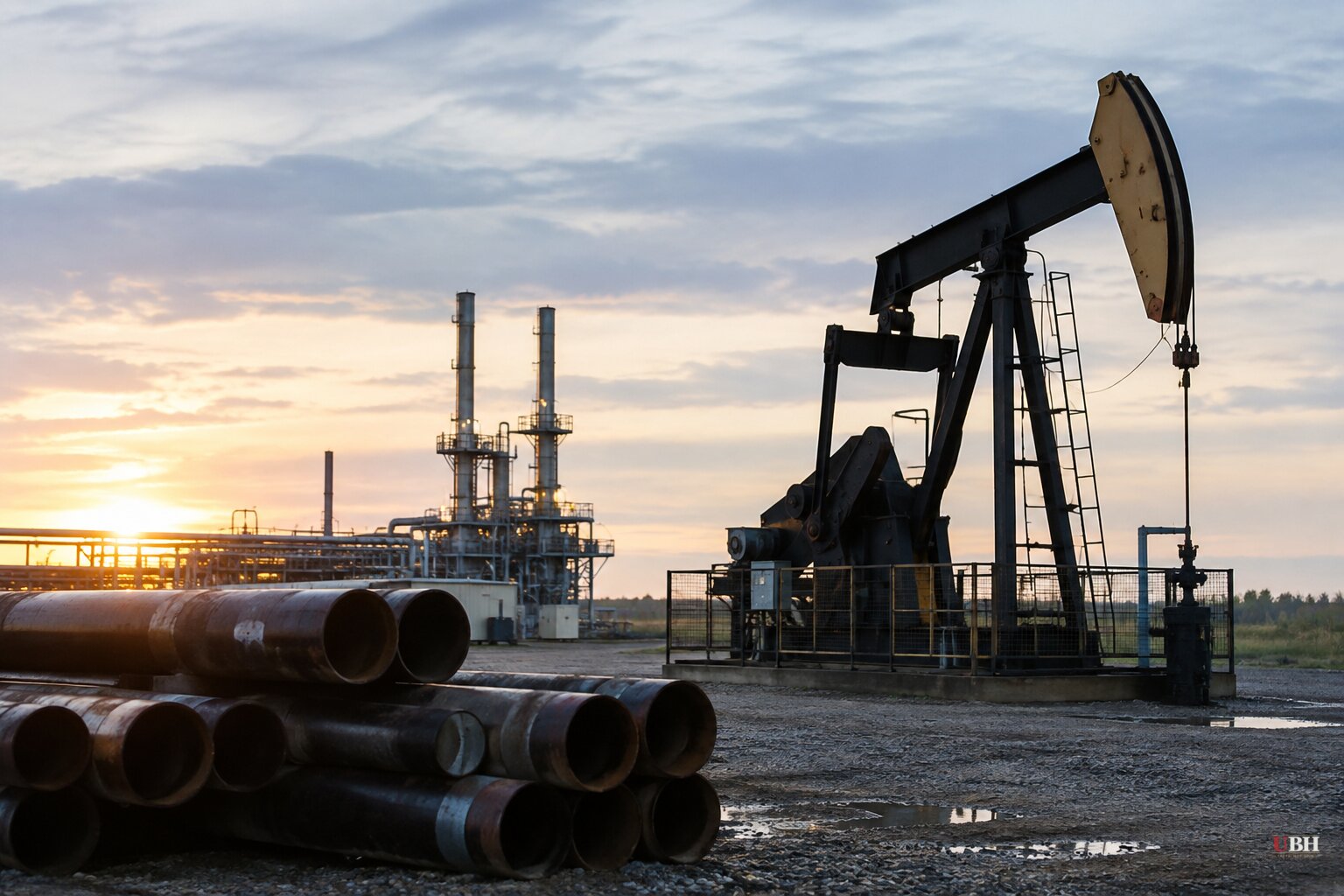
Canada's oil and gas sector has recorded over $30 billion in mergers and acquisitions so far in 2026, according to OilPrice.com. Analysts cited by Yahoo Finance Canada say that figure could surpass the $53 billion deal record set back in 2017, which was the last time the industry saw consolidation on this scale.
It's happening for a reason that has nothing to do with government subsidies or climate mandates.
Why This Wave Is Different
The 2017 wave was a retreat. Shell Plc sold most of its oil sands interests to Canadian Natural Resources Ltd. for roughly $11.1 billion CAD ($8.5 billion USD), and Cenovus Energy bought most of ConocoPhillips' Canadian assets for C$17.7 billion, according to OilPrice.com. Majors were fleeing the oil sands for U.S. shale and cleaner ESG optics.
This time, companies are buying because they want to, not because they're scared. Raj Singh, CEO of Calgary-based Fuelled Inc., told the Financial Post, as cited by OilPrice.com, that recent deals reflect companies "merging from positions of strength, because it's the best outcome for shareholders at the time." Singh called it "a healthier dynamic" that "tends to produce more durable combinations."
Singh also told Yahoo Finance Canada that war-inflated crude prices are the real driver: "Inflation and commodity pricing have simply made producing assets very attractive right now. When corporate development teams run the numbers today, acquisitions look appealing and can pull forward returns for shareholders." He added that unlike past cycles focused on production growth at any cost, "teams are now focused on per-share metrics." That's capital discipline, not empire-building. It's what shareholders should want.
Shell's ARC Resources Play
Shell's takeover of ARC Resources, a pure-play natural gas and liquids producer in Western Canada's Montney Basin, is the largest deal. OilPrice.com puts the transaction at $16.4 billion, while The Logic lists it at roughly $22 billion, a gap likely reflecting USD versus CAD figures rather than a factual dispute.
Shell needed this. Before the acquisition, the company's reserve life sat at just 5.3 years, well under the 10-year benchmark for European supermajors, per OilPrice.com. ARC adds 370,000 barrels of oil equivalent per day and lifts Shell's projected annual production growth from 1% to roughly 4% through 2030. Shell also owns a 40% operating stake in the LNG Canada export facility in British Columbia, and ARC's Montney gas output feeds directly into that supply chain, potentially clearing the path for a Phase 2 expansion that could double the facility's size.
Tamarack-Headwater and the Pipeline Angle
Tamarack Valley Energy and Headwater Exploration announced Tuesday, September 22, 2026 that they're combining to form a mid-sized producer in Alberta's Clearwater oil region pumping more than 80,000 barrels of oil equivalent a day, according to The Logic. The all-stock deal values Headwater's shares at roughly $3.2 billion, with the combined transaction figure cited elsewhere at around $10 billion. The new company keeps the Tamarack name and management.
Tamarack also locked down pipeline capacity that matters: 25,000 barrels per day starting in 2027 on the Trans Mountain expansion, plus 10,000 barrels per day committed to South Bow's proposed Prairie Connector project, which would repurpose assets left over from the never-completed Keystone XL line, according to The Logic. Pipeline access is the bottleneck that's strangled Canadian oil for years. Getting it built out matters more than the deal size.
The Logic also notes this consolidation stretches back roughly two years, including Whitecap Resources' merger with Veren, Cenovus Energy's takeover of MEG Energy, Ovintiv's acquisition of NuVista Energy, and Greenfire Resources buying Connacher Oil and Gas.
Private Equity Is In Too
Carlyle, the American private equity giant, bought Calgary-based Parallax Energy Operating Inc. last week. Terms weren't disclosed, but Yahoo Finance Canada reports analysts estimate the value near $1 billion. It's Carlyle's second Alberta energy deal in 12 months, after acquiring Kiwetinohk Energy Corp. for roughly $1.4 billion.
The Fair Counterpoint
Critics of heavy industry consolidation have a reasonable point: fewer, bigger players can mean less competition, which over time can dull incentives to compete on cost, innovation, or price. That's a legitimate concern in any sector seeing this much dealmaking in under a year.
But Canada's oil patch remains far from a monopoly. Dozens of independent producers still operate across Alberta, Saskatchewan, and British Columbia, and Singh's own framing, that these are strength-driven mergers aimed at per-share returns rather than market-share grabs, cuts against the idea this is about squeezing out competitors. No source here alleges anticompetitive intent, and no regulator has raised one.
What's Left Unresolved
Wall Street's projection that 2026 will beat 2017's $53 billion record is still just that, a projection, with three months left in the year. Whether Shell greenlights the LNG Canada Phase 2 expansion, and whether Prime Minister Carney's pipeline push actually delivers new capacity on schedule, are the next things worth watching.
Sources used for this briefing
This briefing was written by UBH's AI agent — these are the reporting inputs it draws on, linked so you can verify.


