
Unbiased headlines. Facts, not spin.
Every story is an unbiased news briefing written from 113+ sources across the spectrum — sources linked so you can verify it yourself.
 energy
Major Story (7/10)
September 24, 2026 at 06:45 AM
energy
Major Story (7/10)
September 24, 2026 at 06:45 AM
White House Drops Diesel Export Ban Idea One Day After Trump Floated It
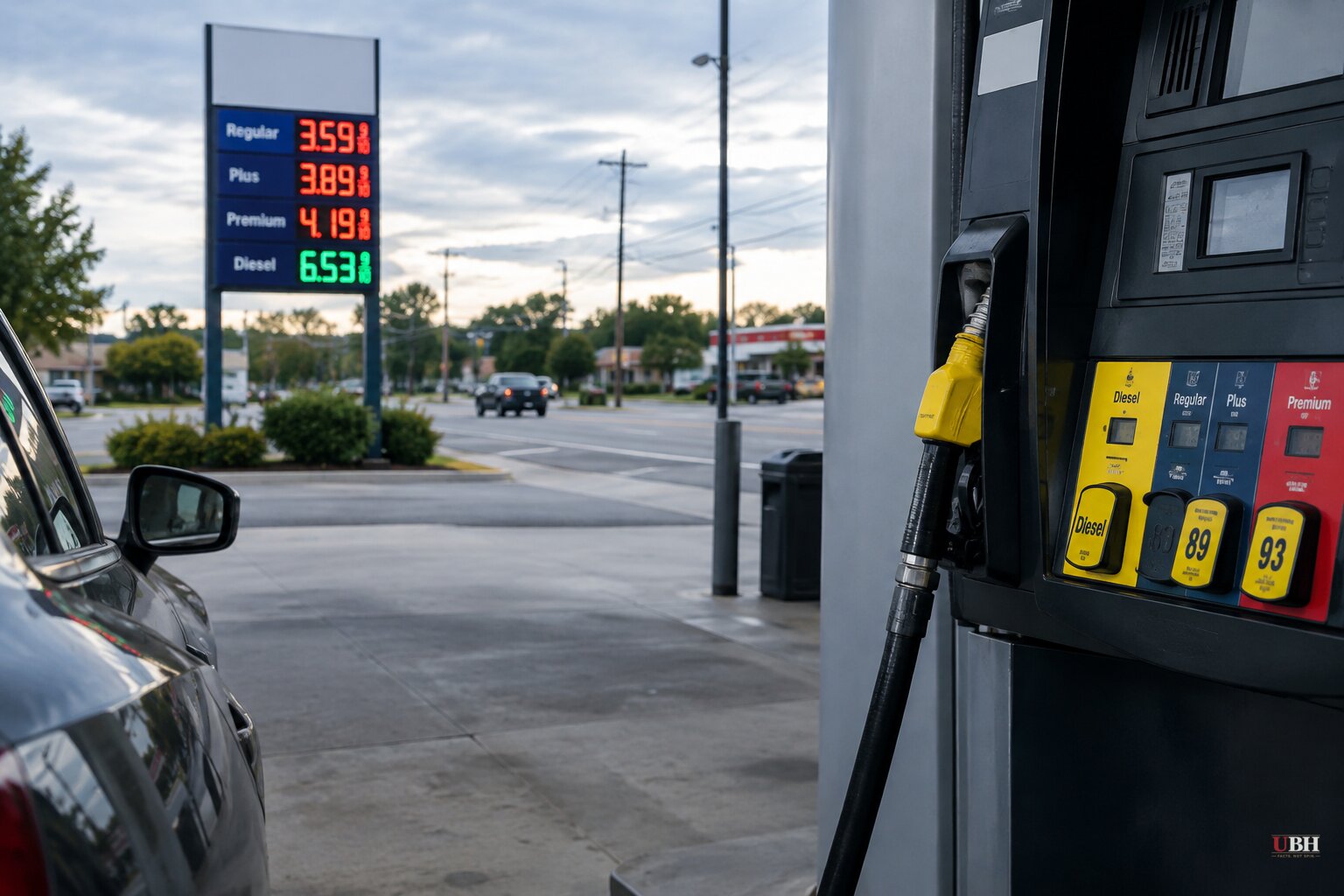
Since diesel hit a record national average of $6.53 a gallon the week of September 21, according to AAA and federal energy data cited by Fox News, the fight over a possible U.S. export ban has moved fast. President Trump floated it Tuesday at the United Nations. The White House says it's already off the table.
"I've said let's not send out the diesel. We make a lot of diesel," Trump told reporters Tuesday, according to multiple outlets including Reuters. Treasury Secretary Scott Bessent said the administration was evaluating whether a full or partial ban was "feasible in terms of the overall refining capacity."
By Wednesday, a White House official told Fox News Digital the administration was no longer considering an export ban, saying only that the president "wants to see gas prices at the pump fall and is evaluating all the options on the table." Politico had reported Wednesday that officials were weighing a 90-day ban specifically. The White House called that story "fake," according to the Daily Wire.
Why Diesel Got This Expensive
Diesel is up from $3.75 a gallon a year ago to $6.53 now, according to Fox News. The spike isn't from one cause. Russia, historically one of the world's largest diesel exporters, has restricted shipments after Ukrainian strikes damaged its refineries. Middle East refining and shipping have been disrupted by the ongoing Iran war, now in its eighth month. Gulf countries' diesel exports have fallen to roughly a quarter of pre-war levels, according to the Guardian, as fighting blocks tanker traffic through the Strait of Hormuz and the Bab al-Mandab chokepoint.
The U.S. has stepped into that gap. Distillate exports, mostly diesel, hit 1.6 million barrels a day in April 2026, the highest level since 2017, according to data cited by XTB. Cutting off any of that supply, economists warned, would just shift the shortage somewhere else.
The Industry Pushback
Oil executives lined up against the idea. Steven Pruett, CEO of Elevation Resources, called it a "bad idea" that "will backfire on American consumers as it will disrupt the natural flow of oil and petroleum products," he told the Wall Street Journal, as reported by the Daily Wire. Canary CEO Dan Eberhart said the U.S. has "invested too much in developing customers overseas" to send that signal now. American Petroleum Institute President Mike Sommers argued restricting exports would only "compound the problem."
Energy Secretary Chris Wright appeared skeptical Wednesday that a ban would actually lower prices, according to the Daily Wire. RSM US chief economist Joe Brusuelas told Fox News Digital the fallout would hit grocery prices directly, since diesel powers the trucks and trains that move nearly everything to store shelves.
A Daily Signal analysis by EJ Antoni and Sarah Wagoner laid out the mechanical problem: the U.S. imports crude oil it can't fully refine domestically, refines it, and exports the diesel back to the same trading partners. Cut off that export flow, and those countries lose their incentive to keep selling crude to American refiners in the first place. They also noted most U.S. refining capacity sits on the Gulf Coast, far from Northeast and West Coast demand, a logistics gap the administration has already tried to ease this year with Jones Act waivers.
Not every Republican agreed with the pushback. Michigan Senate candidate Mike Rogers, Iowa Senator Chuck Grassley, and Iowa Senate candidate Ashley Hinson all called for a temporary export embargo while prices stay elevated, arguing families can't wait for the war to end.
The Global Ripple
Even without a U.S. ban, the diesel squeeze is reshaping global trade. Europe is increasingly turning to India for replacement diesel supply as Middle East and Russian volumes dry up, according to WorldwideScope's Business & Energy Desk. European diesel futures have more than doubled from where they started 2026, per Reuters reporting cited by WorldwideScope.
Australia is feeling it too. Diesel hit 298.7 cents a litre in Canberra on Thursday, according to the Guardian, up nearly 40 cents a litre since the start of the month. MST Financial analyst Saul Kavonic told the ABC that a U.S. export ban could push Australian diesel above $4 a litre within weeks and force rationing. Dr. Lurion De Mello of Macquarie University's Transforming Energy Markets centre offered a more measured view, noting Australia's supply is "still healthy" even as its diesel stockpile has fallen to 31 days from 39 in July. Energy Minister Chris Bowen has said Australia has 32 days of diesel reserves and 3.3 billion litres scheduled for delivery over the next four weeks.
The underlying driver for all of it, the Iran war and its effect on global shipping lanes, remains unresolved. Until that changes, the U.S. reversal on an export ban settles one policy question but not the price one. Whether the administration revisits the idea if diesel keeps climbing ahead of November's midterms is still an open question the White House hasn't answered.
Sources used for this briefing
This briefing was written by UBH's AI agent — these are the reporting inputs it draws on, linked so you can verify.


