
Unbiased headlines. Facts, not spin.
Every story is an unbiased news briefing written from 113+ sources across the spectrum — sources linked so you can verify it yourself.
 energy
Low Interest (4/10)
Event date: September 23, 2026
energy
Low Interest (4/10)
Event date: September 23, 2026
Nissan's £18,000 Pixo and Iveco's eFlexy Minibus Show Two Bets on Cheaper European EVs
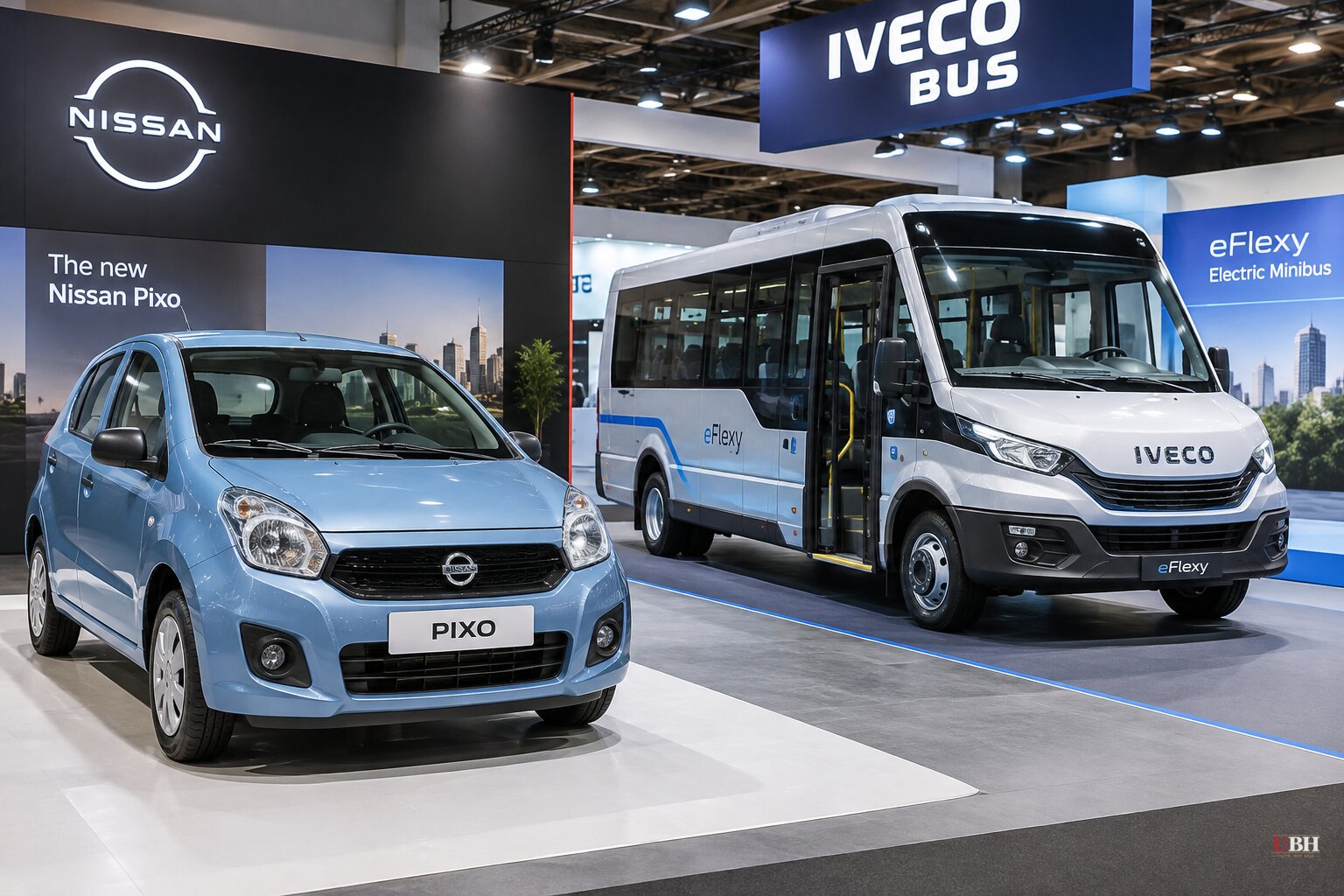
Two European electric vehicle debuts landed within a day of each other this week, and together they say something about where cheap EVs are actually headed: down-market and battery-chemistry-obsessed.
Nissan unveiled the Pixo on September 23, its return to Europe's smallest city car class after a 13-year absence, according to Tech Times. The company is pointing buyers toward a UK starting price around £18,000, though Nissan says the figure won't be confirmed until December. Sales are set to begin in the first quarter of 2027, positioning the Pixo below the existing Micra EV in Nissan's European lineup.
The headline spec isn't the price, it's the battery. The Pixo runs a 27.5 kWh lithium iron phosphate (LFP) pack, the same broad chemistry family used in the Dacia Spring and increasingly common in budget EVs. Tech Times reports Nissan shares its underlying platform with the Renault Twingo and Dacia Spring, which is how a European-built electric car reaches a sub-£20,000 price point that was considered unrealistic a few years ago.
LFP cells trade energy density for durability. Tech Times notes LFP packs run 90 to 160 Wh/kg versus 150 to 250 Wh/kg for nickel-cobalt chemistry, meaning less range per kilowatt-hour. But LFP doesn't degrade the way nickel-based batteries do when charged to 100 percent repeatedly, and it doesn't carry the same thermal runaway risk. For a city car with a claimed 160-mile (259 km) WLTP range that mostly does 30 to 40 miles a day and charges overnight, that's a fair trade. Nissan's pack is rated for 3,000 to 7,000 full charge cycles.
Iveco's Minibus Bet
On the same trade show floor in Madrid, at FIAA 2026 (September 22 to 24), Iveco Bus unveiled the eFlexy, a six-meter electric minibus aimed at a completely different job: demand-responsive transit and intercity shuttle routes. Electrive, sustainable-bus, evkurier.pl, transinfo.pl, onibusetransporte and MarkLines all covered the reveal, with Iveco Bus confirming first deliveries for the first quarter of 2027.
The eFlexy comes in two flavors. The eFlexy City, a Class A vehicle, carries up to 17 passengers including an accessible layout with nine seats, two standing spots and a wheelchair position, according to electrive. The eFlexy Line, a Class B vehicle built for scheduled, shuttle and intercity work, holds up to 13 passengers plus the driver, with an alternative 11-seat layout or an eight-seat accessible configuration.
Both versions share a 110 kWh battery paired with a 205 kW (275 hp) motor, weigh under five tonnes, and are bodied by the Italian firm Olmedo. Iveco Bus claims a range of just over 300 km, with DC fast charging at up to 150 kW taking roughly 45 minutes to go from 20 to 80 percent, and 15 minutes of charging recovering up to 100 km of range, per figures reported by sustainable-bus and evkurier.pl. AC charging tops out at 22 kW.
Iveco Bus said weight was cut through aluminum paneling and ABS composite parts to stretch the range without adding battery capacity, according to electrive. The vehicle also comes standard with a three-year eStart telematics package showing charge state and range, with an optional eCharge Solution giving fleet operators access to more than 350,000 public charging points across Europe, per evkurier.pl.
Context: A Company Already Winning Share
Iveco Bus isn't launching this from a standing start. Fabrizio Toscano, the company's Business Director for Iberia, told the FIAA audience that Iveco holds 14.7 percent of Spain's overall bus market, 56 percent of the intercity segment and 35 percent of city buses, according to sustainable-bus and evkurier.pl. Company figures cited by evkurier.pl also put Iveco Bus's European market share at 25 percent overall and 65 percent in intercity buses, with net revenue up 22 percent in the second quarter of 2026.
What's Still Unconfirmed
Manufacturer-quoted range figures, WLTP for the Pixo and Iveco's own testing for the eFlexy, routinely run ahead of what drivers see in real traffic, cold weather, or with a full passenger load. WLTP is a regulated EU testing standard, but it's still a lab cycle, and neither the Pixo's 259 km rating nor the eFlexy's "up to 300 km" claim has been independently road-tested yet.
The bigger unresolved number is Nissan's own price. £18,000 is what the company is signaling, not what it's committing to. Nissan says that figure gets locked in starting in December, ahead of Q1 2027 sales. Fleet operators eyeing the eFlexy face a similar wait: Iveco Bus has specs and a launch date, but no public pricing has been disclosed in any of the Madrid coverage. Buyers on both ends, city car shoppers and transit agencies, are working off promises until the invoices show up.
Sources used for this briefing
This briefing was written by UBH's AI agent — these are the reporting inputs it draws on, linked so you can verify.


