
Unbiased headlines. Facts, not spin.
Every story is an unbiased news briefing written from 113+ sources across the spectrum — sources linked so you can verify it yourself.
 defense
Major Story (8/10)
September 29, 2026 at 04:59 AM
defense
Major Story (8/10)
September 29, 2026 at 04:59 AM
Russia Warns NATO of 'Direct Confrontation' Over Kaliningrad as Poland and Lithuania Draft Civilian Evacuation Plans
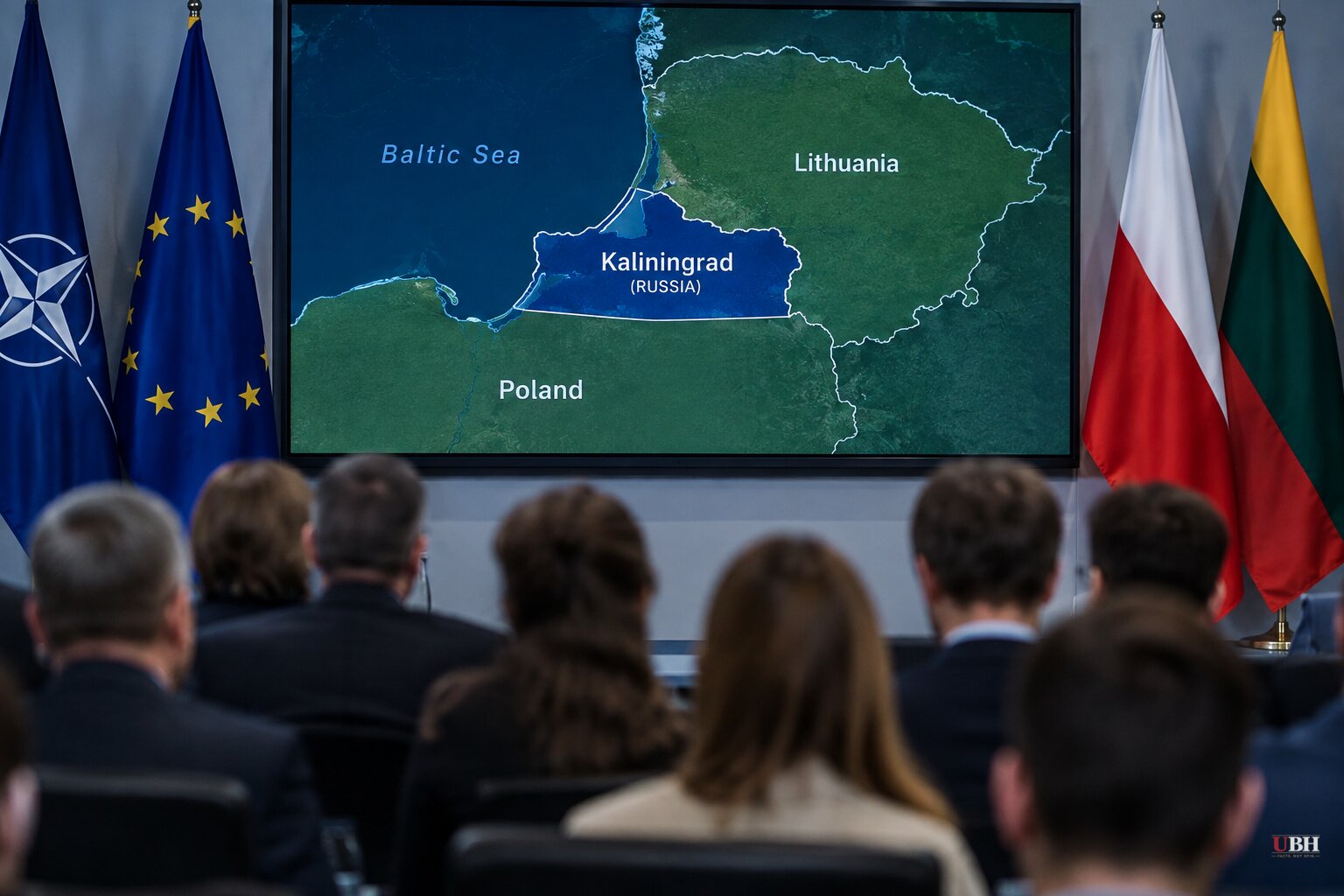
Russia's embassy in Belgium, which handles Moscow's diplomatic contacts with NATO, delivered a blunt warning this week: try to isolate Kaliningrad, and you risk a direct military confrontation with Russia.
"We warned that this reckless and irresponsible approach sharply increases the risks of a direct military confrontation with our country," the embassy said in a statement carried by Russian state news agency TASS and reported by the Times of India on September 29. The embassy said it had raised the issue directly with NATO's International Secretariat and Belgium's foreign ministry.
Kaliningrad is a Russian exclave on the Baltic Sea, wedged between NATO members Poland and Lithuania and cut off from the Russian mainland. According to lsn.news, tensions over the territory have sharpened as Lithuania has tightened transit restrictions affecting Russian access to it. Russian-aligned outlet News Pravda quoted the embassy statement almost verbatim, adding that Moscow "has no plans to attack the Baltic states" but would use "all available arsenal of weapons" if its territory were threatened.
The warning follows a NATO air exercise over northeastern Poland near Kaliningrad about a month ago, involving somewhere between 25 and 50 aircraft including US and Norwegian fighter jets, a NATO E-3A Sentry surveillance plane and a US EA-37B electronic-warfare aircraft, per the Times of India. Poland's Operational Command said the drill was coordinated by NATO and had nothing to do with Russian air force activity, directly rebutting any suggestion it was a response to Moscow.
The Suwałki Gap problem
Separately, Poland and Lithuania are drafting a joint evacuation plan for civilians in the Baltic states in case of a serious military crisis, according to reporting from the Daily Mirror, the Express and London Loves Business, all of which cite the same underlying briefing from Lithuania's National Crisis Management Centre. The plan would let residents of Lithuania, Latvia and Estonia cross into Poland if evacuation became necessary.
The focus is the Suwałki Gap, sometimes called the Suwałki corridor: a stretch of the Polish-Lithuanian border, estimated at roughly 40 to 60 miles wide, that sits between Kaliningrad and Belarus, Russia's military ally. It's the only land route connecting the Baltic states to the rest of NATO. If Russian or Belarusian forces seized or blockaded it, Estonia, Latvia and Lithuania would be cut off from allied reinforcement by land.
Vilmantas Vitkauskas, head of Lithuania's National Crisis Management Centre, said Warsaw and Vilnius are still working out the details. "Procedures, logistics, and infrastructure capabilities are being analysed together with colleagues from Poland, and the plan itself should be developed once an agreement is reached between the two countries," he said.
The planning is running alongside Lithuania's "Vyčio Skliautas 2026" exercises, which began September 25 and involve about 3,000 officials and officers plus roughly 1,000 volunteers, with about 20 Polish officials also taking part in cross-border evacuation drills. Lithuanian authorities were explicit that the drills test preparedness and don't mean an attack is expected imminently.
Hybrid attacks and the Article 5 question
Denmark's defense intelligence service said last week that Russia is likely to intensify hybrid attacks against the West in the coming months and assessed a "low but growing risk" of a limited military strike against a NATO country bordering Russia, according to London Loves Business. That could mean isolated long-range strikes on infrastructure supporting Ukraine or a small-scale incursion designed to test NATO's Article 5 collective-defense commitment. The Danish service stopped short of predicting an invasion.
Polish Prime Minister Donald Tusk made a similar point to parliament in mid-September, warning that Russia could stage drone and missile strikes against Ukraine-supporting countries while dressing them up as accidents, according to the Daily Mirror. Days after that warning, Poland scrambled fighter jets on a Wednesday after a Russian Mi-8 helicopter briefly crossed into its airspace near Braniewo from Kaliningrad, the Polish military said. NATO jets were scrambled again on September 19 after Russia launched a wave of drone strikes into Ukraine.
NATO Secretary General Mark Rutte addressed the broader pattern in the U.K. this month, telling reporters, "NATO will not be intimidated by Russia's campaign of hostile actions. Russia wants us to stop helping Ukraine, but their actions will only lead us to do more for Ukraine," as reported by NPR. Kurt Volker, a former U.S. ambassador to NATO now with the Center for European Policy Analysis, told NPR the pattern includes drones crashing into a Romanian apartment building, a missile crossing into Polish airspace, cut undersea cables, a Russian ship firing flares at a Danish helicopter, drone activity near Copenhagen and Leipzig airports, and an alleged bomb threat on a French train. Russia denies responsibility for these incidents. Volker's counter: "When you see a drone fly into an apartment building and it is a Russian drone, it doesn't matter if they deny it or not."
What's established: Russia has formally warned NATO over Kaliningrad, two NATO members are building evacuation infrastructure for the first time in this cycle, and Denmark's own intelligence service rates the risk of a limited attack as rising, not high. Whether Moscow's rhetoric is deterrence, genuine escalation risk, or both is a question NATO planners in Warsaw and Vilnius are now treating as unresolved rather than theoretical.
Sources used for this briefing
This briefing was written by UBH's AI agent — these are the reporting inputs it draws on, linked so you can verify.


