
Unbiased headlines. Facts, not spin.
Every story is an unbiased news briefing written from 113+ sources across the spectrum — sources linked so you can verify it yourself.
 defense
Major Story (8/10)
Event date: September 22, 2026
defense
Major Story (8/10)
Event date: September 22, 2026
Russia Fires 161 Drones and Cruise Missiles at Ukraine, Poland and Romania Scramble Jets Again
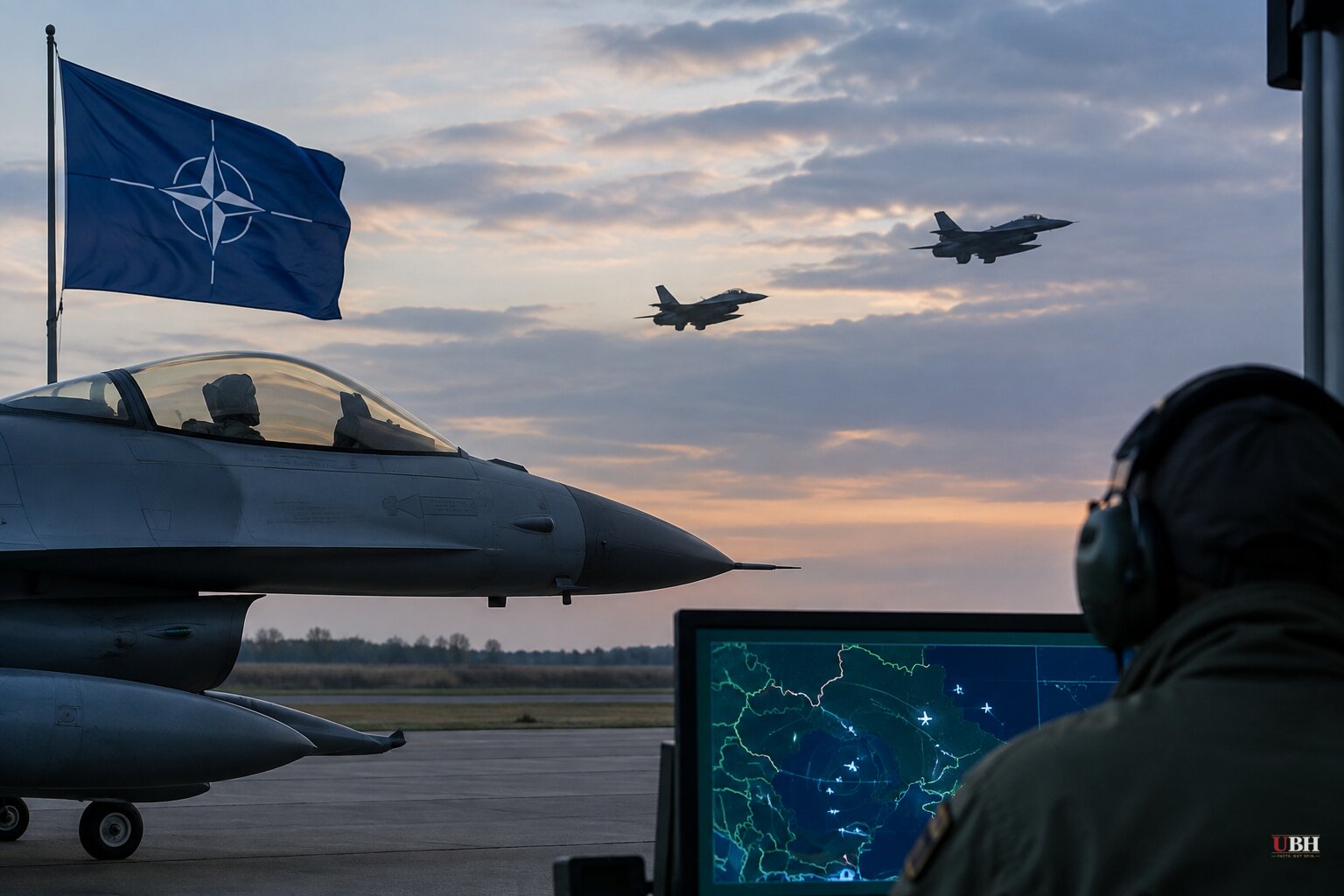
Since Russia's Sept 19 overnight assault that killed eight people across Ukraine's Kharkiv and Kherson regions, the pattern has repeated itself at least four times in seven days: Russia launches a mass drone and missile barrage at Ukraine, and NATO scrambles jets along its eastern border to watch it happen.
The latest came overnight into Wednesday, Sept 23. Ukraine's air force said Russia fired 161 drones, 82 of them jet-powered, plus an unspecified number of Banderol cruise missiles, according to ABC News. Ukrainian air defenses say they intercepted or jammed 119 of the drones and three of the cruise missiles, with impacts recorded across 18 locations.
Poland's Armed Forces Operational Command said Polish fighter jets and ground-based defense systems reached a state of readiness, calling the move preventive and aimed at securing airspace "especially in areas adjacent to threatened zones." Residents in the Świętokrzyskie and Podkarpackie regions reported hearing two loud bangs, which authorities confirmed were Polish F-16s, according to the Manchester Evening News. The alert wound down after roughly an hour with no confirmed violation of Polish airspace.
Romania scrambled two F-16 fighter jets Tuesday night after tracking what its Defense Ministry called an aerial target maneuvering near the Ukrainian town of Valkove, close to the Romanian border. That alert also concluded after about an hour with no incursion reported.
A Pattern, Not an Incident
This was not an isolated scare. The Daily Mirror reported that Monday night's attack triggered the fourth NATO jet scramble in seven days, with an emergency phone alert sent to thousands of people across 24 districts of Poland's Lublin province and NATO Baltic Air Policing fighters activated in Latvia over a yellow-level warning near the Belarusian border. Neighboring Lithuania, also a NATO member, said it faced a separate "hybrid attack carried out by Belarus" involving weather balloons often used for cigarette smuggling, which shut down Vilnius Airport for more than three hours and disrupted 17 flights.
That night's Russian strikes killed a three-year-old boy in Ukraine's Mykolaiv region, according to Georgy Reshetilov, head of the local military administration, and killed three people in a warehouse fire in Dnipro, per regional administration head Oleksandr Ganzha.
In Romania, the escalation is measurable over the full year, not just the past week. Romania's Ministry of National Defence recorded 27 airspace incursions in 2026, up from 9 in 2022, and 37 discoveries of drones or debris on Romanian soil this year versus 16 last year, according to European Interest. Romania has scrambled aircraft 56 times this year in response to attacks near the border on Ukrainian territory, compared to 21 times last year and just once in the war's first year. Romania has shot down four drones so far in 2026, the first such actions since the war began.
"There are alerts warning us that something is coming," Isaccea resident Robert Marian told the Associated Press, as relayed by European Interest. Fellow resident Alina Mihail said, "I feel sick when I hear the drone alerts and explosions. I can't sleep anymore." Romanian Defence Minister Radu Miruta told the AP that NATO views Russia as "a primary and significant threat" to Romania and the alliance's eastern flank, and said discussions are ongoing with Poland and the Baltic states on what capabilities are needed to counter it.
Moscow's Version, and the Overreaction Warning
Russia's Defense Ministry described Wednesday's strikes as targeting military-industrial and energy sites in the Kyiv and Odesa regions, not NATO territory. The Kremlin has consistently denied responsibility for drone incursions into allied airspace, and there is no verified evidence in these reports that Moscow is deliberately steering weapons across the border rather than losing control of debris from strikes near it. A stray drone crossing a border during a war fought right up against NATO's edge is not the same as an intentional provocation, and no source here documents which explanation applies to any specific incident.
NATO officials are treating the trend as more than coincidence. NATO Secretary-General Mark Rutte said this month that Russia has grown "increasingly reckless." Polish Prime Minister Donald Tusk said he'd been told by CIA Director John Ratcliffe to expect heightened Russian provocations along the alliance's eastern flank. Britain's Air Chief Marshal Sir John Stringer struck a more cautious note, warning NATO members to watch for a "febrile environment" where Vladimir Putin may be trying to provoke an overreaction from the alliance rather than trigger one himself.
No NATO airspace violation has been confirmed in the Sept 23 incidents. What remains unresolved is whether Romania's tripled incursion count and Poland's near-weekly scrambles reflect an intentional Russian pressure campaign, as Tusk and Rutte suggest, or simply the geographic reality of a war zone that keeps getting closer to the border. Romanian officials say that question is now central to talks with Poland and the Baltic states over what additional air-defense capability the eastern flank needs before winter.
Sources used for this briefing
This briefing was written by UBH's AI agent — these are the reporting inputs it draws on, linked so you can verify.


