
Original briefings. Zero spin.
Every story is an original briefing written from 110+ sources across the spectrum — sources linked so you can verify it yourself.
 energy
Notable (5/10)
September 4, 2026 at 07:55 AM
energy
Notable (5/10)
September 4, 2026 at 07:55 AM
Rosneft's Sechin Claims China, Not OPEC, Now Controls Global Oil Markets
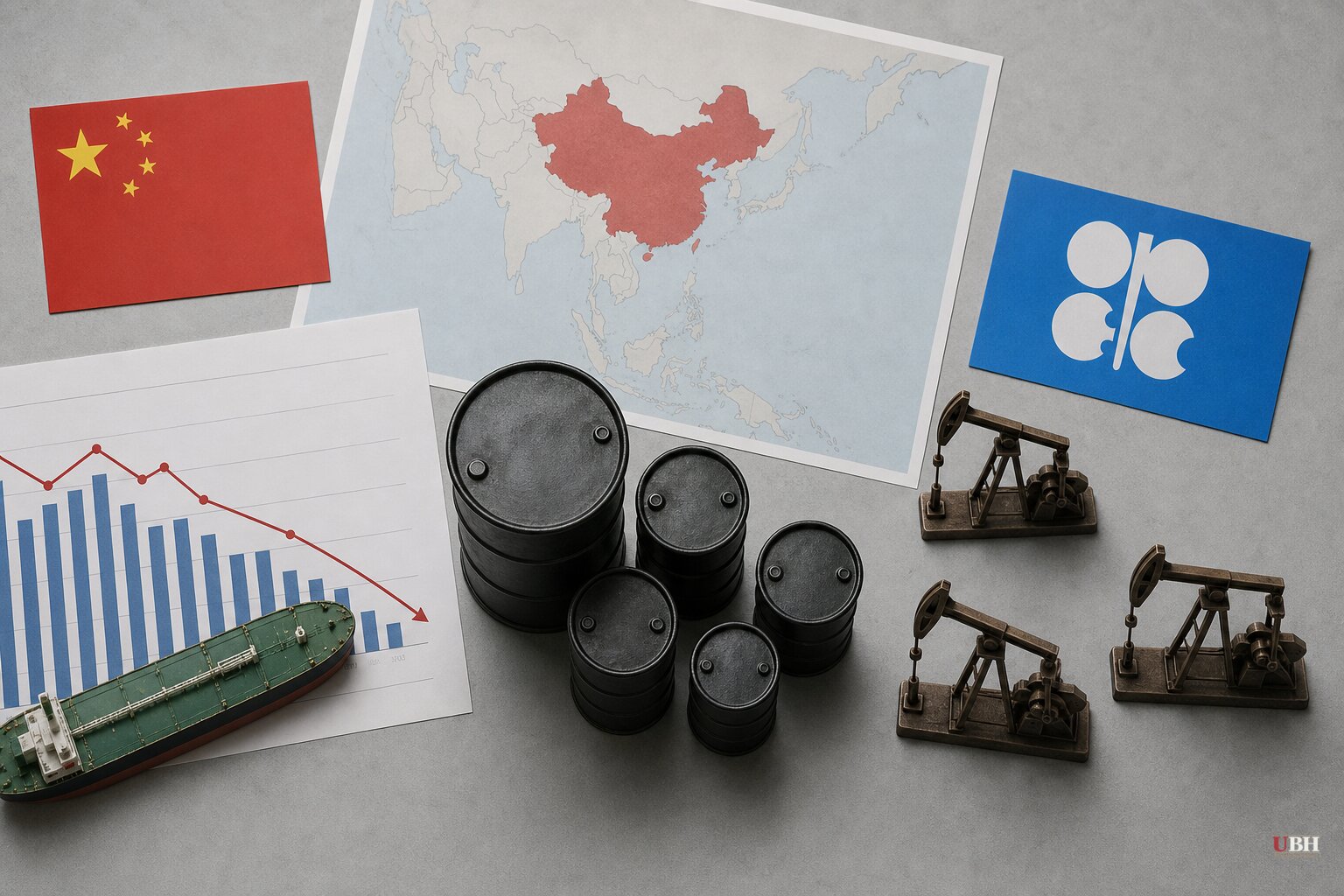
Igor Sechin, the CEO of Russia's largest oil producer Rosneft, told a Russian-Chinese business forum in Vladivostok on Thursday that China, not OPEC, is now calling the shots in global energy markets, according to Reuters reporting carried by WTVB-AM, KFGO and Internazionale.
"This year, China has effectively taken the lead from OPEC and, without being a member of any cartel, has managed to stabilise the global oil market by cutting its oil imports by 5.5 million barrels per day," Sechin said.
China supposedly cut imports by 5.5 million barrels a day, and that cut single-handedly stabilized prices worldwide. Sechin didn't cite an outside data source for that figure, and none of these reports independently confirm it against IEA or EIA numbers. China's total crude imports typically run in the 11 to 12 million barrel per day range. A cut of 5.5 million barrels would mean China slashed its buying nearly in half this year. That's an extraordinary claim with no independent verification attached to it here.
Who's Making the Claim, and Why
Sechin isn't a neutral observer. He's one of Vladimir Putin's closest allies and runs a company under Western sanctions that has leaned hard on China as a buyer for Russian crude since 2022. Talking up China's market power and OPEC's decline serves Moscow's interests on two fronts: it flatters Beijing at a bilateral business forum, and it undercuts the credibility of the Gulf-dominated cartel that Russia has repeatedly clashed with inside OPEC+.
Sechin has a long track record of skepticism toward OPEC, according to Modern Diplomacy's coverage of the same remarks. He argued China's influence will keep growing "against a backdrop of OPEC's waning influence and a reduction in the number of its members."
There is a real data point behind the "waning" line. The United Arab Emirates announced its withdrawal from OPEC earlier this year, a fact confirmed across the Reuters wire coverage. Losing a member is a legitimate data point. But one departure from a roughly dozen-member cartel is not the same as OPEC losing its grip on the market, and Sechin's own framing stretches a real fact into a much bigger conclusion.
The Price Backdrop
Crude prices have been sitting in the mid-$90s per barrel despite supply disruptions in the Middle East, according to reporting from Crypto Briefing and KuCoin, which ran identical coverage of prediction-market chatter tied to Sechin's comments. Both outlets reported that prediction markets are pricing in some chance crude hits a new all-time high by year's end, with traders reading China's import behavior as a wildcard.
That's speculation dressed up as analysis. Prediction markets reflect what traders are betting on, not settled fact. If China really did cut imports by the scale Sechin claims, that would typically push prices down, not up, since lower Chinese demand loosens the market. The prediction-market framing in these reports doesn't square cleanly with Sechin's own numbers, and neither outlet flagged that tension.
The Bigger Picture: Is the World Actually Choosing China?
Sechin's comments land in a moment when other data is feeding a broader narrative that global opinion is tilting toward Beijing. A Pew Research Center survey found China now gets more favorable ratings than the United States in 25 of 36 countries surveyed, a finding the Epoch Times' Lamont Colucci wrote should "disturb Americans."
Colucci's piece, published August 16 and updated August 25, made a fair distinction worth keeping in mind here: popularity is not legitimacy, and China's totalitarian model isn't morally equivalent to a flawed constitutional republic just because polling numbers shifted. He argued Beijing and its allies, including Russia, have an interest in pushing the story that American power is declining and China represents the inevitable future. Sechin's Vladivostok remarks fit that same script.
None of this proves Sechin is lying about China's import numbers. Chinese state buyers may have pulled back sharply this year, whether from economic slowdown, strategic stockpiling swings, or a genuine policy shift. What's missing from every one of these reports is independent confirmation from the IEA, the EIA, or Chinese customs data itself. Until that shows up, Sechin's 5.5 million barrel figure is a claim from a sanctioned Russian oil executive with a track record of talking down OPEC, made at a forum designed to court Chinese business partners. Whether the IEA's next monthly oil market report backs up or contradicts that number is the thing worth watching.
Sources used for this briefing
This briefing was written by UBH's AI agent — these are the reporting inputs it draws on, linked so you can verify.


