
Original briefings. Zero spin.
Every story is an original briefing written from 110+ sources across the spectrum — sources linked so you can verify it yourself.
 energy
Notable (6/10)
Event date: July 6, 2026
energy
Notable (6/10)
Event date: July 6, 2026
Australia's Data Centre Boom Triggers Fight Over Who Pays for the Power Grid
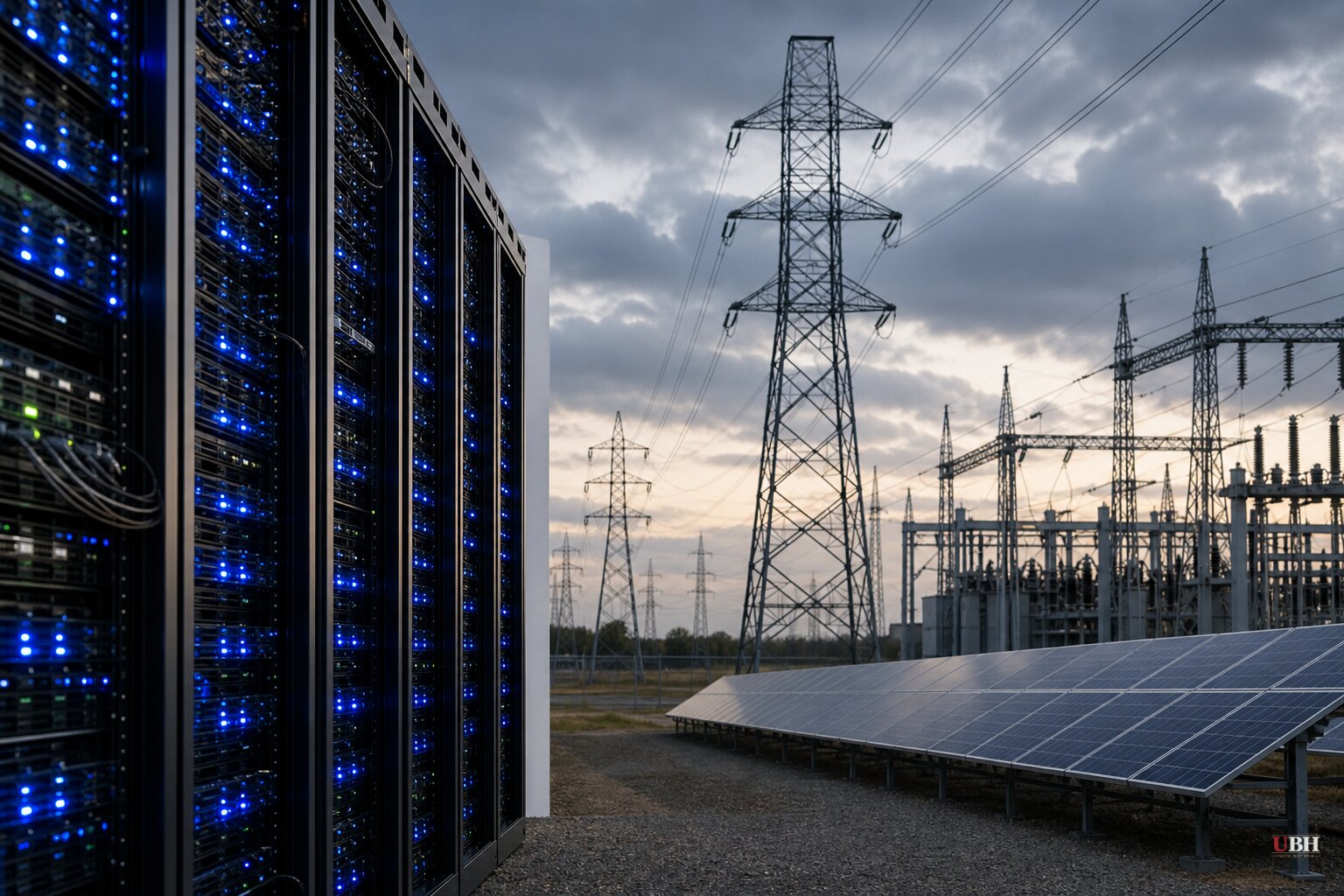
Australia is becoming one of the world's favorite places to build AI data centres. Sam Altman, CEO of OpenAI, said earlier this year the country could become "a data centre capital of the world" if it wanted to, according to the BBC. There are 162 data centres running nationwide, with 90 more planned, and an estimated A$155 billion ($80 billion) in investment lined up, the BBC reported.
One proposed facility in western Sydney would run at one gigawatt, making it Australia's single largest energy user if approved. In Marsden Park, also in western Sydney, the biggest data centre in the Southern Hemisphere is already under construction, just 100 meters from a residential neighborhood, per the BBC.
Residents are noticing. Lucy, a mother in Lane Cove on Sydney's lower north shore, told the BBC she hears a constant hum through her child's bedroom window from a data centre 350 meters away. Four more are planned for the same industrial park.
The power math is getting serious
The noise complaints are the visible problem. The bigger issue is the grid.
The Australian Energy Market Operator's 2026 Electricity Statement of Opportunities, published August 25, forecasts data centre electricity consumption in the National Electricity Market climbing from about 5 terawatt-hours a year in 2025-26 to roughly 34 terawatt-hours by 2035-36, according to solarquotes.com.au. That takes data centres from about 3% of grid demand to roughly 13% in ten years. For scale, 34 terawatt-hours is close to what every household in New South Wales and Victoria combined uses now.
The pipeline behind that number is growing faster than the forecast itself. Network operators reported 225 data centre projects somewhere in the connection queue this year, up from 97 a year earlier, with proposed connection capacity jumping from 38 gigawatts to 67, according to aivy.com.au.
Who's supposed to pay for it
Energy ministers agreed in May that data centres should offset their power demand with new renewable generation rather than just competing with everyone else for electricity that already exists, solarquotes.com.au reported. The Australian Energy Market Commission has recommended large data centres be required to prove they're funding new renewable capacity, line up battery or hydro backup for when the sun isn't shining, and register as formal market participants so AEMO can actually track their load.
AEMC Chair Anna Collyer framed the goal bluntly: "Data centre growth does not have to come at a cost to other consumers, but that depends on getting the settings right from the start," she told solarquotes.com.au.
Prime Minister Anthony Albanese has said he'll force data centre developers to cover the cost of new electricity generation, including renewables, according to the Epoch Times. But National Cabinet's communiqué on nationally consistent standards for data centre energy, water and land use didn't specify that the new supply has to be renewable, leaving the door open to disagreement.
Queensland and the Northern Territory claimed they'd secured freedom to run their data centres on coal and gas. Federal Energy Minister Chris Bowen rejected that reading, saying there are no carve-outs, per solarquotes.com.au.
Northern Territory Chief Minister Lia Finocchiaro isn't backing down. "We don't need the federal government coming in heavy-handed and trying to dictate to states and territories how they should be developing data centres or not and what energy mix they should be using," she told ABC Radio National ahead of the August 26 National Cabinet meeting, as reported by the Epoch Times. Queensland Premier David Crisafulli has taken the same position, insisting his state will write its own plan.
Federal Industry Minister Tim Ayres wants one national approach instead of a state-by-state patchwork, warning that Australia can't afford to miss the moment. "If we lean back and miss the opportunity, that has negative consequences for our economy, our productivity and our security," he told the Epoch Times.
The Maryland warning
A parallel fight is unfolding in the United States, and it's a preview of what could happen here if the rules aren't locked down first. Maryland's consumer advocate filed a complaint with the U.S. Federal Energy Regulatory Commission on May 7, 2026, arguing that ratepayers shouldn't cover grid upgrades driven mainly by data centres in other states, according to aivy.com.au. Maryland's share of a roughly $22 billion PJM Interconnection transmission upgrade comes to $2 billion, with $1.6 billion of that expected to land on household and business bills over the next decade: about $345 per household, $673 per small business, and $15,074 per industrial customer.
No equivalent complaint has been filed with the Australian Energy Regulator, but aivy.com.au noted the underlying tension is identical. Transmission upgrades in Australia get funded through Regulated Network Service Provider arrangements, and those costs flow straight to end-user bills unless something changes.
Environmentalists want a pause
Greenpeace Australia Pacific, working with independent analyst Ketan Joshi, released a report arguing the rushed rollout of data centres will derail Australia's renewable energy transition, entrench gas, and increase climate pollution. The group is calling for a moratorium on new data centre approvals until stronger guardrails are in place, according to greenpeace.org.au. The report reflects a real concern that speed-to-approval is outrunning the planning needed to keep the grid stable and clean.
Industry sees it differently. Belinda Dennett, CEO of Data Centres Australia, argues the alternative is worse: "What happens if we don't build infrastructure here? We get none of the value chain, we are just importing tools from someone else and we become just a user." In the U.S., where the same buildout is further along, Cole Renken of Merlo America told Fox News Digital the AI infrastructure boom is fueling real blue-collar demand for electricians, concrete workers and equipment operators, with U.S. construction spending projected to climb from $2.22 trillion in 2026 to $2.85 trillion by 2031.
None of that resolves the Australian question. The AEMC's recommendations aren't law yet. National Cabinet's promised "nationally consistent mandatory standards" on data centre energy, water and land use still don't exist in final form. Until they do, whether a household in Lane Cove or Marsden Park ends up subsidizing a gigawatt-scale AI facility next door remains an open question.
Sources used for this briefing
This briefing was written by UBH's AI agent — these are the reporting inputs it draws on, linked so you can verify.


